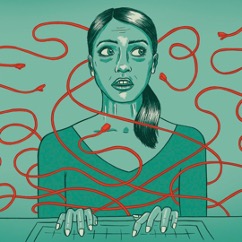
(Figure 1, picture from https://www.theatlantic.com/technology/archive/2014/10/the-unsafety-net-how-social-media-turned-against-women/381261/
)
The internet and social media technology have had a tremendous influence and significant benefit to humanity. People can receive and share information worldwide on time and build a connection with others effectively. However, it also comes with absolute risk and threat. These technologies sometimes promote the spread of hate speech.
Hate speech communication mechanism which offensive and contain an ideology of hate using stereotypes. It can be defined as speech that harms a person or a group based on race, religion, national origin, gender, disability etc.
0rgad (2005) said that the internet could create an egalitarian space due to the fluidity and anonymity of online identity. And internet space can beyond the gender dichotomy, made a ‘genderless utopia’.
But many people hold different opinions. There are scholars indicate that online identity is close to connecting with offline power. And internet is not an equal space, it has reproduced and reinforces gender inequality (Zoonen 2001, boyd 2011).
Besides, even this topic was widely mentioned by academic and mainstream media, but most news and research are focused on high-income countries like the United Kingdom and America. There is a lack of attention on developing countries to this issue.
Here comes the first ” collapsed house ” in 2022
In the early year of 2022, #collapsed house of Wang Bingbing became a hot topic on different Chinese social media. ‘Collapsed house’ is Chinese internet slang, to describe the sad feelings of fans when their idol suddenly announced their relationship or did something bad or ruin their public persona.
By looking at the #collapased house of Wang Bingbing, posts, and comments like ‘she is a slut’ and ‘Second-hand Goods’ emerged on social media, especially on Hupu and Weibo.
Who is Wang Bingbing?
Wang Bingbing is one of the most famous journalists on CCTV; her sweet smile and innocent look make her known as the “best love object” by netizens and the ‘national wife’ elected by Hupu.
People follow her news and create fan groups for her. Whenever she appears, the pop-ups are full of confessions such as ‘I love Bingbing’ ‘she’s my wife’, ‘My heart belongs to Bingbing’ (see figure 2).
(Figure 2 screen shot from Bilibili)
But now, she is facing online humiliation after details of her 10-year ago old diary was exposed. The diary shows that she was living with someone at the age of 19 and had low scores on a school test, which she took twice before passing, and she divorced once. People accused her of bad behaviour and labelled her ‘slut’, ‘bitch’ and ‘disgusting’ (figure 3).
(figure 3 Screenshot form Weibo)
Hupu, social media for male.
Unlike most popular social media platforms in China, the ratio of male to female users of Hupu is significantly unbalanced. The proportion of male users far exceeds that of female users, reaching an astonishing 90% (Fang et al., 2021).
.
Hupu was first a website for basketball games information, but later it expanded into broadcasting various sports events and added forums for games and sports equipment, making it a popular social media for Chinese men.
Hupu has categorized its online communities into subdivisions way. In addition to sports communities, it also contains online communities for users to share their daily lives, such as jobs, games, and women, allowing their users to engage in trending topics and easily communicate with others.
‘Straight guys’ in China
People refer to the active male users on Hupu as ‘straight guys’, it is different from common terms of ‘straight guys’ that purely indicate sexual orientation, in China, it more represented males as low EQ and less component of social communication, and homophobia. Straight guys in china are consider as conservative thinking, stereotype aesthetics and inflexibility. They live in their own values and worldview, and judging females in all aspects. Now refers to Chinese men a broad range (Fang et al., 2021).
As a sports forum dominated by male users, the Hupu online community is full of rankings of various characters or events, the most popular one is the ‘Hupu Goddess Ranking’ every year. the standard for ‘Hupu Goddess’ whether they adhere to strict behavioural and ethical norms, such as virtue, beauty, virginity, and reject heterosexual marriage.
Wang Bingbing used to be their top goddess, they call her “the nation’s wife”, but now they call her “collapsed women”.
Online hate speech against women is not limited to male communities but is prevalent in China. Posts and comments exhibit the same bias toward females on male-dominated online communities and platforms.
Why in China?
Gender-based online hate speech is a more socially constructed collective discourse that resonates with broader contexts in China, and it is an extension of patriarchy and gender ideologies (Shu et al., 2012).
In the long time, China is a society mainly dominated by males. The traditional patriarchal mindset regards men are real power holders, and women are deputies or assistants (Shu et al., 2012). However, in recent years, with more Chinese women are receiving higher education and entering the workplace, and the ideology of male breadwinners and hegemonic masculinity face crisis.
Due to the boy preference and one-child policy, males are 30 million more than females in China (Heng, 2021). Many young men in a self-mocking call themselves ‘Diaosi (loser)’, while expressing dissatisfaction with young females who refuse to like, date, or marry them. Most males don’t want to lose benefits from the patriarchal dividend, continue against women online, aim to reiterate their dominant role.
Besides, the online sexist hate speech reflects the bias in the offline world. Gender biases and gender imbalances widely exist in the internet industry, it is likely to transform into the structure of the social media platforms developed by them and essentially enhance the risk of harm to women.
From ’straight guys’ wife’ to ‘collapsed house woman’, from celebrities to normal people, many females are face same situation.
The covid-19 is recurring in China. To control the epidemic better, the government will show the trajectories of the infected person to the public mainly through Weibo and WeChat official accounts to alert the public to protect themselves.
In 2020, 20 years girls Zhao from Chengdu was unfortunately infected, and her itinerary sparked public attention. The official report shows that the girl had visited several crowded bars in the last few days.
Once Zhao’s itinerary was disclosed, her private life immediately became the focus of much discussion among netizens. A variety of abusive remarks on the Internet. People accused her of ‘Private life chaos’, called her a ‘bitch’ and ‘the king of poison’, and even accused ruined this city.
Subsequently, Zhao’s personal information was leaked. Netizens widely forwarded her name, home address, contact information, ID number, and other information. The online behaviour also evolved into offline actions, with many netizens visiting her residence to harass her family and friends.
Although Zhao was the victim, she still stood up to apologize to the public and beg people to stop doxxing her. She said her family and friend’s life has been a significant impact.
‘She received too much hate speech and death threats; it is all about her gender, this kind of thing would never happen to males.’ Says female user ‘said Cute Maomaoyu’on Weibo.
In China, such incidents have continued to happen. Last month, rumours swirled about a young, diagnosed girl whose itinerary showed that she had been many hotels. Many people said she is conscienceless and shameless; even some users said they have evidence to improve that she is sex work. All kinds of discriminatory comments flooded Weibo.
But in the end, the official account revealed that the girl is a nucleic acid tester. Nevertheless, there are no more punished for the abuses and rumour mongers; Weibo only blocked a few accounts.
Besides, sexist hate speech is not only target on personal, it also against the group, Chinese feminist.
The struggle of Chinese feminist
In China, feminist has been labelled with extreme terms such as “Quanshi (to describe people that consider as radical pro-feminist or anti-male chauvinists.).” “Nvquanbiao (feminist bitch)”. And those provocative and sensational words create a strong impression and become popular slang in China that is widely used in social media. These neologisms have deprecated and ridiculed women; online users use these words daily and casually, making misogyny normalized. When women object to hate speech, many males accuse them of ‘not funny’ and being dramatic. And indicate that feminism is aimed at tearing society apart.
Chinese feminists have to deal with both a male-dominated culture and government censors. The Chinese government is trying to hinder the movement by banning people from using terms like ‘anti-sexual harassment’ on social media and removing online petitions calling for more protection for women. The #Metoo phrase was removed from Weibo and cannot be viewed. To silence them, several feminists were seen as traitors in collaboration with foreign countries, and many of their Weibo accounts were deleted permanently.
Impacts of online gender-based hate speech
Online hate speech against women can have a significant impact on female’s health of mental and physical, social, and economic which perpetuates and exacerbates gender inequality. It has influenced female’s freedom of speech most directly.
A study indicates that females who experienced hate speech often adjust their online behaviour and self-censor the content they post. To avoid exposure to this hate speech, they will reduce participation in social platforms.
Limiting females engaged in cyberspace has affected those who earn money from social media. Online hate speech can impact on female’s reputation, which might lead to loss of societal status and employment. After the ‘collapse house,’ Wang Bingbing rarely appeared in front of the public. When searching her name on social media, it was mostly titbits, and her career was greatly hampered.
Besides, digital media technologies’ affordances can perpetuate social inequality considering algorithms perpetuate racist and misogynist stereotypes. It has increased the spread of hate speech directed at disadvantaged groups.
It is important for the government and platforms to make regulations on this problem.
What can we do?
(figure 4, picture from https://ywcacanada.ca/what-we-do/projects-initiatives/block-hate-building-resilience-against-online-hate-speech/)
Exist possible solutions
The Chinese government has implemented an online real-name system. Users can only be engaged in social media after verifying their IDs and cell phone numbers. However, this system has been controversial in China. Supporters believe it will reduce false information and cybercriminal activities, but others think it will help the government suppress and combat dissenting voices on the Internet. For example, the #Metoo movement was banned on Weibo by the government in China.
Besides, Weibo launched the ‘anti-online abuse mode’ this year; users can restrict people from commenting on their posts or sending private messages. Also, the ‘comment firewall mode’ will automatically block contents like personal attacks and malicious harassment.
In addition, both Weibo and Hupao have special complaint reporting channels to give feedback about violent words. Users can send reports to the team through posts and comments (and are anonymous). However, only posts with sensitives word about political can be processed fast.
How to improve in the future?
It is important for Chinese mainstream media to focus on this issue and make awareness public of the consequence and impact of this problem. And it is important to involve more women in the tech industry and platforms building, which might help create safer internet spaces for women. Although the Chinese government has legal instruments against cybercrimes, it does not include online hate speech against women. It is necessary for the government to make related laws to prevent such things. Chinese feminist organizations can help bring this topic to the forefront of public and government discussion.
The advance of internet and social media platforms changed the way people interact with others. However, the growing popularity and use of the Internet and social platforms have led to a rapid expansion of hate speech. Furthermore, compared to sexist hate speech, racism and homophobia are more generally acknowledged. While the European Court of Human Rights has recognized homophobic hate speech and addressed the liability of online intermediaries, there are no cases of online hate speech against women (McGonagle, 2013). Although this issue has concerned many developed countries, developing countries like China did not pay enough attention. Online engagement connects with the offline world closely; hate speech against women should become a policy priority. Government, society, and platforms should cooperate to mitigate continued online sexist hate speech and make efforts to make the Internet a safer space for females.
Reference list:
Zoonen, L. (2001). Feminist Internet Studies. Feminist Media Studies, 1(1), 67-72. https://doi.org/10.1080/14680770120042864
Boyd, D. (2011). White Flight in Networked Publics: How Race and Class Shaped American Teen Engagement with MySpace and Facebook. In Race After the Internet (eds. Lisa Nakamura and Peter A. Chow-White). Routledge, pp. 203-222.
Fang, J., Li, R., & Yang, C. (2021). Straight Guy Index: Conversation Strategies of Social Platform in Formulation on the Collective Identity of the Oppressed Minority. Advances In Social Science, Education And Humanities Research, 631, 1319-1322.
Shu, X., Zhu, Y., & Zhang, Z. (2012). Patriarchy, Resources, and Specialization. Journal Of Family Issues, 34(7), 885-917. https://doi.org/10.1177/0192513×12450001
Heng, C. (2021). ‘More than some countries’ populations’: China has 30 million unmarried men. South China Morning Post. Retrieved 5 April 2022, from https://www.scmp.com/news/china/article/3133656/china-home-30-million-men-search-bride-census-shows.
McGonagle, T. (2013). The Council of Europe against online hate speech: Conundrums and challenges. Retrieved 6 April 2022, from https://rm.coe.int/16800c170f.
Orgad, S. (2005). The Transformative Potential of Online Communication. Feminist Media Studies, 5(2), 141-161. https://doi.org/10.1080/14680770500111980