Little Red Book introduction
Little Red Book, also known as Xiaohongshu, is a social media and e-commerce platform. It has been described as “China’s answer to instagram”. On the platform, most users are young girls and women aged from 15 to 40. The app encourages users to share their beauty and health experience in this online community.
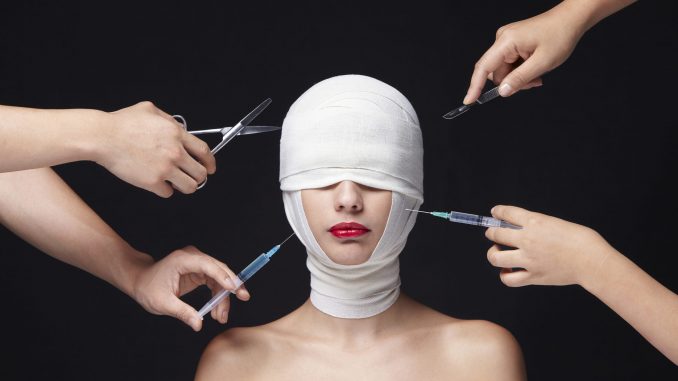
However, there are increasing unhealthy tendencies appearing on Little Red Book. For instance, many bloggers post pictures to show their exquisite lifestyle, items, and services to get traffic and draw audiences’ attention. And basically, those achieve many audiences’ likes and admiration even though the values reflected behind them are contrary to the mainstream values promoted in China. Among them, the most toxic issue on the platform is the preaching of aesthetic medicine and appearance anxiety, which have a pernicious impact on the online community. Since most posts on the platform are about make-up, outfit, and workout, it seems like that only the people with good-looking faces and figures can be the capital to go on this platform.
On 17th February 2022, there was a topic tag#Little Red Book initiated the strictest aesthetic medicine governance, appearing on Weibo, which meant a lot of illegal posts, pictures and topics about medical beauty on Little Red Book would be clean up.
Why govern this frenzy in Little Red Book
According to the Little Red Book active users profile trend report in 2021(Qian Gua,2021) manifest, the active users are mainly females aged from 18 to 34, accounting for 83.31% and going toward the tendency to be younger. At the same time, with the population of smartphones, there are increasing numbers of juveniles easily accessing the internet and getting to the Little red book. The value of “beauty first” subtly influences juveniles to form the correct value. Zhang, Zhu and Chen(2002) demonstrated that teenage girls were likely to be attracted to their peers’ photos and make upward comparisons with peers with more likes. In addition, a minority of young girls who pursue beauty even invest a lot of money and deal with online lending platforms and guarantees.
One thing that needs to be known about Little Red Book is that there are many posts with the nature of advertising, so users make it hard to distinguish if it is a sharing post or an advertisement. Some of these advertisements are even disinformation. Many experiencers advertise for certain institutions of medical cosmetology under the guise of experience sharing. Also, many accounts claim to be cosmetology surgery masters posting many contents about analysis of facial disadvantage features, preaching perfect facial features and leaving messages that anyone having such issues mentioned for further consultation in private. However, the audience can not judge if they have medical qualifications or licenses.
So many girls are blinded by the value of “beauty first”, so they are deceived by this platform chaos . Medical cosmetology advertising belongs to medical advertising in China, being subject to stricter censorship. According to the China Consumers Association’s official website, the medical cosmetology whistle-blowing data rose from 483 to 7233, increasing nearly 14 fold in five years. Disinformation and illegal practice of medicine are two prominent problems of medical beauty institutions involved in lawsuits. Nevertheless, Little red book is short of appropriate regulatory mechanisms, providing a lawless online community for illegal institutions of medical cosmetology and low-quality medical-grade products. A platform that encourages users to express beauty should be obligated for the affairs arising from beauty.
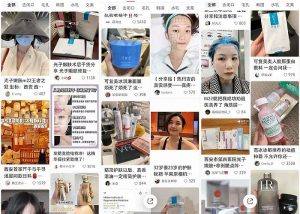
Fig1,Medical beauty frenzy in Little Red Book
Why did this chaos happen?
Platform features and framework
Little Red Book is a product discovery and recommendation search engine to some extent. Even representatives refer to the platform first and foremost as a social recommendation platform(Digitalcrew, n.d.). Algorithm ranking determines who and what gains visibility and the extent to which content is seen on social media(Bucher,2012,cited in Kelley,2018) . Based on its strong algorithms and big data mechanism, Little Red book can precisely extract the key terms or specific items that users are searching for and interested in and display relevancy again of what users may be interested in on the page when users scroll down next time. In addition, the page framework and feed of Little Red book are similar to Pinterest and Tiktok “for you feed” respectively. When users go into the “explore” page, they will be shown several recommended posts on a page. Only by browsing in a few minutes, they can scan through 100 posts on average, which means Little Red Book relies heavily on UGC to create rich content and focus on content quantity over quality.
Advertorial & Commercial advertisement
Many brand owners and advertising agencies get to know such platform recommendation mechanisms and in-feed ads, so they work with influencers, MCN and ordinary people to publish a barrage of posts about certain products and services. They have thoroughly studied Little Red Book recommendation mechanisms and platform traffic attaining before publishing target advertorial and commercial advertisements to maximize their traffic profits. If users click the post about a product for preliminary understanding, subsequently they will get far more recommended information and posts around the product than imagined because of Little Red Book’s powerful and accurate algorithms and recommendation mechanism processing. Some commercial advertisements are placed in the feed as regular posts and automatically pushed to target audiences. Unless the user manually clicks “not interested”, the advertisements will be sticky to show on their page.
How did Little Red Book govern aesthetic medicine this time?
Many digital media scholars believed that platform governance moderation systems and management are the most effective governance mechanisms, including content policies, terms of service, algorithms, interfaces, and other socio-technical regimes, which can significantly impact and mediate individual behaviours (Plantin.et al,2018, cited in Gorwa,2019).
And this time, the Little Red book treats medical beauty with a heavy fist. The first governance phase was implemented in two respects.
- Little red book cancelled the online account certification of private institutions of medical cosmetology. The professional certificate is only available for governmental hospitals and doctors working in governmental hospitals.
- Little Red Book cleaned up the posts produced by regular users, removed, blocked and downgraded the accounts and contents suspected of attaining illegal traffic and spreading disinformation. It suspended all business cooperation with relevant brands and accounts, and took measures to cut off traffic flow. Currently, searching prohibited brands and accounts on Little Red Book, the page will show that the brand is suspected of illegal marketing, and relevant content will not be displayed.
Algorithmic reality construction and the formation of social order in Little Red Book
Referring to what was mentioned before, Little Red Book relies on users to create posts and content, and the display of those contents is executed by algorithm technology. The algorithm can not distinguish the authenticity of the content, what it does is to convey targetedly those categorized to audiences. Users will be left with all-encompassing but chaotic content if there is no algorithm. And this chaotic stuff is processed by the recommendation mechanisms formed by the artificial logic and order in the algorithm, plus the user click, it seems to create a domain-specific world for the audience, the medical beauty planet, constantly shaping the audience’s behaviours and cognition. Natascha and Michael pointed(2016) out that an emerging awareness that technology has effects can be conceived as behaviour or agency. It can create something by its own meaning or be an institution with effects on social order and individual and collective behaviours.
Medial beauty frenzy’s content display was co-governed and co-determine by multiple algorithms routines, such as search engines/crawlers, filtering, aggregation applications, ranking, anticipated and consumed, etc(Natascha and Michael, 2016,p.247). It means that users who see this content are not exposed to the Internet that generally perceived as having a very high degree of freedom of access to information. But in Little Red Book, the user is tied to a network that has been carefully woven by the platforms using these algorithmic means. The algorithmic decision-making of Little Red Book shapes the formation of preferences and decisions in the production and consumption of goods and services on the Internet. And beyond by influencing the behaviour of individual producers and users, essentially co-managing the evolution and use of the Internet. The micro-level behaviour of users subject to the platform algorithm also has an unexpected impact on the macro-level network structure and society culture practice(Natascha and Michael, 2016,p.247).
The flaw of the Little Red Book platform governance
From the two respects of governance in Little Red Book, the platform’s governance of medical beauty frenzy still stays on the visible level, like removing illegal contents and accounts. With the continuous evolution of platforms and social production and cultural practice development, there will inevitably be another platform chaos that needs to be regulated. Only if under duress of established policies and regulations take the algorithm to clean up the content of the solution does not effectively solve the rationale and root cause behind that frequent chaos happens on the platform. It should be known that these medical beauty stakeholders have already mastered the content display and recommendation mechanism of the Little Red Book of algorithms, and how the user can conveniently acquire information sources on the platform. They just require modifying the key term so that they can find new land to disseminate to avoid the governance of the platform secretly.
With the growing awareness of the importance of (software) technology in the development of communication systems, technical issues are increasingly seen as policy issues, also in the context of algorithms. Algorithmic governance implies the need to gradually shift the attention of technology from being a purely functional tool to evoking certain behaviours and shaping and reshaping activities and meanings(Natascha and Michael,2016,p.242). For Little Red Book, such a product with the nature of search engine, the effect of content governance for the platform is achieved at a technical level by adjusting certain architectural and design features of its algorithm, such as reducing the coverage of excessive recommended contents and disclosing the composition of recommended contents,to let users select what information they want to get.
The infrastructure role and discourse of Little Red Book
The boundaries of whether platforms are media companies or technology companies are increasingly blurred today, and the norms that apply to their regulation are constantly being adjusted by their changing identities. The power of algorithms and media work together to shape reality and the social order, increasingly influencing perceptions of the world and affecting behaviour. However, I believe the platform that regardless of either form of governance to take or which type of company(media/technology) to act, is always an infrastructure and window for social and collective expression, and the platform needs to take social responsibility for the consequences of those actions and voices that emerge. As the online community platform with the largest share of female users in China, Little Red Book is not only a window for every user to express their beauty voice, but also, considering the platform as a whole, certain values and discourses derived from the platform influence the reality construction and social value.
Conclusion
Given the rapid growth and development of the platform ecosystem,as well as the dynamic nature of the platform companies in question, external governance still places more emphasis on applying to general social issues rather than solving the specific chaos happening in targeted platforms. Especially when the platform’s identity is blurred between media companies and technology companies, it is inevitable to govern both in terms of the discourse of the platform and the technical means. When Little Red Book is defined as a media company, it needs to interpret the definition of beauty from the internal level of the platform and preach the correct beauty values externally. Here we can refer to the example of searching suicide in Tiktok and tips counselling services. When users search for the words of medical beauty, conveying a positive definition of beauty to users. In addition, the overwhelming algorithm and recommendation mechanism is also a booster of the platform this time. Medical beauty chaos is just one of the cultural practices based on the push of algorithmic technology above, and there will be other chaos as the platform develops and social and cultural practices continue to evolve. The change of content but technical mechanism boosting conditions remain unshifted, the platform governance will continue to be at the same level of governance. Therefore, Little Red Book still needs to modulate the existing potential regulatory flaw and algorithmic innovation of the platform by penetrating various functions of the platform.
Reference lists:
Anonymous.(2022, Feb 17).Xiaohongshu treats medical beauty with a heavy fist. DayDayNews. Retrieved from April 7, from https://daydaynews.cc/en/technology/xiaohongshu-treats-medical-beauty-with-a-heavy-fist.html
Anonymous.(n.d).Little Red App: How to create content on the platform.Digitalcrew,Retrieved from April 7, from https://www.digitalcrew.agency/little-red-app-how-to-create-content-on-the-platform/
Cotter, K. (2019). Playing the visibility game: How digital influencers and algorithms negotiate influence on Instagram. New Media & Society, 21(4), 895–913. https://doi.org/10.1177/1461444818815684
Gorwa, R. (2019). What is platform governance? Information, Communication & Society, 22(6), 854–871. https://doi.org/10.1080/1369118X.2019.1573914
Just, N., & Latzer, M. (2017). Governance by algorithms: reality construction by algorithmic selection on the Internet. Media, Culture & Society, 39(2), 238–258. https://doi.org/10.1177/0163443716643157
Qian Gua Statistics. (2021).2021 active users protrait trend report in Little Red Book. Retrieved from April 7, from http://www.qian-gua.com/blog/detail/877.html
Zhang, X., Zhu, W., Sun, S., & Chen, J. (2022). Corrigendum: Does Influencers Popularity Actually Matter? An Experimental Investigation of the Effect of Influencers on Body Satisfaction and Mood Among Young Chinese Females: The Case of RED (Xiaohongshu). Frontiers in Psychology, 13, 873514–873514. https://doi.org/10.3389/fpsyg.2022.873514