
Introduction
Did you know that while you’re enjoying your favorite short video, short video apps are tagging you? Douyin, which is the Chinese version of TikTok is a creative short video app launched by Bytedance company. Launched on September 20, 2016, the app is a short video community platform for all ages, allowing users to select songs and shoot music to form their works. Douyin’s algorithms mechanism gives users several labels based on the video they click, like, and comment on. The algorithms system can help the users more quickly find the video they may have been interested in, through the system locates the tag for the users. But there exist personal information security issues behind the algorithms systems, the private media company can use this personal information to gain the benefit and rights and make it hard for users to notice. The following content will introduce the privacy and security problems for personal information on the online platform; and then, there will be a case study of Douyin to illustrate how does the short video app make the benefit and rights of personal data. As the World Economic Forum pointed that personal data has been a new resource and material of the twenty-first century. (World Economic Forum, 2011, p. 5) Personal data has commercial value and bring benefit to private companies. Companies treat personal data as a commodity, a valuable asset, and invest heavily in processing it for private benefit. (Bottis & Bouchagiar, 2018) Meanwhile, the largest digital platform companies are increasingly the focus of legislators, policymakers, and regulators around the world. (Flew, 2019) Jason Sadowski commented, “Behind all intelligence is monitoring and control.” Because intelligence is behind the data. The disclosure and misuse of data by private companies can also involve violations of people’s rights. In addition, there are also hidden problems in the thought limitation control brought by the algorithm recommendation mechanism, and the digital social governance between private companies and the government, which are worth discussing. Therefore, this paper will take Douyin as a case to discuss the benefits brought by personal information as a commodity and the rights obtained by private companies through cooperation with the government.
Personal data security
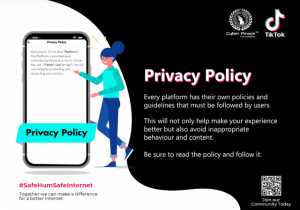
Privacy right is seen as an inherent human right, although in practice it is limited by other competing rights, obligations, and norms. (Flew, 2019) The right to privacy is not an absolute human right. Rather, it is a right based on a specific social and legal background. In the Internet environment, the issue of privacy takes on new importance because of the amount of information that can be provided. (Flew, 2019) Under the condition that the existing privacy protection regulations and the privacy protection technology are not perfect, the personal privacy and security issues on the Internet have gradually received attention. Facebook, TikTok, YouTube, and other social software grasp the social relations of users, the monitoring system records people’s chat, Internet access, travel records, online payment, and shopping websites record people’s consumption behavior. In the era of big data transmission, the threat people face is not limited to personal privacy leakage but is also based on the prediction of people’s state and behavior based on big data transmission. The media platform records the users’ behavior and uses big data to analyze the users’ characteristics and potential movement. But many users are unaware of these behaviors. One example Netflix can record movies watched by users to make video recommendations for users. Even in the privacy consent clause before using the platform, the user is required to agree to the use of personal information as a condition for the use of products and services, and the data of search engines and media platforms will be resold to third parties. (Flew, 2019) Each app collects personal information, and Douyin distributes it more widely to various Chinese companies (such as Xiaomi and Taobao). (Ikeda, 2021) So many users may be curious about why they just watch the products on short videos, the following app’s page is all about these products. Even they will receive an advertising call about this product. In addition, sometimes the private can cooperate with the government based on their data and technology to achieve the right to digitally govern society. The innovation of the Healthcode can be a classic case of digital governance. It also happened in TikTok. The paper will make a discussion of the challenges brought by data commodification and digital society governance to information security in the case of short video platforms Douyin and TikTok.
Douyin labels users
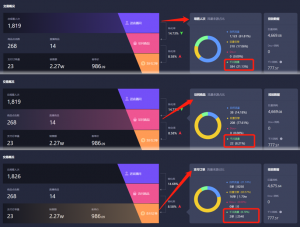
Douyin short video software has its intelligent algorithm, through the intelligent algorithm — labeling users, the video is more accurately delivered to users who like the content. As can be seen through the official teaching video of “Juliangqianchuan” on the official website of Douyin on traffic delivery, It can be seen that Douyin can label you through your browsing records, likes, and comments, and through the analysis of big data. The label can be separated into two parts: the users’ label and the creator’s label. (What is the Douyin label, 2021) The users’ label comes from the type of video people swipe every day. For example, if a user is interested in beauty and skincare and interacts more with these types of short videos, the system will label the account as “beauty and skincare”. Of course, this label is invisible to the public, only the algorithm mechanism is recorded in the background of the system. Each Douyin account will be labeled with many labels, and the labels are also divided into large labels and small labels, such as whitening, lipstick, masks, and dozens of other small labels under the big labels of beauty and skincare. The biggest role of the Douyin tag is to help the system describe and classify the content, which is easy to retrieve and distribute to people with the same tag. (Why does Douyin do positioning, 2021) There is no doubt that the label and recommendation system can increase the stickiness of the user. However, there are still great hidden dangers in the use of these label data.
The personal data including the user label bring Douyin huge benefits. The private company can use the label to do the video and product promotion and charge for targeted referrals. In addition, they can sell their information to other private companies. Actions in the field of technology generate user data; This data has been transformed into a valuable commodity, mainly for large corporations in a capitalist environment. The behavior of these companies is often opaque; As a result, many superficially innocuous, services and benefits cause consumers to forget about suspicious practices beneath the surface of internet use. (Rachel, 2018) Because of the launch of Douyin mall and live broadcast function, Douyin has become not only a short video app, it also been a shopping app. Depending on the user’s video interest information and the labels, Douyin could catch the user’s hobby more quickly than other apps. From Douyin’s official teaching video about “juliangqianchuan”(巨量千川), which is a paid traffic feature that increases the number of people watching a live stream, we can see that Douyin is using the label information of these users to promote products. And use this data to get companies that want to promote products to pay for this information to get traffic, to sell product videos to the mobile phones of people who are interested and can buy. In addition, Douyin will also divide users according to the number of purchases and amounts of users. Recommend high-priced items to users with high purchasing power, low-priced supplies to users with low purchasing ability, and users without purchasing ability. Companies that need paid traffic are also willing to pay higher prices to get better user views. But all this behavior is like the privacy issues we mentioned earlier, it is difficult for users to perceive, and the use of such information is tacitly accepted in the privacy regulations. It can be seen from this that there are many potential commercial uses for personal data, and the possible data abuse of capital companies is not easy for users to detect, and the potential impact on users is huge. Personal data is becoming a new economic “asset type.”
The political rights behind the data
Digital Governance is starting to become one of the biggest challenges in the world. When the number of global Internet users reached 5 billion, people fully enjoyed the dividends of Internet popularization, and digital technology began to profoundly change social culture, social structure, and political operation. The technological order, social order, national order, and international order are all facing unprecedented impacts, the new order of the digital age is far from being established, and the importance and urgency of governance issues in the digital age have increased rapidly. (Zhong&Fang, 2021) A classic digital governance case for this topic that should be mentioned is the Healthcode during the COVID-19 period, the Chinese government cooperated with a private company to Invent an outbreak tracking app. The empowerment of the color of the health code directly determines a user’s freedom of travel, but in the process of use, some users appear to be marked as yellow or red for no reason. Digital communication will make the dissemination of information take on a new paradigm, and everyone will also be digitized. In a digital society, whoever grasps the rules of data and the use of data has the corresponding power. Some of the special phenomena that have occurred in the use of this health code are very convincing. (Fang&Yan, 2020) Looking at the problems on Douyin, the most concern now is the international version of TikTok. From the research on Internet, the public is concerned about TikTok’s data and national security problems. The international version of TikTok was launched by the Chinese company ByteDance, which is the same company as Douyin. In terms of algorithms and content, Douyin and TikTok have a lot in common, which is also why countries are worried about whether their data will be shared with the Chinese government. It is still a controversial topic. On the one hand, people who compare the algorithms system with Douyin found that TimTok does not share the code that sends back to China server. When it comes to data sharing and national security threats, the researchers found that TikTok did not communicate with any servers located in China. While TikTok itself may not share user data directly with China, it may pass it on to Beijing’s parent company, ByteDance, which then accepts requests for national intelligence. In this respect, TikTok can only be “relatively” safe. (Ikeda, 2021) On the other hand, A group of TikTok users filed a class-action lawsuit against TikTok and ByteDance, saying the TikTok app “includes Chinese surveillance software.” (Koch, 2020) China has allowed the government to force any Chinese company to provide almost any information it requests, including data on foreign nationals. In addition, the law can also enforce the confidentiality of these requests and not disclose them through transparency reports. The lack of an independent judicial system makes it nearly impossible for companies to appeal to the Chinese government’s demands. Above all, the law requires that Chinese companies of any actual size have “cells” of the Communist Party within themselves to ensure adherence to the party line. The Chinese government has long used data collected from Chinese tech companies to monitor, censor, and control its citizens. So from this point of view, TikTok may cooperate with the Chinese government to achieve digital governance goals like Alibaba and Tencent creating Healthcode and shared data. There are still great potential threats to the issue of data security brought about by the cooperation between private companies and the government and the problems of a digital governance society. In addition to this part of the threat, it may also involve all of these data, and the issue of rule-making rights. Private companies can expand access to data through government convenience, and the making of rules has empowered them.
Conclusion
Overall, the users’ tag can bring a short video app Doouyin benefit through the promotional products and selling traffic to people with precise labels. From here, we can see that the data has been commoditized without most users noticing. Furthermore, the digital governance cooperation between private companies and governments will bring about international political threats to the security of user information in each country. For further research, the right of private companies to own data and the right to make rules is still a matter worthy of attention and discussion, and private companies may be given certain rights through cooperation with governments.
Reference
AitKen, P. (2022).TikTok shares more of your data than any other app, and a study says it’s not clear where it goes. https://www.foxbusiness.com/technology/tiktok-personal-data-study
Correia, S. (2021). Is TikTok Dangerous To Personal Privacy and Security? https://www.makeuseof.com/is-tiktok-dangerous-privacy-security/
Koch, R. (2020). TikTok and the privacy perils of China’s first international social media platform. https://protonmail.com/blog/tiktok-privacy/
Ikeda, S. (2021). Is TikTok Really a National Security Threat? New Report From University of Toronto Says No. https://www.cpomagazine.com/data-privacy/is-tiktok-really-a-national-security-threat-new-report-from-university-of-toronto-says-no/
What is the TikTok hashtag? How long does it take to tag? (2021). www.sohu.com. https://www.sohu.com/a/467526600_99990915#:~:text=
Fang, X. & Yan, F. (2020). Research on the challenges of digital society governance behind the “health code”. http://govreform.cupl.edu.cn/info/1022/7000.htm
Rachel, G. (2018). The Commodification of Personal Data. https://www.durhamlawreview.com/submissions/2016/2/9/rough-highways-revolving-towers-yezxs
Why does Douyin do positioning? How to let users understand according to the positioning of the Douyin account. (2021). http://www.xingtaiseo.cn/308180.html#:~:text=
What is the label of the Douyin account How should the label be modified and how to locate the account? (2021). http://www.xingtaiseo.cn/266110.html
Flew, T. (2021) Regulating Platforms. Cambridge: Polity.
Suzor, Nicolas P. 2019. ‘Who Makes the Rules?’. In Lawless: the secret rules that govern our lives. Cambridge, UK: Cambridge University Press.
Flew, T. (2019) ‘Platforms on Trial’, Intermedia 46(2)