
Online harassment is a type of bullying or harassment that involves the use of technology such as the Internet or digital devices. Cyberbullying is another term for online harassment. As the digital world expands and technology advances, it has become increasingly common, especially among teenagers. When users are bullied or harassed on the Internet and other digital venues, especially on social media platforms, it is referred to as cyberbullying. For example, posting rumors, threats, sexual insults, personal information about the victim, or insulting hashtags on social media are all harmful bullying activities. Repetitive behavior and the desire to harm can be used to identify bullying or harassment. Victims of cyberbullying may be depressed, want to commit suicide, and a host of other negative emotions.

The majority of teenagers who are bullied online have also been tormented in other ways, such as physical and verbal abuse. Few children are mistreated online randomly; these online victims are often physically larger pupils, prompting bullies to prefer online conflicts to face-to-face confrontations at school.
According to research, the victimizing effects of cyberbullying can lead to a range of negative effects. The harmful impacts of cyberbullying vary depending on the country and other demographics. Some scholars believe that modern computer methods can be used to detect and prevent cyberbullying. Cyberbullying is a popular form of bullying that occurs in online communities, such as online games or social media. The bully simply wants to get other people’s attention or cause a disturbance, or worse, simply for personal entertainment. Cyberstalking is a type of bullying or harassment in which a victim is stalked using electronic communications; this can be a serious threat to the victim. All negative interactions that take place online or on social media cannot be blamed on cyberbullying. Online interactions, according to study, can result in peer pressure, which can have a negative, positive, or neutral influence on those who participate. Hate speech on the internet and its amplification via digital platforms and social media has been recognised as a serious and growing problem. has been identified as a significant and rapidly rising issue.
In the U.S., the Pew Research Center reports that in 2017, 41 percent of Internet users claimed to have experienced online harassment, and 18 percent of those cases were serious, including physical threats, persistent harassment, sexual harassment or stalking(Duggan, 2017).
“Repeated and protracted hostile, purposeful acts or behavior by a group or individual employing a type of electronic contact against a victim who cannot easily protect himself or herself,” according to one definition. There are various variations on this term, such as the more explicit definition provided by the National Crime Prevention Council. “The act of emailing or posting text or photographs to damage or shame another person using the Internet, cell phones, or other technologies.” Cyberbullying resembles traditional bullying in many ways, but there are some key differences. Because of the nature of the online contact, victims of cyberbullying may not know who their bully is or why they are being targeted. Harassment can have a wide impact on victims since the content used to harass them can be quickly distributed and shared among many people, and it usually remains accessible long after the original incident.” Although the phrases “cyberharassment” and “cyberbullying” are frequently interchanged, the latter is sometimes used to refer to harassment directed at children or in school settings.
On social media
On social networking platforms like Facebook, Myspace, and Twitter, online abuse is possible. By 2008, 93% of 12- to 17-year-olds had access to the internet. In fact, aside from sleeping, young people spend more time on media than on any other activity (Amanda Lenhart).
Bullying that occurs through the use of electronic com
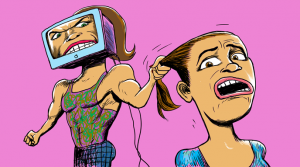
munication technologies such as email, instant messaging, social media, online gaming, or digital messages or photographs delivered to cell phones has expanded rapidly over the previous decade(Cyberbullying, 2016). Cyberbullying is one of the most serious dangers associated with social media sites. One million youngsters have been harassed, intimidated, or otherwise cyberbullied on Facebook in the last year, and 90% of kids who use social media after experiencing cruelty online claim they have disregarded it, with 35% doing so on a regular basis. Ninety-five percent of kids who use social media and have witnessed cruelty on social networking sites believe others ignore it, and 55 percent say it happens regularly (Statistics – NVEEE, 2012). Long-term social media use has given rise to terms like “Facebook depression,” with cyberbullying playing a significant part.
Because of the amount of technology available to youngsters today, cyberbullying is becoming more common. Instagram, Twitter, and Snapchat are the most popular cyberbullying platforms among teenagers. It has become increasingly difficult to curb cyberbullying since parents and teachers are uninformed of when and where it occurs. Teens will say hurtful things to each other online, oblivious to the fact that what they say and post is forever. Teens used to feel comfortable at home, but now they might be victims of cyberharassment. Whether it’s through YouTube, WeChat, WhatsApp, or messaging, you’ll be able to do so. Cyberharassment is simple to come across no matter where you are, making it practically impossible to avoid.
According to a 2013 Pew Research survey, eight out of ten children who use social media now disclose more personal information than they did previously (Brenner, 2013). Their address, photographs, and phone number are all available. To protect children, personal information such as age, birthday, school/church, and phone numbers must be kept private. Women sent 80 percent of body-shaming tweets, as well as 50 percent of misogynistic messages, according to two 2014 studies (News, 2016). By leveraging websites that belong to specific organizations, cyberharassment can be used to effectively target another person or group. Bullying of climate scientists and campaigners is one example of this.
The main reasons for online harassment are political or religious beliefs, physical appearance race or ethnicity, gender, and sexual orientation. In some high-profile cases, online harassment has morphed into mass hate speech. Harassment has evolved into mass hate speech. The so-called #gamergate controversy ostensibly relates to debates around gender and cultural diversity in video games. In a related case, game critic Anita Sarkeesian and game developer Anita Sarkeesian have been subjected to online harassment on Twitter and Reddit. Sarkeesian, game developer Zoe Quinn, and game developer Brianna Wu reported being harassed to varying degrees on Twitter and Reddit. After the harassers published their home addresses, all three experienced varying degrees of disruption in their daily lives and were forced to leave their homes and cancel events. The harassers published their home addresses to threaten them and incite others to commit violence against them. (Burgess and Matamoros-Fernandez, 2016; Massanari, 2017; Matias et al. 2015)
Research
The Australian Nationwide Covert Bullying Prevalence Survey examined the cyberbullying experiences of 7,418 students (Cross et al., 2009). According to the data, cyberbullying rates increased with age, with 4.9 percent of Year 4 students reporting cyberbullying compared to 7.9 percent of Year 9 students. Bullying and harassment of others reduced with age, but increased with age, according to Cross et al. (2009). In comparison to 5.6 percent of ninth pupils, only 1.2 percent of fourth graders reported cyberbullying others.
With 42 percent of young people experiencing cyberbullying on Instagram, and 37 percent on Facebook, Instagram is the most popular site for young people to engage in cyberbullying. Snapchat came in third place with 31% of the vote. Despite the fact that study participants prefer YouTube over any other platform, video-centric social media accounts for only 10% of reported cyberbullying incidences (Enough Is Enough: Cyberbullying, 2021). Seventy-one percent of study respondents believe social media platforms aren’t doing enough to combat cyberbullying. (Annual Bullying Survey 2017, UK Study, Dropping the Label).
Harmful effects For youth and adolescents
Cyberbullying has a variety of consequences, but research shows that it has a bigger negative impact on children than on teenagers and adults. Adolescents are more vulnerable since their minds and bodies are still developing. “”Worry, melancholy, loneliness, dissatisfaction, and poor sleep are common in bullied children,” says Jennifer N. Caudle, a licensed family physician.
The majority of the time, cyberbullying goes unseen; the younger generation hides their bullying from others in order to avoid it from occurring and worsening. Cyberbullying affects anywhere from 20% to 40% of teenagers throughout the world. Teens gradually adjust their behavior and activities to become more withdrawn and quiet, but because the change is small, it can go unrecognized. “Cyberbullying will become a big problem in the future as young people’s use of the Internet and cell phones grows,” says Metin Deniz. Younger children, as well as teenagers, will feel more lonely and unhappy if no preventative steps against cyberbullying are taken, their eating and sleeping patterns will alter dramatically, and they will lose interest in routine activities.
These alterations will have an impact on their development and progress as adults. Younger children and adolescents are 76.2 percent less likely to have suicidal thoughts and acts, but other factors such as mental health, family care, and social ties can still put them at risk. When victims do not have anyone in their lives to assist them, their risk of suicide rises by 35 to 45 percent, and cyberbullying can exacerbate this. Young people tend to be more vulnerable to anonymous social media cyberbullying, maybe because they utilize these channels to seek validation from their peers. Abusive behavior on sites like ASKfm, Yik Yak, and Sarahah can feel especially powerful to young people, making them lose confidence.
Community Support
Several organizations have joined together to raise awareness, give protection, and propose solutions to this growing problem. Some groups try to provide information and preventative actions to help people avoid and effectively stop cyberbullying and online abuse.In August 2009, the anti-bullying organization Act Against Bullying started the CyberKind campaign to promote positive Internet use.

BeatBullying, YouTube’s first anti-bullying channel for teens, was created in 2007, with celebrity assistance to combat the problem. Alexis Skye Pilkington, then 17 years old, was discovered dead in her room by her parents in March 2010. She committed suicide, according to her parents, as a result of persistent cyberbullying. The attacks resumed shortly after her death. Members of the eBaums World began posting notes on the teen’s Facebook tribute page, expressing their excitement at her death and using banana images as their personal photos.
To protest cyberbullying and teasing, families and friends of the deceased children developed a Facebook page with a banana sign behind a red circle with a cut across it. In reaction to and in collaboration with the 2011 film The Bully Project, a grassroots campaign to eliminate cyberbullying was launched.” It’s a dictatorship. Their ambition is to create a “a nationwide campaign to end bullying, transform bullying into a culture of compassion and action, and transform the lives of children.
Reference:
Brenner, J. (2013, May 21). Part 1: Teens and Social Media Use. Pew Research Center: Internet, Science & Tech; Pew Research Center: Internet, Science & Tech. https://www.pewresearch.org/internet/2013/05/21/part-1-teens-and-social-media-use/
Cyberbullying. (2016). Pacer.org. https://www.pacer.org/bullying/info/cyberbullying/
Carlson, B., & Frazer, R. (2018). Social media mob: being Indigenous online. Macquarie University.
Defining “Online Abuse”: A Glossary of Terms. (2018, April 11). Online Harassment Field Manual. https://onlineharassmentfieldmanual.pen.org/defining-online-harassment-a-glossary-of-terms/
Duggan, M. (2017). Online harassment 2017.
Enough Is Enough: Cyberbullying. (2021). Enough.org. https://enough.org/stats_cyberbullying
Finn, J. (2004). A survey of online harassment at a university campus. Journal of Interpersonal violence, 19(4), 468-483.
Jones, L. M., Mitchell, K. J., & Finkelhor, D. (2013). Online harassment in context: Trends from three youth internet safety surveys (2000, 2005, 2010). Psychology of violence, 3(1), 53.
Social Media & Mobile Internet Use Among Teens and Young Adults (2010). https://files.eric.ed.gov/fulltext/ED525056.pdf
Statistics – NVEEE. (2012, July 31). NVEEE. https://www.nveee.org/statistics
News, B. (2016, May 26). Twitter abuse – ’50% of misogynistic tweets from women’. BBC News; BBC News. https://www.bbc.com/news/technology-36380247
Mataoros-Fernandez, A. (2017). Platformed racism: the mediation and circulation of an Australian race-based controversy on Twitter, Facebook and YouTube, Information, Communication & Society 20(6), pp. 930-946.
Vogels, E. A. (2021). The state of online harassment. Pew Research Center, 13.