Introduction
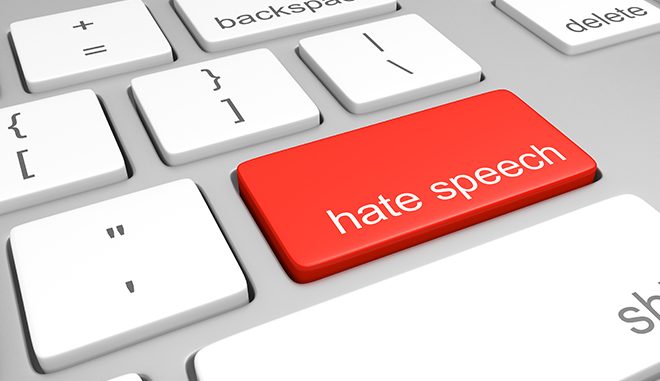
Hate speech began to be discussed in the early 20th century, when racism was rampant, and thus hate speech mainly was synonymous with “racial hatred” (Naidoo, 2016). Since then, the scope of hate speech has gradually expanded from race to other areas such as religion, partisan, gender, and more. With the rapid development of network information technology, the Internet provides a convenient way for the dissemination of hate speech, so hate speech has begun to grow exponentially. Nowadays, the online society is full of various types of hate speech. Some people take advantage of the large community of Internet users to spread extreme racial, political or personal hatred on the Internet. And the resulting racial discrimination, hate crimes and other aspects of the problem increasingly emerged in real life. At the end of 2019, the situation of hate speech, discrimination and xenophobia caused by COVID-19 has been increasing, and some people have used explicit language online to accuse Asians of carrying the coronavirus, which made them face tremendous pressure of discrimination and even violence threat. This article will take the online hate speech against Chinese and Asians on social network platforms after the outbreak of COVID-19 as an example by analyzing the dissemination characteristics and consequences of online hate speech to discuss the treatment of online hate speech and the issues between equal rights and freedom of speech.
What is hate speech?
Hate speech has a long history, and many tragedies in human history have been caused by hate speech. For example, Julius Streicher was hanged after World War II because he made speeches and wrote articles advocating hatred against Jews, which indirectly contributed to the tragedy of the Holocaust. The world-shaking genocide in Rwanda in 1994 killed an estimated 930,000 people, all caused by hate speech (Fino, 2020). What is hate speech? Many scholars have tried to define the term systematically, but a generally accepted definition has not yet emerged. The main reason is that the line between speech being “offensive” or speech conveying “hate” is blurred and influenced by subjective consciousness (Tontodimamma et al., 2020). However, according to existing research and the formulation of laws, hate speech is a kind of speech that causes hatred and discrimination among groups based on identity characteristics such as ethnicity, race, ethnicity, gender, religion, etc., guided by hateful intent. The scope of groups involved in hate speech will continue to expand with the changes in society, but it is worth paying attention to that these groups are all vulnerable groups protected by law.
Online hate speech
In recent years, the Internet has completely changed the way people communicate with each other and receive information, so hate speech has gradually moved from real society to online society. The spread of hate speech on the Internet has some new characteristics. First, the Internet provides a convenient way to spread and diffusion of hate speech. It breaks through regional and time constraints, greatly expanding the scope and audience of information dissemination, making it more likely to cause clustering behavior. Secondly, the expression forms of hate speech on the Internet have become more diverse. The blending of text, video and meme interferes with people’s judgment, making it difficult for people to distinguish whether the information is offensive or harmless. Finally, the threshold of online speech is low, and anonymity makes it difficult to hold specific individuals accountable. The Internet provides a relatively free platform for people to make their voices heard. However, when hate speech becomes a general atmosphere of public opinion, and social media becomes a tool for carrying and spreading hate speech, more people begin to question and reflect, is it correct to tolerate all kinds of discriminatory speech without any bottom line? In May 2016, the European Commission announced that it would cooperate with online platforms with large user bases such as YouTube, Facebook, Microsoft, Twitter, Google, etc., whose purpose is to regulate and control illegal online hate speech. The companies have jointly signed a “code of conduct” that said they would block and delete relevant hate speech within 24 hours of receiving a report (Kharpal, 2016). However, relying on these does not entirely ban online hate speech. At the end of 2019, COVID-19 had had a severe impact on the social environment around the world, and online hate speech had an intensified trend.
Online hate speech under COVID-19
Since 2020, the negative impact of COVID-19 on the economy and society of various countries has become increasingly prominent. Lockdown measures were imposed in many countries or regions, forcing millions of people to stay at home. Therefore, social platforms have become important objects for people to obtain information and meet their social needs. However, as users spend more time online, social media platforms like Twitter, Facebook, Tik Tok, and others have become the main arena for nourishing hate speech, amplifying friction and prejudice. In such an environment, Asians face tremendous pressure of discrimination, language threats, and even physical harm in some countries. L1ght, a company that uses artificial intelligence to screen for online hate speech, released a report after analyzing millions of websites, social platforms, chat forums and gaming sites since December 2019. The report states that the use of the social networking platform “Twitter” has grown dramatically after the COVID-19 outbreak, while hate speech against China and Chinese citizens on the platform has surged by 900% (L1ght, 2020). Some Twitter users have accused Asians of being carriers and spreaders of COVID-19, even though the pandemic affects people of all races. Hashtags such as “kung fu flu” and “Chinese virus” became extremely popular among Twitter users. In addition, with the proliferation of online hate speech, prejudice and bullying among children are on the rise. L1ght reported a 70% increase in hate speech among kids and teens during online chats (L1ght,2020).
Some people spread extreme hatred on the Internet, which is reflected in real life. NBC New York reported that on a train in Brooklyn, New York City, a black man yelled at an Asian man to “Get out” and sprayed him with disinfectant from the front (Avalos, 2020). The New York Post reports that an Asian woman walking with her two children in Manhattan was unprovoked by a surly suspect who shouted, “go back to your country.” (Celona & Garger, 2021). According to the latest statistics released by Stop AAPI Hate, a US non-profit organization that fights discrimination against Asian-Americans, the number of Hate crimes against Asian-Americans in the US from March 19, 2020, to December 31, 2021, exceeded 10,000 (More, 2022). Looking back in history, the COVID-19 pandemic is not the first time an infectious disease has inspired hate speech, discrimination and racism. An important reason for the emergence of hatred is the fear of the unknown. The lack of information about the virus has left many people anxious, and anxiety can increase prejudice and xenophobia. Since the development of COVID-19, people who want to end the damage to the world economy as soon as possible and return to normal life need scientific and effective response measures, and countries also need to reach friendly and cooperative relations. On May 8, 2020, UN Secretary-General Antonio Guterres called for global solidarity to stop hate speech related to COVID-19 and also called on social media, politicians and others to shoulder their responsibilities (Guterres, 2020).

The impact and treatment of online hate speech
The spread of online hate speech has brought many serious consequences. Because information on the Internet is permanently stored, many highly invasive hates speech can cause lasting harm to the victim groups and individuals. More importantly, this will make the dominant group in the aggressive position more dominant. In contrast, the disadvantaged group will be silent under pressure, thus deepening the damage to the group’s feelings and further marginalizing some groups. Then there is the impact on real life activities. The close connection between real space and cyberspace will make people bring online emotional implications to real life. Thereby constructing people’s prejudice against some groups and even causing violent behaviors in real life, making society have hidden dangers. In recent years, many tech companies have begun exploring ways to deal with online hate speech, from keyword blocking and language filtering to algorithmic and human censorship (Gorwa et al., 2020). However, this does not entirely prevent the generation and spread of online hate speech.
Online hate speech and freedom of speech
Hate speech manifests unequal power relations, and the complex balance between defending human equality and freedom of speech has always been a hot topic of concern (Flew, 2021). Since the beginning of human society, freedom of speech has been the highest pursuit of all people and the highest goal that all countries around the world want to achieve. New media has given people greater freedom of speech than before, but if speech itself violates the dignity of individuals and groups, causes conflicts and hatred between social groups, and causes harm to social order, freedom of speech will lose its original meaning. Some argue that online platforms need to regulate hate speech better and restrict some speech. But some opponents say that it will damage the diverse discourse space and hinder positive values and social progress (Apalara, 2017). For example, online real-name systems and the publication of internal operating rules on the Internet seem to be one of the solutions to hate speech. However, the exposure of identities not only makes users worry about their privacy but also fear that they will be punished for publishing their speeches. The announcement of some internal rules by Internet companies will also damage the interests of Internet operators, thus hindering the progress and innovation of Internet companies. Therefore, it does not make sense to address the problem of online hate speech by increasing transparency. It is an eternal topic to coordinate the relationship between equal rights and freedom of speech.
Conclusion
In an orderly society, everyone has the right to be free from discrimination and violence but hate speech challenges this right. It undermines social cohesion and erodes society’s shared values by stirring prejudice. The Internet provides a compatible platform for the existence and dissemination of all kinds of information, but it also intensifies discrimination and deprives some groups of the dignity they should enjoy in society, thus affecting the social integration of some groups. Some people in the dominant position in the social structure may not be sensitive to hate speech, but the oppression of disadvantaged groups such as racial minorities, women and sexual minorities is all around us. Just as COVID-19 is a public health issue, not a race issue, but some of the stigmas against Asians are likely to continue due to online hate speech (Gover et al., 2020). Flew (2021) states that hate speech itself does not incite public discrimination and violence, although the language expressed is often sarcastic or emotional. The language itself is not the main focus of hate speech, the psychology of hate is. The psychology of hatred is not temporary anger but a long accumulation of contempt. We need to learn from some of the incidents and realize that preventing and addressing hate speech is an important task of our time. In the age of new media, addressing hate speech requires the media, law, technology and educators to work together to find the best solution.
Reference
Apalara, R. (2017). Striking a balance: Freedom of expression and the prohibition of hate speech and offensive remarks. SSRN.
Avalos, G. (2020). Irate subway passenger sprays Asian man with air freshener over coronavirus concerns. NBC New York. Retrieved from https://www.nbcnewyork.com/news/coronavirus/irate-subway-passenger-sprays-asian-man-with-air-freshener-over-coronavirus-concerns/2316216/
Celona, L., & Garger, K. (2021). Brute punches Asian woman, screams “go back to your country” in unprovoked NYC attack. New York Post. Retrieved from https://nypost.com/2021/08/22/brute-punches-asian-woman-in-unprovoked-nyc-attack/
Fino, A. (2020). Defining Hate Speech: A Seemingly Elusive Task. Journal of International Criminal Justice, 18(1), 31–57.
Flew, T. (2021). Regulating platforms. Cambridge: Polity, pp. 91-96.
Guterres, A. (2020). Appeal to address and counter COVID-19 hate speech. Retrieved from https://www.un.org/sg/en/content/sg/speeches/2020-05-08/appeal-address-and-counter-covid-19-hate-speech
Gover, A. R., Harper, S. B., & Langton, L. (2020). Anti-Asian Hate Crime During the COVID-19 Pandemic: Exploring the Reproduction of Inequality. American Journal of Criminal Justice, 45(4), 647–667.
Gorwa, R., Binns, R., & Katzenbach, C. (2020). Algorithmic content moderation: Technical and political challenges in the automation of platform governance. Big Data & Society, 7(1).
Kharpal, A. (2016). US tech giants like Facebook could face new EU laws forcing them to tackle hate speech. CNBC. Retrieved from https://www.cnbc.com/2016/12/05/us-tech-giants-facebook-illegal-hate-speech-face-new-eu-laws.html
L1ght. (2020). L1ght releases groundbreaking report on corona-related hate speech and online toxicity. Retrieved from https://l1ght.com/l1ght-releases-groundbreaking-report-on-corona-related-hate-speech-and-online-toxicity/
More, M. (2022, March 8). National survey from ‘stop AAPI hate’ reports over 10,000 hate incidents in under 2 years. NBC Southern California. Retrieved from https://www.nbclosangeles.com/news/local/national-survey-from-stop-aapi-hate-reports-over-10000-hate-incidents-in-under-2-years/2843500/
Naidoo, K. (2016). The origins of hate-crime laws. Fundamina: a Journal of Legal History, 22(1), 53–66.
Tontodimamma, A., Nissi, E., Sarra, A., & Fontanella, L. (2020). Thirty years of research into hate speech: topics of interest and their evolution. Scientometrics, 126(1), 157–179.