
How privacy concerns are threatened in the data age
Introduction
With the slow development over time, the economic form of the digital age has been redefined in terms of data value, and data has become a critical factor in the development of new technologies. High-speed, convenient, and knowledgeable modern services have led to a higher level of personal data utilization (2022). The shared nature of the digital age has led to the use of data to enhance the value of data. However, at the same time, the problem of data security has also begun to emerge, and the violation of personal privacy has been occurring. In the era of the digital age, digital information technology has the characteristics of fast information transmission, ample information storage and long storage time. Due to these characteristics, the danger to citizens’ privacy through digital information technology in the era of the digital age is constantly increasing. In the era of the digital age, there are three main violations of personal privacy through technology: obtaining personal information through data, spreading the privacy of others through data, and affecting the daily life of individuals through data. Most invasions of privacy include one or more of these types.

Retrieved from https://quizizz.com/admin/quiz/6077060824457a001bb969b7/internet-privacy
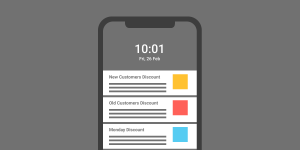
On the one hand, the public demand for personal data protection is getting stronger in the current era. On the other hand, is a high reliance on data resources in various industries (2022). It is undeniable that human society has changed from the industrial type society in the past to the data type era. As a fundamental resource for social development in the new era, the innovation, sharing, dissemination, and creative use of data can dramatically increase productivity. However, sometimes unknown harassing phone calls, mandatory pop-up ads that cannot be turned off on mobile apps, and dazzling and confusing app usage permissions allow people to be distraught. After entering the era of the digital age economy, we have to be troubled by the problems in data security while enjoying the convenient life brought by data development. This blog will discuss how online companies use big data technology to get users’ personal information to push customized content ads for users in the digital era, which saves users’ time by eliminating the search step. However, sometimes the behaviour of luring users to consume is also worrying, and users face the fear of having their information exposed (2022). Analyzing users’ personal information makes it possible to give first-time users a price advantage, such as more discounts or more suitable package options. However, sometimes data analysis can also flag users who frequently purchase the same item, making them often spend more money on the item. Thus, new and existing users need to spend different prices to buy the same product, creating differentiation and unfairness.
Customized Push
Retrieved from https://deepstash.com/idea/173657/the-kind-of-push-notification-consumers-want
Thanks to data algorithms, Internet platforms can increasingly capture users’ choices, help people get information more efficiently and accurately, and attract users’ attention. One of the essential advantages of data algorithms is that they can form a unique push mechanism for users to complete customized information push, thus realizing the value of data. Each user’s knowledge structure and interests are different (Laura O’Brien & Micek, 2021). Through big data technology, information can be pushed for the user’s characteristics, which will enhance the user’s feeling of use. As the information collected by the digital age becomes more and more comprehensive, the effect of data based on user customization push will continue to strengthen. According to incomplete downtime, the current customized content based on data algorithms has accounted for about 70% of the entire Internet information delivery board (2022). Data algorithm recommendation gradually becomes the mainstream use tool of each Internet platform. However, the adverse effects such as vulgar and poor quality customized content pushing, “big data discriminatory pricing,” and other adverse effects also come to the fore.
I believe many people have encountered a similar situation: just when the family chatted about food for dinner, various apps began to push restaurants, ingredients, etc. frequently. Just talking to friends about their fitness plans, the next thing you know, online shopping platforms are recommending fitness supplies. How can these mobile apps understand our specific needs, are our phones already being monitored? Technically speaking, cell phone listening is possible at the physical level. Even if we lock the screen, the phone can continue to record. Nevertheless, the high cost, inefficiency, and legal risks that come with it are unacceptable to network companies. So since no app can monitor us, how can the app do actual pushing according to the user’s needs. According to data analysis, we know that the app can generate a 360-degree portrait through data resulting from an accumulation over the years. In addition, there is another result of the convergence of data obtained from different channels (Merler & Bruegel, 2022). The accuracy of the portrait is finally achieved through extensive data modelling and analysis of our online shopping records, browsing records, search records, and even the list of downloaded apps. This is because the source of data may not be the current app but from other apps on the phone. In addition to aggregating the information used together, the data algorithm will also associate the user’s friends list and other people in the same area where the user is located. When the users in this area have some actions, it may also become a direction of pushing advertising. For example, some people in the same area start to buy some medicine for rhinitis, some start to pay attention to air quality, and by summarizing the air data of the current area, we can conclude that the air quality in the current area is poor, and start to recommend ads for filtering masks. Even if the data originally does not belong to personal information, after a large number of convergence, it can also be summarized through the data algorithm to find out the deep connection between things, which is why cell phone apps can realize user portraits accurate customized push.
Big data discriminatory pricing
The “big data discriminatory pricing” generally refers to the Internet company using big data technology to summarize people (2018), analyze users’ personal information through data algorithm modelling and processing, make exclusive user portraits based on data, and implement the same thing with different prices for users who are not priced sensitive or who often buy the same goods, to achieve the most benefits for themselves.
There are various forms of “big data discriminatory pricing” and three main ways of realizing it.
1:Pricing differences according to different devices, such as the price difference between Apple users and Android users for online shopping.
2: Pricing differences based on the consumer’s location, such as higher price quotes for users far from the store.
3: Differential pricing according to the user’s consumption frequency. For example, the stronger the consumption frequency of the user’s ability to afford the price.

Retrieved from https://www.facebook.com/Big-Discount-HK-573305383350371/
With the development of technology and algorithm iteration, we will get a more profound user portrait, such as the user’s price sensitivity, by analyzing all the primary data. General e-commerce platform in the use of data algorithms to deal with the problem is not simply based on the number of goods purchased by the user to determine the number and price, but will be based on the price ranking of the user to buy goods, such as in the user’s shopping cart has what kind of ranking of goods, according to this ranking of goods price floating (Schreiner, 2020). In addition, more sophisticated algorithms will also be based on the length of time the user has been following the product from being added to the cart to checkout and even include information such as whether the user has clicked, favourited or used coupons in the past. It is undeniable that different users have different requirements for the price of the same item and the flexibility of the service features. However, the merchant’s intentional fraud in the subjective sense also leads to the loss of the consumer’s property in the objective sense, which is a classic case of privacy issues being violated in the era of the digital age.
We live in a digital era, which means that the distance between all people is gradually drawn closer. The past “stranger society” is gradually far away. The emergence of the Internet has slowly reduced the high cost of communication caused by mutual distrust. In recent years, the news of “big data discriminatory pricing” has aroused widespread public opinion, triggering a crisis of trust in the consumer community for the Internet companies involved and reducing users’ trust in the online economy and related companies (2022). This corporate culture of pursuing profits by any means necessary has led to a situation where “bad money drives out good money” in the market, where the quality of products and services is no more extended care but rather the convenience of algorithms, capital advantages, and market position to use loopholes to gain profits. This approach affects the economic model of the market, leading to a waste of social resources and stagnating the development of data technology itself.
Our governance of the “big data discriminatory pricing” issue also brings us to the more profound question of thinking about data technology’s progress and society’s development. Data itself is a neutral tool, but the use of data should have its value. The “big data discriminatory pricing” is an obvious example of data and rules against each other. We enjoy the convenience of data technology, and the application of technology and life will deviate from each other. This deviation requires that governors, in addition to their continuous sensitivity and attention to data technology, also require efforts to plan for the relevant corporate culture and ethical governance to counter the unreasonable urge to chase profits.
Conclusion
With the use of data, the data analytics technology initially used to provide better service to people has had the opposite effect as capital and ethics have changed. Customized service information pushes, and price discounts themselves are only designed to help users save time and reduce the monetary cost of trying new things. However, now it is being used as an unethical technology to overly pry into users’ privacy and bring in more revenue.
Data technology relies on the ease of cyberspace, with its fast dissemination, anonymity and tolerance. It is being integrated and transformed into our daily lives at a tremendous pace, but with this ease of living comes the concern of privacy. The widespread use of technology in the data age has led to a significant change in the scope and definition of privacy (2021). Issues such as customized ad push and “big data discriminatory pricing” that were not discovered in the past are now officially considered. In today’s data era, privacy has become data-driven and value-driven. In the age of big data, the conflict between personal privacy and ethical issues is not just once. However, it is a product of the evolution of privacy and ethical issues at the beginning of the original Internet. From the actual privacy issues at the advent of the Internet further rose to the point of individual rights, the decline of moral binding developed into a lack of responsibility of the government and enterprises, and the conflict between personal and public interests affects social justice. These problems are caused by the logical loopholes generated by the data era itself, the mismatch between the new technology and the original ethical norms and the lack of ethical awareness of the subject’s privacy protection by enterprises from all walks of life. When we are faced with such a moral dilemma, the solution to the privacy protection problem in the significant data era should start from the ethics of responsibility, pay attention to the risks brought by data, advocate for the government and enterprises to work together to strengthen moral ethics, and sound national legal constraints on top of complying with the rules of privacy protection in the significant data era, and work together to make progress together in order better to protect everyone’s privacy in the new data-based age.
Reference
Big Data and price discrimination. (2018, April 26). Retrieved April 7, 2022, from https://equitablegrowth.org/big-data-price-discrimination/
Challenges of the digital age for privacy … – researchgate. (n.d.). Retrieved April 7, 2022, from https://www.researchgate.net/publication/343608108_Challenges_of_the_digital_age_for_privacy_and_personal_data_protection
Digital age: Is our privacy under threat? | ohchr. (n.d.). Retrieved April 7, 2022, from https://www.ohchr.org/en/stories/2018/11/digital-age-our-privacy-under-threat
Human rights in a Digital age. (2019, December 11). Retrieved April 7, 2022, from https://www.cam.ac.uk/cammagazine/humanrightsinadigitalage
Laura O’Brien@lo_brie View all posts by Laura O’Brien →, & Micek, P. (2021, January 25). To protect privacy in the Digital age, world governments can and must do more. Retrieved April 7, 2022, from https://www.accessnow.org/un-privacy-resolution/
Merler, S., & Bruegel. (n.d.). Big Data and first-degree price discrimination. Retrieved April 7, 2022, from https://www.bruegel.org/2017/02/big-data-and-first-degree-price-discrimination/
Schreiner, P. (2020, February 18). Is privacy at risk in a Digital World? Retrieved April 7, 2022, from https://isg-one.com/articles/is-privacy-at-risk-in-a-digital-world
Symposium: Human rights in the digital sphere. (n.d.). Retrieved April 7, 2022, from https://www.coe.int/en/web/freedom-expression/human-rights-in-digital-sphere
Why Data Security and privacy in the Digital age are crucial: Imperva. (2021, January 28). Retrieved April 7, 2022, from https://www.imperva.com/blog/why-data-security-and-privacy-in-the-digital-age-are-crucial/