Introduction
In March 2020, at the beginning of the Covid-19 burst, former President of the US, Donald Trump, post a tweet with a hashtag: #Chinavirus (ABC, 2021). It is the time that Chinese people were experiencing their darkest, most difficult time throughout these years, with nobody having figured out how coronavirus has been formed yet. Trump’s improper remarks instantly ignited the fuse. His tweet has immediately show on the world trend Twitter, and it also raised a bunch of users using this hashtag. His action provides people with an object, which is China, that can blame and vent their anger, especially those who already have anti-Asian attitudes. Hate speech towards Asian increased sharply. According to the analysis, there are 777,852 pieces of tweets with #Chinavirus and above half of them have shown hate speech and racism towards Asians (Hswen, Xu, Hing, Hawkins, Brownstein, & Gee, 2021). These online hate speeches even happened in the real world, in which “more than 2800 reports of hate incidents” are reaching the highest level of hate crime over these years (BBC, 2021). Angry people lose their boundaries between free speech and hate speech, as well as the former President, utilized his influences to incite racism against Asians. However, until now, this racism hashtag is still usable, and thousands of users post under this hashtag. This racist label seems to be the same as Covid-19, instead of disappearing, it is intensifying and continuing hurt innocent people.
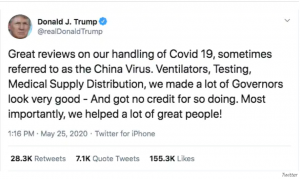
Images retrieved from Sippell, 2020, 12 Trump Tweets About the Coronavirus That Are Super Awkward Right Now (Photos)
Free Speech VS. Hate Speech.
Users with different perspectives and beliefs may ask different questions: Why this hashtag has not been banned yet? Is #ChinaVirus a kind of hate speech? All these questions lead to a controversial topic, which is how the platform deals with the boundaries of freedom of speech and hate speech within social media. Nowadays, social media has already become a part of our life. This free zone not only brings users infinite information, but also anxiety and harm. Online hate speech is becoming a widespread and serious problem all over the world. The report shows that Asians experience a 2,270% increase in online hate speech during the pandemic (Wintle, 2021). This may seem exaggerated, but if we look at the definition of hate speech, this data becomes reasonable under this context. Scholars defined hate speech in this sentence: “speech that ‘expresses, encourages, stirs up, or incites hatred against a group of individuals distinguished by a particular feature or set of features such as race, ethnicity, gender, religion, nationality, and sexual orientation’” (Flew, p91, 2021). Reflecting on how many Asians have been hurt and harassed after Trump’s tweets post, it is no doubt to say his words are hate speech toward the Chinese. After that, WHO soon made announcement, that people should not name pathogens with nationality and place to “minimize the unnecessary negative effect on nations and economies and people” (Bushman, 2022). Still, many people use this hashtag to describe Covid-19, and many people use this hashtag to show their racism and anger towards Chinese people, because, without specific words that show hate, Twitter will not ban these tweets. From Twitter’s perspective, it is reasonable for users to use this hashtag based on the platform’s core idea: Freedom of Speech. This is what Twitter says in its help center: “Twitter’s mission is to give everyone the power to create and share ideas and information, and to express their opinion and beliefs without barriers. Free expression is a human right” (Twitter, 2022).
The Help Center also mentions how the platform deals with Hate Speech, and based on how serious and violating the hate speech is, the punishments also have levels. Instead of banning violated accounts, Twitter chooses to kindly treat them. The mild punishment will only “downranking Tweets in replies”, “making tweets ineligible for amplification in Top search results” and “requiring tweets removal”, while the hard punishment is “suspending accounts” (Twitter, 2022). Compare to users that have been psychologically, even physically harmed by hate speech, these punishments seem quite gentle and simple. And Twitter, instead of punishing negative behaviors on the platform, maximally keeps their freedom of speech.
If these rules are Twitter’s treatment of the boundaries of free speech and hate speech, then here comes a contradictory issue: Who’s freedom of speech and human rights does Twitter is protecting? On the one hand, the platform claims it protects every user’s right to speak and provides them a free zone. On the other hand, because of the freedom of speech, some users say words without consideration, and violated users are hurt by racism and hate speech, yet platforms give no intervention. Obviously, Asians were not been protected by the platforms, and as a platform that claims it will protect every user’s human right, Twitter seems failed to protect Asian’s human rights. It is not the first time that this mainstream platform takes sides with the privileged group. Twitter has also remained silent about the incident with Indigenous Australian football star Adam Goodes. When he performed an Aboriginal dance normally and confidently, his actions were seen by racists as an expression of his disrespect for whites. Opponents started to express hate speech on Twitter and spoofing Goodes and give booing when he played football. The platform did not take action against this series of racist hate speeches, and these speeches cause a serious impact on the innocent Goodes until he retired in 2015 and close his Twitter account in 2016 (Matamoros-Fernández, 2017). Again, racialized identities on mainstream social media platforms were not been treated equally with privileged groups, and Twitter’s core idea that “protect users’ human rights” also seems not to apply to everyone.
Algorithms
What is even more irritating is that if we carefully analyze this event, we will find that the platform has not only failed to stop the spread of this toxic content but has instead helped it widespread. Evidence shows that, as the platform keeps the hashtag #ChinaVirus, its algorithms will help introduce similar content to users who tend to be interested in this type of content, in another word, racist hate speech will be promoted to racists people and will be used more often. An expert from New York University explains that “as platform algorithms pick up on engagement around this toxic content, they recommend increasingly more extreme content to users until their feeds are dominated by nothing but the most extreme stuff” (Reja, 2021). Algorithms are applied by the platform to analyze users’ favor of the content and recommend similar content that users may like about. However, algorithms also recommend toxic content if users often search these toxic words, which amplifies the impact of racism content and makes it widespread (Matamoros-Fernández, p933, 2017).
Hashtag
Moreover, #ChinaVirus is a hashtag, which means this hashtag helps categorize related content. For instance, most people called Coronavirus Covid-19, and what they called “China Virus” is the same thing as Covid-19. By adding a # in front of “ChinaVirus”, it perfectly separates this toxic name as well as racist hate speeches, away from the normal name. Twitter’s Help Center also explains hashtag’s power: “Clicking or tapping on a hashtagged word in any message shows you other Tweets that include that hashtag” and “Hashtagged words that become very popular are often trending topics” (Twitter, 2022). Yet, within tips that Twitter provides for using the hashtag, it is not explicitly that racist words should not be used as a hashtag.
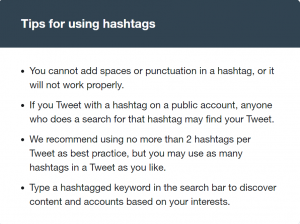
Images retrieved from Twitter Help Center, 2022
Content Moderation
Furthermore, Twitter’s content moderation did not filter these toxic words out before they get released. Content moderation is an important process before any content is released. The system will moderate every content and filter the content toxic words, pictures, audio, and video. Content moderation aims to ensure the contents are legal and positive and contribute to keeping users who are willing to receive these contents. (Roberts, p34, 2019). However, the moderation system seems did not stop Trump’s racist tweets, as well as others who also post this racist hashtag, if that is what the platform says is legitimate and positive. In conclusion, as the big environmental changes, in dealing with racism issues and colored people’s rights, the system that does not consider diversity issues is gradually exposing its loopholes and ambition to “interests first”.
The Big Environment
Indeed, it is unrealistic to talk about an operation without interests, and “interests first” is the actual core idea that all platforms follow. And what they said “freedom of speech” and “protect human rights” are just aims at groups of people that can bring them interests. Twitter will not care about #ChinaVirus, because it clearly understands that most of the Chinese do not have access to Twitter because of the firewall and they cannot fight back and report these hate speeches. Moreover, users who spread out hate speeches toward Asians are exactly the interest group that they are protecting, at least during Trump’s administration. These fast-growing mainstream media mixed the “idea of capitalism as the means to guarantee freedom of action” (Matamoros-Fernández, p934, 2017) into its design prototype, and they truly understand, that without the help of capital power, the platform cannot develop to its current glory in a short time. It may not be the original intention, but the platform follows the political framework in the big environment and seduces users to think in that way. During former President Trump’s ministration, the relationship between China and America has fallen to the lowest that has ever been, as well as Asians’ situation in the US has never been so dangerous. Besides this racist hashtag #ChinaVirus, the banned on TikTok and WeChat, fake news on 5G and Covid-19, and “attacks on Asians in 16 of America’s largest cities soared by an unprecedented 164% during the first quarter of 2021” (Farivar, 2021) was happened one after another during the past two years. The occurrence and reporting of these incidents have inadvertently encouraged racism to more recklessly harming minorities because of the grand context. And the freedom of speech promised by social networking sites has turned into a pretense of publishing hate speech in the general environment.
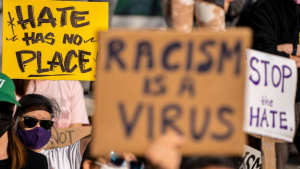
Image retrieved from Reja, ABC News, 2021
In General
People like social media, because it does provide a place for everyone to say something. To Twitter, the majority are its main stakeholders, and they should have the ability to share their opinions. However, what the former President did is to make it a political means to provoke disputes between nations. Twitter failed to treat different interest groups equally under the special context, as well as fix the boundaries between freedom of speech and hate speech. This situation brings the platform dilemma of not only how to deal with free speech and hate speech, but also how to balance the capital and public. In Jan 2021, after Trump failed the election, some radical supporters of him “violently stormed the Capitol” because of his radical comments about his defeat on Twitter. Again, his speech and his influences raise a huge impact on innocent people. And for this time, Twitter banned his account permanently (Twitter, 2021). Reasons that cause this permanent suspension may have many, such as his speech inciting violence, or it could be he is not president anymore. We do not know if hate speech against Asians can end here, but all we know is, that true freedom of speech is not based on expressing hate on others, even if it is endowed with the supreme right. And social media, a platform that carries the opinions of countless people, cannot promise everyone absolute freedom as well.
References
BBC News. (2021). Covid ‘hate crimes’ against Asian Americans on rise. Retrieved from https://www.bbc.com/news/world-us-canada-56218684
Bushman, B. (2022). Calling the coronavirus the ‘Chinese virus’ matters – research connects the label with racist bias. Retrieved from https://theconversation.com/calling-the-coronavirus-the-chinese-virus-matters-research-connects-the-label-with-racist-bias-176437
Farivar, M. (2021). Attacks on Asian Americans Spiked by 164% in First Quarter of 2021. Retrieved from https://www.voanews.com/a/usa_attacks-asian-americans-spiked-164-first-quarter-2021/6205172.html
Flew, T. (2021). Regulating platforms. Cambridge: Polity Press. pp. 91-96.
Hswen, Y., Xu, X., Hing, A., Hawkins, J. B., Brownstein, J. S., & Gee, G. C. (2021). Association of “#covid19” Versus “#chinesevirus” With Anti-Asian Sentiments on Twitter: March 9-23, 2020. American journal of public health, 111(5), 956–964. https://doi.org/10.2105/AJPH.2021.306154
Matatoros-Fernandez, A. (2017). Platformed racism: the mediation and circulation of an Australian race-based controversy on Twitter, Facebook and YouTube, Information, Communication & Society 20(6), pp. 930-946.
Reja, M. (2021). Trump’s ‘Chinese Virus’ tweet helped lead to rise in racist anti-Asian Twitter content: Study. Retrieved from https://abcnews.go.com/Health/trumps-chinese-virus-tweet-helped-lead-rise-racist/story?id=76530148
Roberts, S. (2019). Behind the Screen: Content Moderation in the Shadows of Social Media. New Haven: Yale University Press.
Sippell, M. (2020). [Images]. 12 Trump Tweets About the Coronavirus That Are Super Awkward Right Now (Photos). Retrieved from https://www.thewrap.com/donald-trump-coronavirus-tweets/
Twitter. (2021). Permanent suspension of @realDonaldTrump. Retrieved from https://blog.twitter.com/en_us/topics/company/2020/suspension
Twitter. (n.d.). Hateful conduct policy. Retrieved from https://help.twitter.com/en/rules-and-policies/hateful-conduct-policy
Twitter. (n.d.). How to use hashtags. Retrieved from https://help.twitter.com/en/using-twitter/how-to-use-hashtags
Wintle, T. (2021). Anti-Asian hate speech online surged 2,770% amid pandemic, report shows. Retrieved from https://newseu.cgtn.com/news/2021-11-16/Anti-Asian-hate-speech-surged-online-amid-pandemic-report-shows-15f77VauL2U/index.html