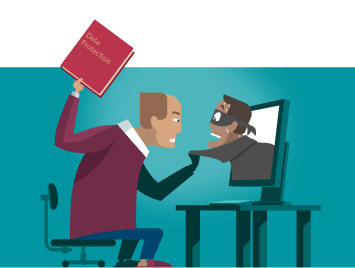
Introduction
The right to privacy has long been recognized as a vital aspect of human life. However, data privacy is becoming increasingly important as more data is processed and uploaded on the internet. The term “data privacy” relates to how information should be handled based on its subjective value. People have a lot riding on the confidentiality of personal data, and it isn’t only a business issue. The more you learn about it, the better you’ll be able to defend yourself against some hazards. The digital age, also known as the Information Age, is defined as a collection of digital solutions such as virtualization, online services, artificial intelligence applications, algorithms, and information frameworks that define the specific attributes of the modern environment, such as internationalization e-communications, and knowledge management. According to Berman and Mulligan (2018), in the contemporary digital age, the concept of data privacy is primarily applied to critical private data, also known as personally identifiable information (PII) and personal health information (PHI). Privacy refers to a person’s or a community’s ability to separate themselves or details about themselves and show themselves differently. Furthermore, the technology of the digital era can violate several key principles of information security and privacy by providing uncontrolled access to data and personal data stored at various nodes of the global network (Flew, 2019). The purpose of this research paper is to identify certain unique characteristics of personal information security, summarize the main issues of the digital age for user security and privacy in relation to a case study of the massive data breach at Facebook in 2019, the consequences of these privacy threats, and finally discuss the measures that can be taken to minimize these threats.
According to Goggin et.al. (2017), any threat or sequence of threats to illegally use or publicly release Private Information plundered from an Assured for the intent of securities, demanding money, or other intangible or tangible assets significance out of an Assured is considered a threat to privacy. When we talk about risks to confidentiality in the digital age, we’re referring to the dangers posed to personally identifiable information by technology bullies who always have a reason for doing so. This occurs when a person’s private information is given to digital platforms, rendering it no longer private but open to all in the digital age. For a company, information privacy extends beyond its workers’ and customers’ personally identifiable information (PII). It also includes the information that enables it to function, such as exclusive development and research data or financial information that demonstrates how funds are spent in an organization (Flew, 2021). If the information that should be kept confidential falls into the hands of shady characters, unpleasant things happen. Such confidential information includes: financial information, medical and health details, social security number data, as well as sensitive and basic details like birthdates, addresses, and full names.
An image showing how the digital age is impacting our personal privacy
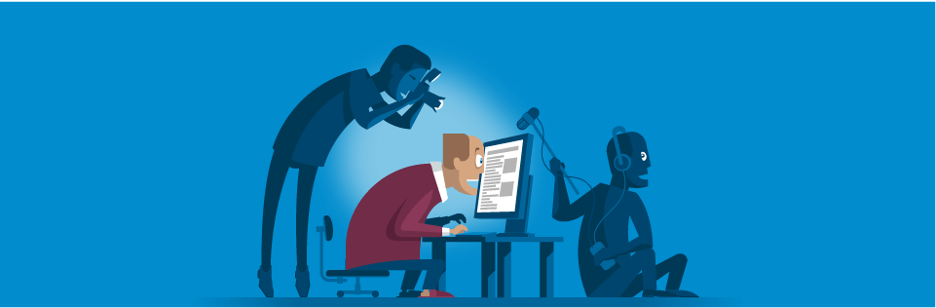
Source: (Okwe 2017).
In the case study, an anonymous hacker on a limited hacking platform freely disseminated Facebook user details, including phone numbers and sensitive information. 533 million Facebook users from 106 countries were exposed, including 32 million US subscribers, 11 million UK subscribers, and 6 million Indian subscribers (Holmes 2021). Each person’s full name, address, birth date, and even Facebook ID are included. In some cases, their email address is also included in their profile. Many entries were confirmed by cross-referencing known Facebook users’ phone numbers with the information set’s IDs, which was done by examining a sample of the hacked data. Also, according to an insider, they used the Facebook reset password data to double-check datasets. This could have revealed some of the user’s contact information partially. A social media company spokeswoman said that a security issue fixed in 2019 led to the hacking of the information. CTO of cybercrime intelligence firm Hudson Rock Alon Gal said that the disclosed information could provide important data to evil hackers who utilize users’ personal information or scam them into providing login details (Holmes 2021). A massive database including the personal information, such as phone numbers, of a large number of Facebook users would undoubtedly be used by malicious actors to launch cyber-attacks or hacking efforts. Information on hundreds of millions of Facebook users’ contact information was uncovered for the first time after a user on the same hacker site uploaded an autonomous robot that could offer the numbers for a price. Initial reports claimed the robot existed, which was later confirmed to be true. Everyone with even the most basic knowledge of data now has access to the entire dataset, thanks to the hacking platform’s release to the public.
An image showing Facebook data breaches of 2019
Source: (Holmes, 2021).
The phone numbers of a huge number of Facebook subscribers were discovered online, and this was not the first time. A weakness identified in 2019 violated Facebook’s terms and regulations, allowing the theft of millions of people’s contact information from its databases. According to Facebook, the problem was fixed in August of that year. After Cambridge Analytica violated Facebook’s terms and conditions by stealing the data of 80 million users, the social media giant promised to crack down on data-scraping in the run-up to the 2016 election. In terms of security, Gal said Facebook couldn’t do much to help those whose information was compromised because it was already in the public domain. However, he emphasized that Facebook would inform users so that they can be on the lookout for online scams or fraud involving their confidential information. As Gal put it, “When people sign up for a reputable company like Facebook, they’re entrusting them with their information, and Facebook is expected to maintain that data with the highest regard… If personal information about individuals is leaked, it is a huge betrayal of trust and should be treated” (Holmes 2021).
Consequently, questions were raised concerning the Facebook CEO, and the stock price plunged by 17%. In addition, he was asked to impose rigorous laws on the safety of users’ personal information. After this, users were informed that the access they had granted to various programs had been revoked and evaluated in the settings, as well as audit trails on the investigation of a security breach. Facebook, on the other hand, has promised to produce an app that would require users to remove all of their Facebook web search data. Despite Cambridge Analytica’s best efforts to improve its record, the company has been chastised for legal and widely accepted actions as routine components of internet promotion in both the federal and industrial sectors. According to ur Rehman (2019), Cambridge Analytica has been the subject of numerous baseless allegations in the past years. CA tasked a third-party auditor, Julian Malins, with investigating the accusations. The investigation, according to the firm, found that the allegations were unfounded. Customers and suppliers have fled CA because of the media attention, even though the company has always maintained that its workers acted ethically and properly, a belief that is now fully confirmed by Mr. Malin’s confession.
Measures to Enhance Privacy in a Digital Age
As we go into the digital age, securing our personal information becomes increasingly crucial since so much of our daily lives is now mediated via the internet. Numerous individuals get out of bed in the morning and check their phones for notifications before going about their day. It is a significant problem that can have long-term consequences for a company or institution and personal life. Data breaches can occur at any level of an organization, individual, or even government, and if your private or sensitive information is compromised, you could face a host of issues (Acquisti et al., 2020).
An image showing how to protect your digital privacy

Source: (Cepero, 2021).
Privacy may be protected in the digital age if individuals, businesses, and governments follow the following measures.
- Get an Internet Security Suite
Individuals, businesses, and governments should ensure that they purchase an online security package while signing up for an online service, as that will assist encrypt your data and make it more difficult for hackers to get their hands on it. Individuals and businesses alike might benefit from purchasing an internet security suite. Many ISPs, such as Spectrum, include a web security suite as part of their service (Hyliaka, 2021). Your device will be safer with the free internet security suite you’ll receive. It will protect your data and your gadget from illegal access and phishing assaults using this security suite. Even if you have to pay extra for an internet security suite, do so. When it comes to protecting your online privacy, several organizations charge an additional fee for their internet security package. Your personal information is essential, and you don’t want to lose it. It can cause significant harm, so make sure you choose an internet service provider that provides security and safety to avoid any harm.
- Perform Regular Vulnerability Assessments
To ensure their security, organizations should conduct frequent risk assessments (Spremić & Šimunic 2018). Many companies ‘ data integrity departments perform regular vulnerability assessments, such as once a year or monthly. As long as it doesn’t go on for too long, it allows the hackers to get familiar with the security teams’ new habits.
- Educate yourself and your employees
Businesses must educate their employees on security to protect their electronics. A cyber-attack, which may result in identity theft or the leakage of your company’s secrets, is the most common cause of privacy breaches. When people do not take online safety seriously, they are more likely to commit privacy violations.
- Beware of phishing attacks.
According to Karppinen (2017), human mistake is to blame for the vast majority of security failures. Phishing emails and hyperlinks should not be clicked on by anyone, even if they appear to come from a trusted source. If you receive an email from a sender you don’t recognize, delete it immediately since it may contain malicious code. Notify your security teams of any emails or URLs that appear suspicious to take appropriate action as soon as possible.
- Backup and encryption
Ensure that all gadgets are secured and regularly backing up your files to a protected cloud storage service. Your information is not jeopardized if an intruder compromises your device.
A person’s right to privacy is a major issue raised by technology in the processing of information. Even though we hope for a better future for our right to privacy, the outlook is bleak. User data harvesters have accumulated enormous power since the rise of the digital society and online accounts. The collection of user data may have some benefits, but there is an equal obligation to protect and secure any maintained personal data. The most valuable asset we possess is our identity. They’re a type of “identity capital,” a store of value. We have a right to anticipate that our personal information will be kept safe from theft and exploitation. Unfortunately, both shocking invasions of privacy and the wrongful use of personal data are all too common. Privacy invasions are far more common than we’d like to think. We’ve all had our personal information compromised in some way. Companies track customers to sell things, interest groups utilize social media to influence polls, and regimes strive towards omnipotence by abusing our identities. Online enterprises are generally multi-national and can operate undetected from across borders. It is impossible to rely on either tiny businesses or central governments regarding self-regulation.
Conclusion
The right to privacy in the digital era necessitates a global partnership to guarantee that everyone on the planet has the fundamental right to keep their personal information private. According to liberty, honesty, and civil dignity principles, practical recommendations for dealing with these issues can be developed. But the global community has a responsibility to create confidentiality-enhancing technologies that safeguard everyone equally. Online companies should be prohibited from obtaining all of their personal information without following regulations. Privacy and technology access should not be compelled onto unwitting users. For our protection, we must ensure that our personal information is not used for reasons other than those for which it was initially collected. The right things are being done, but it’s still a race to the finish line.
References
Acquisti, A., Brandimarte, L., & Loewenstein, G. (2020). Secrets and likes: the drive for privacy and the difficulty of achieving it in the digital age. Journal of Consumer Psychology, 30(4), 736-758.
Berman, J., & Mulligan, D. (2018). Privacy in the digital age: Work in progress. Nova L. Rev., 23, 551.
Cepero, R. (2021). ‘How to Protect Your Digital Privacy’, Retrieved 1 April 2022, from https://bleuwire.com/how-to-protect-your-digital-privacy/
Flew, Terry (2019) ‘Platforms on Trial’, Intermedia 46(2), pp. 18-23.
Flew, Terry (2021) Regulating Platforms. Cambridge: Polity, pp. 72-79.
Goggin, G., Vromen, A., Weatherall, K., Martin, F., Webb, A., Sunman, L., Bailo, F. (2017) Executive Summary and Digital Rights: What are they and why do they matter now? In Digital Rights in Australia. Sydney: University of Sydney.
Holmes A. (2021). ‘533 million Facebook users’ phone numbers and personal data have been leaked online’, Business Insider Africa, Retrieved 1 April 2022, from https://africa.businessinsider.com/tech/533-million-facebook-users-phone-numbers-and-personal-data-have-been-leaked-online/65sy87q
Hyliaka, S. (2021). Human rights in the digital age: Challenges, threats and prospects. Науковий юридичний журнал, 28(1), 16.
Karppinen, K. (2017) Human rights and the digital. In Routledge Companion to Media and Human Rights. In H. Tumber & S. Waisbord (eds) Abingdon, Oxon: Routledge pp 95-103.
Okwe C., (2017). ‘How the Digital Age is Impacting Our Personal Privacy’, Retrieved 2 April 2022, from https://medium.com/@cre8tivemediaservices/how-the-digital-age-is-impacting-our-personal-privacy-695326dd1455
Spremić, M., & Šimunic, A. (2018). Cyber security challenges in digital economy. In Proceedings of the World Congress on Engineering (Vol. 1, pp. 341-346).
ur Rehman, I. (2019). Facebook-Cambridge Analytica data harvesting: What you need to know. Library Philosophy and Practice, 1-11.