Introduction
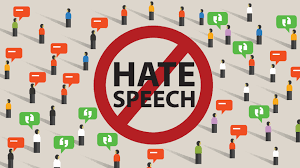
The Internet is a new carrier for the dissemination and exchanging of information after books, newspapers, and other traditional media. However, with the advent of the information age, the network provides a more convenient way for the dissemination of hate speech, which leads to the problems of cyber-violence, hate crime, and so on. Internet Governance Project (2022) explained that “While Internet connectivity generated innovative new services, capabilities and unprecedented forms of sharing and cooperation, it also created new forms of crime, abuse, and social conflict”. With the development of the Internet, hate speech has shifted to networks. Initially, people who used the Internet to spread hate speech were mostly a minority of extremists. As more and more users participate in social networking discussions, the proliferation of hate speech was fueled, leading directly to the rapid growth of the groups involved. Jordan (2013) also stated that the internet has changed the way we communicate and so changed society and culture. With the close connection between the Internet and real life, the complexity of online hate speech is increasing, so it is urgent to solve the problem of online hate speech. This blog mainly introduces the causes and consequences of online hate speech, and how to solve it.
What is online hate speech?
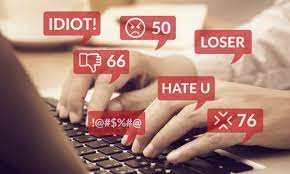
The discussion of hate speech began in the early 20th century when racism was widespread (e.g., Nazism and the Ku Klux Klan in the U.S.) and crimes were committed, and hate speech was mostly directed at the racial characteristics of a particular social group. Appropriate efforts to condemn symbolic acts of violence such as cross burnings by the Ku Klux Klan have expanded over the years to include all sorts of alleged speech and thought crimes (Holmes, 2018). Nowadays, hate speech is a type of speech that is biased, discriminatory, and hateful against a group or individuals based on group identity characteristics such as race, nationality, gender, or religion, guided by hateful intent (Parekh, 2012). Hate speech targets both individuals and groups. When directed at a group, the group has a distinct, identifiable identity. This group identity can be innate, such as race, gender, or sexual orientation; it can also be an acquired choice, such as religious beliefs or party affiliation; when directed at individuals, hate speech targets, not individual traits, but individual group identity traits. Hate speech is an extreme form of intolerance which contributes to hate crime.
The Internet provides a more convenient way for the spread of hate speech. Gagliardone et al. (2015) wrote that “Hate speech online is situated at the intersection of multiple tensions: it is the expression of conflicts between different groups within and across societies”. The expressive intent of hate speech, that is, the attitude of the hate speech speaker in expressing the speech, affects the definition of the speaker’s responsibility. There are three psychological attitudes: “prejudice,” “discrimination” and “hatred”. First, “prejudice” refers to negative or unfair perceptions and attitudes toward a person or group of people. Second, “discrimination” is the most prevalent psychological attitude behind hate speech, which manifests itself in the form of differential treatment of a group of people, especially vulnerable groups. Last, “hate” is the strong hatred and hostility toward a group or individual.
Reasons for the expansion of online hate speech
The emergence of the Internet has created an anonymous platform for people to express their opinions freely on the Internet anytime, anywhere. Because of the anonymity of identity, it is difficult to determine the specific subject of online violence without professional and advanced investigation techniques as well as tedious and difficult investigation methods. The anonymity gives people a sense of “safety” and allows them to express their opinions freely on the Internet, making the Internet a place for some people to vent their emotions, make malicious accusations, and spread rumors. The anonymous environment allows some people to post vicious hate speech with no fear, which can lead to incidents of online violence. The cyber-violence people are often not punished because of the distance, privacy, and flexibility of the Internet and a large number of people, and because some of the main members are under the age of criminal responsibility. In addition, blindly following the trend reflects a lack of rationality. Many netizens blindly follow the trend in network public opinion, reflecting the herd mentality of some netizens, and the lack of rationality, independent thinking, and independent judgment ability. Moreover, some websites and social media platforms are deliberately hyped and spread more extreme hate speeches in order to make profits, and improve the click-through rate. This is also a reason for the deterioration of the situation.
Case study
a.
It is common for celebrities to be forced to delete their social accounts due to online violence, and in 2015, New Zealand impersonator Liam Martin closed his Instagram account because he was overwhelmed by abuse and suffered from depression as a result. According to The Sunday Times (Nikkhah, 2021), Harry and Meghan decided to give up using social media and focus on their new life in the United States because of the hate speech on the Internet. It is said that they have become disillusioned by the“hate” they encountered online. Meghan has spoken about the“almost unsurvivable” experience of online trolling.
b.
Many feminists once believed that the Internet provided a space for people to communicate relatively equally, which could promote equality between men and women and change the inferior position of women in the mass media. However, in fact, some of the stereotypes of women in real society still persist on the Internet. And in many news reviews, there has been much hate speech against women. Most of these remarks are based on prejudice and discrimination against women. In addition, in today’s upsurge of feminism and the feminist movement, there is more and more hate speech against feminism. Especially on social media, such as Weibo and Tiktok, hate speech against feminism can be seen everywhere. Sometimes, men and women are even seen to have violent quarrels and utter many insulting words under such news. Such hate speech in turn leads to human flesh searches and cyber violence.


In recent years, there has been frequent news about “female drivers” in China’s online news, and “female drivers” have become represented with poor driving skills. These media’s unconscious prejudice and discrimination against women in their reports have deepened the society’s hate speech against women. In China, many feminists argue that this is prejudice and discrimination against women. However, the situation has not improved. Some people even made hate speeches against feminism. In fact, studies found that male drivers reported engaging in risky driving behaviors more frequently than female drivers (Rhodes & Pivik, 2011). As early as 2007, data showed that the ratio of male to female drivers in Beijing was 7: 3, but the death toll of female drivers was 1/50 of that of male drivers. Male drivers also have problems such as temper, anger, and impatience when driving. However, due to the one-sided reports on female drivers in the online media, the behavior of individual female drivers has become the behavior of the entire female driver group, which has led to a deviation in the public’s perception of female drivers. On TikTok in China, 47.72 billion views of the hashtag with female drivers, while only 300 million views of the hashtag with male drivers. When I look through Weibo and TikTok, it is common to see insulting and mocking comments about female drivers, believing that women cannot master certain skills. For example, comments often include such remarks as “it is indeed a female driver, female drivers can’t drive at all”, “I hope the female driver can get out of my life” and “a female driver should not drive on the road to harm others”, accusing women or mocking them. These hate speeches are from prejudice and ability discrimination against women. The resulting debate about feminism has even triggered a lot of cyber violence.
Consequences and impact
In my opinion, online hate speech has not received enough attention at present. The group contradictions behind hate speech and its historical background and realistic influence have not received due attention. On the Internet, the power of the individual is very weak in the face of the existing dilemma. When an individual’s rights are infringed by inappropriate speech and react to it, the infringer has already disappeared in the virtual world. The harm and aggressiveness it contains will not fade away with the passage of time. It may cause secondary discussions or even secondary attacks due to the occurrence of related events, which will cause sustained harm to the victims and groups. Studies have found that online hate speech often makes young people who are targeted emotionally worse and seriously damages their mental health, causing them to have low self-confidence, reduced sleep quality, social anxiety, a strong sense of insecurity, and even self-harm and suicide. What is more serious is that the dominant group in the attacking position is more and more dominant, while the inferior group tends to be silent under pressure, causing a kind of recessive negative emotion and pressure on the Internet. Finally, the relationship between real life and the Internet is becoming closer and closer, and the emotional impact online will turn into the construction of people’s views on some groups in real life, and even cause violence in real life, threatening social security.
Internet governance and solutions

From the perspective of the entire network space, the overall legal quality of Internet users is not high, the internet governance regulations are not in place, and it is difficult for Internet users to maximize the protection of rights. Therefore, compared with terrorism, extremism, and criminal activities, the governance of online hate speech tests the governance ability of governments, industries, and platforms, and requires a balance between regulation, freedom of expression, and people’s values. Laws and regulations on the Internet should be improved as soon as possible. Various laws and regulations for real society can no longer effectively assume the management responsibility for the Internet, and laws and regulations for the Internet must be issued as soon as possible. By popularizing laws and legal knowledge, Internet users can better regulate their online speech in accordance with laws and regulations, and find a legal basis to defend their legitimate rights and interests when they are infringed. In addition, in the process of development and governance of internet culture, guidance and management should be strengthened, which can advocate the responsibility consciousness of the Internet and raise people’s awareness of the consequences of cyber behavior. Therefore, I think mainstream media should strengthen the guidance of public opinion. The mainstream media has the advantages of wide dissemination and great influence. The mainstream media should respond to and clarify the problems brought by rumors, hate speeches, and human flesh searches that have begun to spread on the Internet in a timely manner, so as to restore the truth to the public and reduce the occurrence of online violence.
Conclusion
To sum up, we must say no to online hate speech! Online hate speech will not only cause harm to individuals but also to groups and society. The essence of the Internet is that everyone can participate and share, and the Internet has become a platform for ordinary citizens to express and share. We have freedom of speech on the internet, but it doesn’t mean we can do whatever we want. Therefore, in terms of internet governance, it is urgent to solve the problem of online hate speech. The best way to deal with online hate speech is to fight it with law and rationality. From the viewpoint of the content of the legal norms, the emphasis in the legal liability section is on the responsibility of network operators or Internet users who violate the relevant provisions, such as fines or suspension, disqualification from publishing news, or simply seize the site or criminal liability. And rarely involves the protection of the right to freedom of expression on the Internet and remedy channels. Online hate speech is a difficult problem for Internet governance. The governance of online hate speech tests the governance capacity of the government, industry, and platform, which needs the joint efforts of all parties.
Reference
1. Gagliardone, L, et al.(2015). Countering online hate speech. Unesco series on Internet fressdom. Paris: UNESCO Publishing.
2. Holmes, K. R. (2018). The Origins of “Hate Speech”. Retrieved from https://www.heritage.org/civil-society/commentary/the-origins-hate-speech
3. Internet Governance Project. (2022). What is Internet Governance? Retrieved from: https://www.internetgovernance.org/what-is-internet-governance/
4. Jordan, T. (2013). Internet, Society and Culture: Communicative Practices Before and After the Internet. New York: Bloomsbury Publishing USA.
5. Nikkhah, R. (2021). Harry and Meghan quit social media. Retrieved from https://www.thetimes.co.uk/article/harry-and-meghan-quit-social-media-w5qrlsck7?utm_medium=Social&utm_source=Twitter®ion=global#Echobox=1610215852.
6. Parekh, B. (2012). “Is There a Case for Banning Hate Speech?” in Michael Herz, and Peter Molnar (eds.), The Content and Context of Hate Speech: Rethinking Regulation and Response, Cambridge, New York: Cambridge University Press.
7. Rhodes, N. & Pivik, K. (2011). Age and gender differences in risky driving: The roles of positive affect and risk perception, Accident Analysis & Prevention, 43 (3), 923-931. https://doi.org/10.1016/j.aap.2010.11.015.