Introduction
In the era of rapid development of digital media, the number of Internet users has increased dramatically. According to the 45th Statistical Report on China’s Internet Development released on April 30, 2020, the number of Internet users in China has reached 904 million, and the Internet penetration rate is 64.5% (Wang and You 2021). Information sharing under the background of big data makes people’s life convenient. It not only expands the consumption of information such as mobile Internet and the Internet of things. Big data applications such as health care and enterprise supervision have also been accelerated. However, while big data promotes the rapid development of society, it also threatens people’s personal privacy security. “Privacy” means there should be no outside observation or interference (Warren & Brandeis, 1890). But our personal information and data are being collected by Internet companies, and are being observed and disturbed in every way possible. According to the survey report on APP Personal Information Disclosure released by China Consumers’ Association, 85.2% of respondents had been harassed or harmed due to personal information disclosure. So how does our personal data get leaked?
Actually, online shopping is a dangerous move for people who don’t want their personal data exposed. Payment providers act as intermediaries to gain access to personal information about customers when they make a transaction with a merchant, just as a Courier company can obtain the addresses of the sender and receiver (Preibusch, Peetz, Acar, and Berendt, 2016). As a result, their names, phone numbers and addresses have been exposed. The use of social software can also make people unknowingly divulge personal data. With the development of big data and cloud computing technologies, consumption records, travel traces and personal information left by users on the mobile Internet can be completely restored through big data analysis. In other words, in the era of mobile Internet, personal privacy has data value and commercial value, which is also the motivation for many apps and network platforms to abuse user information illegally. Your personal privacy has become a tool for others to make money. This is an important issue that the mobile Internet era must face.
This blog will cover some of the social problems caused by the disclosure and misuse of personal data. First, we’ll talk about the concept of Big Data Discriminatory Pricing (BDDP) and the social problems it causes. Secondly, we will discuss the fraud caused by accurate personal data leakage. Finally, we will conclude with a small summary of this blog post.
Big data discriminatory pricing (BDDP)
Nowadays, people spend a lot of time on social media platforms every day. However, every action and every choice we make on social media platforms is recorded by big data, such as buying habits, browsing history, interests and hobbies. These become the hashtag of our accounts. Social media platforms and Internet users have created a two-tier supply chain where some platforms use the big data they collect as well as users’ personal data to discriminate against their consumers (Liu, Long, Xie, Liang, and Wang, 2021). For example, Cases of Big Data Discriminatory Pricing were discovered as early as 2012. Orbitz, an American travel website, used big data to collect personal data from its users and found that people who use Apple-branded computers are 30% more likely to pay for a hotel room than those who use other brands. So Orbitz raised the price of staying with Apple-branded computers (Liu, Long, Xie, Liang, and Wang, 2021). Such irresponsible behaviour of using users’ personal data to set discriminatory prices is known as Big Data Discriminatory Pricing.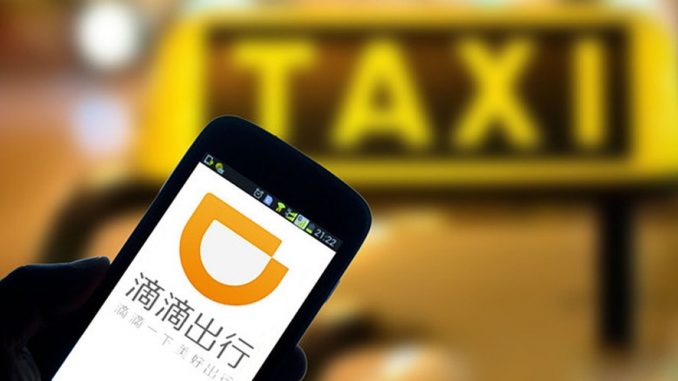
There is a Big Data Discriminatory Pricing case about social media platforms that I found in China. It is about the Didi company. In 2018, Didi charged different taxi fares for different customers (CSDNnews, 2018). Didi is a taxi-hailing app in China, which is similar to Uber. It is almost the first and largest ride-hailing platform in China, and most Chinese use Didi to take taxis. It almost monopolized the Chinese market. However, Didi has been ordered to remove the App for rectification by the Cyberspace Administration of China (CAC), citing illegal issues such as collecting and using personal information. Didi not only collects customers’ basic personal information, such as phone numbers and home addresses. It also requires real-name authentication, which means that users’ real names and ID numbers are also collected. Meanwhile, Didi’s big data records where you usually go, when you usually take taxis. After they collected all your personal data and your daily habits, Didi started discriminating against their customers in a very specific way.
Personal data such as the cost of electronic equipment, consumption level and adoption of consumption habits can all serve as references for Didi’s abuse. For example, iPhone users are often charged higher prices by Didi. Because Didi reckons that people who can afford Apple’s devices generally have more money than those who use other devices. This has happened to me, the same 19-minute journey, the same starting point and destination, my father and I paid different prices for taxis. I use an iPhone while my father uses a Huawei phone. The price of my taxi is 3.8 yuan higher than that of my father. This is a violent deliberate bid-up based on personal data. In addition, If you can’t get a taxi during peak hours, the Didi system will send you a message. Asking if you’d like to add 5 yuan for a quick ride. If you agree, Didi’s big data system will consider you a generous consumer, and you’ll be labelled generous. They will gradually increase the frequency with which similar messages are pushed to you, or just slowly raise your taxi fares. Moreover, Didi is very good at attracting new users. As a longtime VIP user of Didi, you may not be treated as well as some new ones. For instance, when it comes to waiting in line, the Didi system automatically lets new users hail a cab faster than its VIP patrons. Since they have almost mastered the data of old VIP customers, they hope that more new users will join. So make it easy for them to think that Didi is a good platform. Moreover, a lot of new data can be collected through the use of these new users on the Didi platform. These are the problems of price inequality caused by Didi’s discriminatory use of big data to collect personal information. Platforms and corporate mobile personal data are inevitable, but they should use user data legally. Instead of abusing personal data to create convenience for themselves and bring inconvenience to users.
Cyber Frauds
As many Internet platforms can conveniently obtain users’ personal data according to their own work, the data of Internet users is no longer private. In the three years from 2016 to 2018, Facebook, Google, Uber and other social media platforms have experienced major data breaches. Asa result, their platform users have the risk of losing their account information (Lauren, 2019). As big data advances, the wings of online fraudsters have grown fatter. As a result, the risk of online fraud increases in countries around the world (Holt and Bossler, 2014, Leukfeldt, 2014). In the era of big data, it is impossible to block data companies from mining personal information. There are many ways in which users’ personal information can be leaked. For example, the phone numbers and addresses on the packages that people buy online can be seen everywhere. Even there are some unscrupulous companies selling the personal data of mobile phone users at a high price. In some cases, hacker attacks on accounts lead to account theft and the release of important personal information. Therefore, personal data is abused by some malicious fraud enterprises. Criminals also began to use the accurate personal data leaked by Internet companies to carry out targeted crimes.
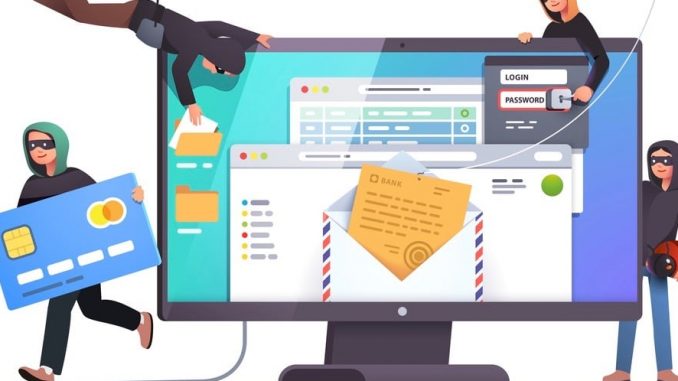
According to the shocking data obtained by the American Communications Fraud Control Association (CFCA), the global amount of money lost to fraud is about 38.1 billion DOLLARS per year (Snyder and Kanich, 2015). It is believed that most people have received fraudulent phone calls or fraudulent information in their lives. Some scam messages tell you that your family needs money at the hospital, or tell you there’s a problem with your passport and ask you to call back. More seriously, there are even more serious cases where But more seriously, the social platforms we use fail to protect our personal information. So our personal information such as photos, bank accounts and passwords are abused by others. For example, Facebook’s massive data breach in 2018 led to a third-party company collecting the personal information of 50 million Facebook users through an app. Facebook explained that sensitive information including name, contact information, search history and log-in location was obtained by hackers as a result of a vulnerability in its security system. Tens of millions of users’ private photos were also leaked.
I found a case where the social media platform failed to protect users’ personal information, resulting in user data leakage and bank card information theft. Court Ventures, a subsidiary of Experian, was defrauded of a database of 200 million people in 2013 by a Vietnamese private investigator posing as a Singaporean. This Internet scammer has been defrauding people’s databases since 2007. Selling personal information about U.S. residents to cybercriminals around the world. The personal information here is not only the user’s name and other basic information but also the user’s credit card and Social Security numbers and other important information. After his arrest, he admitted to committing multiple frauds using stolen personal information and making as much as 2 million dollars from selling the data. The reason why the platform here leaks personal information is that it is not rigorous enough to pay attention to security issues. Only when users trust the platform will they submit their personal information to the platform. If the security problem fails to attract the attention of relevant platform enterprises, this kind of thing will happen again and again.
Conclusion
After reading the whole article, I believe that we all have a certain understanding of the problems caused by the misuse of human data by an enterprise. Living in a data age, we are inextricably linked to countless Internet and social media platforms. Big data can show people what they want to see and filter out what they don’t want to see. It also brings infinite benefits and convenience to human life. However, big data technology is a double-edged sword, which brings new opportunities to industrial development, people’s livelihood security and national governance, as well as unprecedented challenges to personal privacy protection. In the digital age, not only Internet users should protect their personal information, but also relevant Internet companies should shoulder their due responsibilities. If social media platforms are not effectively governed, people’s personal data will remain in a dangerous zone. Not only will malicious enterprises make use of leaked user data to create big data discriminatory prices, but fraud companies will also create more fraud methods based on user data. The governance and supervision of network security must be updated in real-time, because big data is progressing, and people with malicious intentions are also closely following the pace of The Times. The slightest mistake will fall into the digital trap, resulting in unnecessary losses.
References
Chen, S., Yuan, Y., (Robert) Luo, X., Jian, J., & Wang, Y. (2021). Discovering group-based transnational cyber fraud actives: A polymethodological view. Computers & Security, 104, 102217–. https://doi.org/10.1016/j.cose.2021.102217
CSDNnews, 2018. Why Are Ali Fei Pig, Didi, and Ctrip All Questioned to Abuse Big Data for Pricing? (in Chinese). https://www.huxiu.com/article/266330.html?h_s=f4.
Holt TJ, Bossler AM. An assessment of the current state of cybercrime scholarship. Deviant Behav. 2014;35(1):20–40.
Lauren M Lozada. (2019). THE (POSSIBLY) INJURED CONSUMER: STANDING IN DATA BREACH LITIGATION. St. John’s Law Review, 93(2), 461–486.
Leukfeldt ER. Cybercrime and social ties. Trend. Organ. Crime 2014;17(4):231–49.
Liu, W., Long, S., Xie, D., Liang, Y., & Wang, J. (2021). How to govern the big data discriminatory pricing behaviour in the platform service supply chain? An examination with a three-party evolutionary game model. International Journal of Production Economics, 231, 107910–. https://doi.org/10.1016/j.ijpe.2020.107910
Martin, N., & Rice, J. (2013). Spearing High Net Wealth Individuals: The Case of Online Fraud and Mature Age Internet Users. International Journal of Information Security and Privacy, 7(1), 1–15. https://doi.org/10.4018/jisp.2013010101
Preibusch, S., Peetz, T., Acar, G., & Berendt, B. (2016). Shopping for privacy: Purchase details leaked to PayPal. Electronic Commerce Research and Applications, 15, 52–64. https://doi.org/10.1016/j.elerap.2015.11.004
Snyder P, Kanich C. No Please, After You: Detecting Fraud in Affiliate Marketing Networks December. WEIS; 2015.
Warren, S. D., & Brandeis, L. D. (1890). The right to privacy. Harvard Law Review, 4(5), 193–220.
Wang Min, & Zhilong You. (2021). Attitudes of online users towards personal information leakage: based on Sina Weibo database. E3S Web of Conferences, 251, 01044–. Les Ulis: EDP Sciences. https://doi.org/10.1051/e3sconf/202125101044