Introduction
The Internet provides a meeting place for speech and many cultures. In the years of development of the Internet and social media, “free speech” has led to a growing problem of online harassment. According to a study of Americans by the pew research center (2014), 40% of Americans surveyed said they had personally experienced online harassment, and 73% said they had witnessed others being harassed. Social media remains the online venue where harassment occurs most often.
Online harassment involves attacking strangers without boundaries in order to make a name for themselves. Some people stab others through the skillful use of cyberbullying, and virtual worlds, free speech and cyberbullying have turned into a set of irreconcilable contradictions. This is a very severe postgraduate examination for network supervision, not only for the law, but also for platforms and users.
Multiple Reasons
Perhaps some aspect of online social media culture does encourage bad behavior. (Gaia Vince) The anonymous nature of social media keeps users hidden from the web. Social media has physical distance, relative anonymity, and little reputational impact or punishment for bad behavior. If you act mean, no one in your acquaintance will know. This makes it easier for users to become emotional, angry, and mean when using social media. Studies have shown that emotional and moral words are more likely to spread content on social media, with each emotional and moral word increasing the spread of a tweet by 20 percent. (Bavel et al., 2017)
Information environment and media environment
For the current information environment, the diversity of information and the openness of the network increase the difficulty of establishing a network system and also increase the difficulty of network supervision. Much online harassment and bullying is difficult to manage in real situations. The relevant network security laws, regulations and regulations such as news information are not very popular. From the perspective of the media environment, when authoritative platforms and media make evaluations on events, a large number of users will follow blindly instead of thinking critically. There are group effects in the network. When faced with some cyber incidents, individual behavior is influenced by groups. A small group of dissenting opinions may choose to remain silent, while the masses will go wild in spreading a single idea. This has led to the gathering and widespread dissemination of extreme and emotional speech, which has resulted in online violence and harassment.
Harassment cost and doxing
From an operational point of view, everyone can carry out online harassment and violence against others at almost no cost. To a large extent, the perpetrator will not receive condemnation or even response from other netizens, which makes the rights of perpetrators and victims unbalanced objectively. Such harassment and violence are different from those in real life, and there is simply no way to avoid and escape. Due to the open nature of the web, public harassment, violence and insults can further harm victims. At the same time, human doxing will become an internal cause of online harassment. Although doxing may play a supervisory role, it inevitably violates the privacy of some users and affects the normal life of these people. This usually happens to people who are already at the center of public opinion. In real life or their past information is rediscovered and published on the Internet, providing round after round of new material for public opinion. This has become a very important and common part of online harassment. It can itself be called cyber harassment, or it can be the cause or the result of cyber harassment. And why are victims of online harassment harassed?
The Anti-Defamation League (2021) survey found that a third of respondents said their harassment had something to do with their identity. Political opinions, race, appearance and gender are all very high targets’ perceived reasons for harassment.
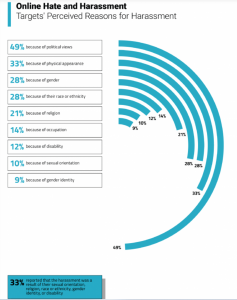
Figure1 https://www.adl.org/online-hate-2021#why-are-targets-harassed
online harassment types
The pew research center measures online harassment using six different behaviors: offensive name-calling, purposeful embarrassment, stalking, physical threats, harassment over a sustained period of time and sexual harassment. Its report classifies these different harassment behaviors as ” more severe” and “less severe” forms. Offensive name-calling and Purposeful embarrassment are less severe online harassment and others are “more severe online harassment.
However, for public figures, a large amount of offensive name-calling and purposeful embarrassment is sufficient to give Victims cause a lot of harm. Therefore, it is difficult to rate various online harassment behaviors, because in real situations, the consequences of these different behaviors are similar. And it seems to be rated as less severe offensive Name-calling and purposeful are more difficult in Internet govern ace. On the contrary, the so-called more severe four kinds of harassment are easier for the platform to find in the real governance situation (of course, this is based on an effective reporting system), for It is easier to judge and punish by law.
Case study
Who is she?
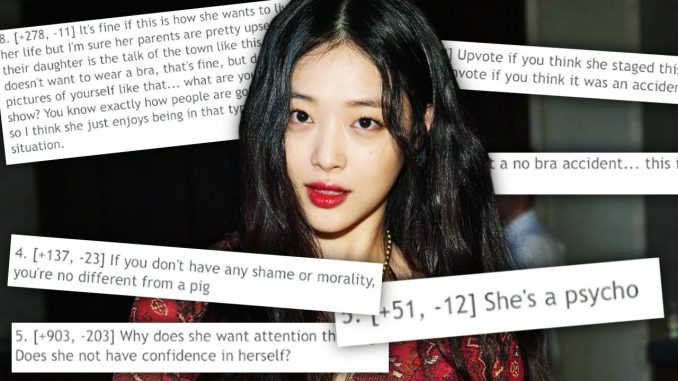
Sulli’s suicide caused a lot of uproar in the entire East Asian entertainment industry. And since that time, cyberbullying and online harassment have become a common topic and often brought up. Until now, it has still become a typical case against Internet circumvention and violence. Sulli used to be the idol of South Korea’s SM Entertainment. She was found dead by suicide in her home on October 14, 2019. Sulli debuted in 2005 as a child actress and in 2009 with girl group F(x). She announced the launch of the group in 2015 to continue her acting career as an actress. She was 25 when she was found dead. (Kim&Denyer, 2019) The reason for her suicide has been a topic of widespread discussion. Part of the reason was her own depression. The source of her depression and her life experiences are widely believed to be online harassment and violence. Although she grew up far from her parents, many issues such as the harsh system of female idols in the Korean entertainment industry were some of the factors in the tragic experience she received during her lifetime. But the online harassment and cyberbullying she suffered was almost unprecedented in the entire Korean entertainment industry.
Not real screen image
Because of Sulli’s childhood acting experience, she was called ‘SM Company’s little princess’ and was regarded by the audience as a lovely, innocent young girl. Is this image created by the character and company her true self? the answer is negative. For the general public, social media may be a stage, a false space, a place to create the personality you want to create. But for Sulli, she is already performing and creating a character that is loved by the public in front of the camera and on the real stage. She chose to pursue and express her true self-identity on social media. After launching the group, she was not as sad and negative as netizens thought. But completely abandoned the character of the good girl. She does not hesitate to share her life. The photos she posted were considered bizarre, disgusting and sexually suggestive. In 2014, Sulli revealed her boyfriend who is 14 years older than him. These behaviors are considered by netizens as mental problems, crazy, drug addiction and so on. A lot of malicious remarks surrounded her. And sulli publicly responded to the comments that harassed and insulted her: ‘I feel that many people have a prejudiced viewpoint on me, so it is still very sad’.(JINRI MARKET, 2019 )
Possible reasons of harassment to Sulli
On the other hand, there are many possibilities for the reasons why netizens harass Shirley online. First of all, Shirley’s release of herself has surprised netizens to a large extent, and even her own fans have a hard time accepting her sudden change. The so-called love of these people is a fake screen image of the Sulli youth and cuteness in their hearts, not the real Sulli. So when they find out that their cute little girl has turned into a sexually suggestive woman in an ‘inappropriate’ relationship, what was once a love turns into a disgust, but at the same time wants her back to what she once was.
double standard
Most of Sulli’s targeted audiences are Asians, especially East Asian countries such as Korea and China who love K-pop very much. These countries are influenced by Confucian culture and are relatively conservative in thinking. Influenced by Western culture, they can actually accept revealing, sexually suggestive pictures and photos. But that doesn’t happen to an Asian, young, once-lovable, once-innocent, female idol. This is not for Sulli alone, but for young Asian women as a whole. Asians seem to be very receptive to open-minded foreigners, but they cannot accept such Asians. This is a very contradictory point, and perhaps it can also be called racism. Although not greatly affected in terms of interests, judging from Sulli’s Instagram comments, and even from Chinese social media, Asian netizens seem to have a double standard for Asians and Westerners which is based on prejudiced viewpoint and stereotype. Someone encouraged Sulli to say, ‘you shouldn’t have been born in Korea, you’re a cool Hollywood girl.’
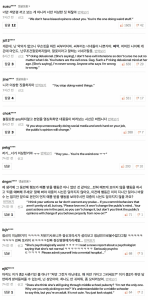
No bra photos
Sulli regularly posts photos of herself without a bra on social media. She often receives malicious comments for posting photos of her without a bra. In response to one of the comments, she said: “I think this is about the freedom of the individual. Bras aren’t good for your health. They have a wire. They’re not good for your digestive organs, and I have issues with my digestion. Since it’s more comfortable not to, I don’t wear them. I think that it’s free and beautiful.’. (J.K, 2019) Sulli says she wants to change people’s prejudice. But she is questioned as a fake feminist activist, because her views on abortion and gender issues made her the target of an online gender hate crime. The emotional impact of online abuse has been cited as a major reason for her suicide. (Park & Kim, 2021) Park and Kim analyzed The ego network of the word “misogyny.” They found that users believed Sulli’s death was due to hatred of women and discussed that misogyny is a deep-rooted problem in South Korea.

Figure 3 https://www.instagram.com/p/BwUQRVLh0jH/?igshid=YmMyMTA2M2Y=
Conclusion
After Shirley’s death, her fans flocked to the presidential Blue House website to petition for a real-name online commenting system. According to the survey, 70 percent of South Koreans support the proposal, while 24 percent oppose it. (Shin & Yi) However, this bill is no longer in the discussion of the National Assembly. (J.K, 2020) This means that the Sulli law proposal seems to have failed. The reason for the failure of the real-name system may be due to data leakage. When a website stores a large amount of user private data, it may become the target of hackers. Data breaches occur frequently, but have instead become another important issue for Internet regulation in South Korea. (Liu, 2019) Although Sulli’s suicide has caused a great sensation, it is still difficult to find effective solutions to online harassment and cyberbullying. Tackling online harassment and cyberbullying remains a long way to go.
Reference list
Pew Research Center(2021). The State of Online Harassment. https://www.pewresearch.org/internet/2021/01/13/the-state-of-online-harassment/#most-online-harassment-targets-say-their-most-recent-experience-occurred-on-social-media
Vince,G.(2018,April,3). Evolution explains why we act differently online, BBC furture, https://www.bbc.com/future/article/20180403-why-do-people-become-trolls-online-and-in-social-media
Bavel,J.A, Brady,W, Jost,J.T, Tucker,J& Wills,J.A(2017). Emotion shapes the diffusion of moralized content in social networks. Proceedings of the National Academy of Sciences 114(28):201618923, https://doi.org/10.1073/pnas.1618923114
Anti-Defamation League.(2021) Online Hate and Harassment: The American Experience 2021. https://www.adl.org/online-hate-2021#why-are-targets-harassed
Kim, M.J. & Denyer, S(2019), K-pop singer Sulli found dead in suspected suicide, highlighting mental health pressures. https://www.washingtonpost.com/world/asia_pacific/k-pop-singer-found-dead-in-suspected-suicide-highlighting-mental-health-pressures/2019/10/14/1e69a8de-ee67-11e9-bb7e-d2026ee0c199_story.html
J.K(2019). Sulli Candidly Responds To Malicious Comments About Not Wearing A Bra, Accusations Of Drug Use, And More. https://www.soompi.com/article/1333734wpp/sulli-candidly-responds-to-malicious-comments-about-not-wearing-a-bra-accusations-of-drug-use-and-more
Park, S., & Kim, J. (2021). Tweeting about abusive comments and misogyny in South Korea following the suicide of Sulli, a female K-pop star: Social and semantic network analyses. El Profesional De La Información, 30(5)http://dx.doi.org/10.3145/epi.2021.sep.05
JINRI MARKET(2019, January 23) [Jinri market│Jinri Market]SPECIAL CLIP. The truth about Sulli we know part. 2 .Youtube. https://www.youtube.com/watch?v=1IrQhhoV8T4
Shin,H., Yi, H.Y.(2019) K-pop singer decries cyber bullying after death of ‘activist’ star Sulli. Reuters, https://www.reuters.com/article/us-southkorea-kpop/k-pop-singer-decries-cyber-bullying-after-death-of-activist-star-sulli-idUSKBN1WV1L3
J.K, (2020) Insiders Question The Effectiveness Of Disabling Comments On Entertainment News; “Sulli Act” Reportedly No Longer In Talks, https://www.soompi.com/article/1411495wpp/insiders-question-the-effectiveness-of-disabling-comments-on-entertainment-news-sulli-act-reportedly-no-longer-in-talks
Liu, D(2019) Push the “Sulli Law” to ban bad comments? South Korea once pushed the online real-name system but failed, Chinanews, https://www.chinanews.com.cn/gj/2019/10-17/8982173.shtml