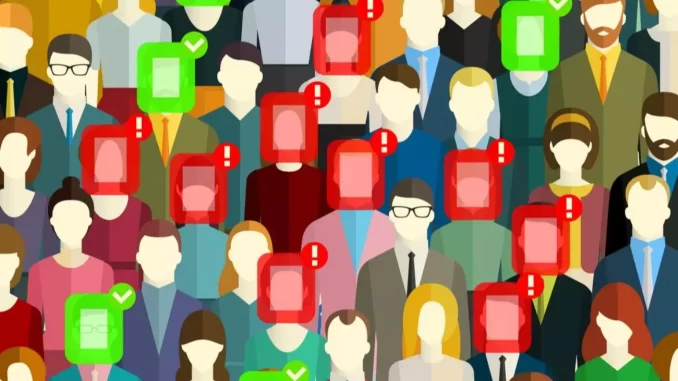
Since the outbreak of Covid-19, digital processes have played an important role in the prevention and control of the epidemic on a global scale. In the process of the global fight against the Covid-19, a number of experts and academics have been actively using big data to build models to predict outbreak trends and assess winds, greatly improving the efficiency of tracking close contacts and effectively controlling recurrent outbreaks (Zhang, Gao, Wu, Cao & Zeng, 2021). With the development of the normalization of Covid-19 prevention and control, and with the continuous improvement of digital technology, the normal operation of people’s productive life is ensured to the maximum extent. Nevertheless, the demands for the timeliness and accuracy of data sources also indirectly pose the risk of leakage of personal information. The personal information that is made public becomes data in the sense of Big Data and can be used to mine it along with other known own resources. This process has the potential to generate currently unknown information, which can not only provide the potential for crimes such as ‘precisely fraud’, but can also pose additional risks to the future lives of those whose information has been compromised. Therefore, while digital technology is widely noticed and used, it is also necessary to think about the protection of personal privacy in this context.
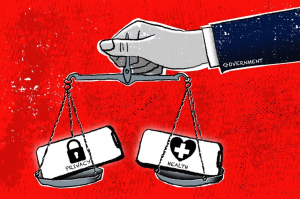
This blog will focus on the manifestations of personal privacy breaches during the Covid-19, analysing the fundamental causes of privacy threats in terms of technology fit, technology transformation and user perspective. In the meantime, this blog will propose solutions based on the analysis in terms of the law, the users themselves and technical support.
Privacy disclosure of Covid-19 patients
In the past two years since the outbreak of Covid-19 in China, there have been repeated incidents of leakage of Covid-19 patients’ information in the country, and each incident has inevitably led to a high degree of public concern. The most publicized cases are the two cases in Chengdu and Liaoning involving Covid-19 patients whose privacy has been breached.
On 8 December 2020, officials in Chengdu announced the condition and transport of the three new confirmed Covid-19 patients and the six main sites where they have been within 14 days. However, in just one day, another more detailed information about one of the women named Zhao was circulated on social media platforms, including her name, address, phone number, and even her cell phone number and ID number.

After that, there was a massive outpouring of ridicule and attacks on the woman, with people getting this information and directing their anger about the Covid-19 at the innocent woman and her family. Ms Zhao also responded on social media platforms, saying that she and her family had received slanderous and mean-spirited comments. As a victim, she was not only subjected to physical pain, but also to the abuse that pervaded the internet.
Another positive case of Covid-19 reported from Shenyang, Liaoning Province, was detected by a patient returning from South Korea after being quarantined.

The personal information of the positive patient, Mr. Yin, and his family was maliciously posted on the Internet.
While Mr. Yin was in quarantine with his family at the hotel, his cell phone rang non-stop with hundreds of unfamiliar calls and text messages, which seriously affected the normal life of himself and his family.
Main causes of privacy threats
What are the root causes of privacy threats during Covid-19?
Advanced digital technology made easier to access information
In the era of the digital age, with emerging data processing technologies, data can be mined and transformed into information, which can be of the corresponding value in different fields (P. Romansky& S. Noninska, 2020). In public health, personal data in the big data environment can be understood as personal information, including track information, facial information, and historical visit information. Unlike personal data in the traditional sense, these data can be processed by existing data technologies. In addition, these data can be linked to text, images, videos, etc. in the online environment to target personal information.
Technology development and network security mismatch
In the social environment of continuous development of information technology, a huge amount of data is produced and stored, and the process of data collection and storage also has the risk of privacy leakage. This risk is reflected in both external attacks and internal leaks. Half of the external attacks are from hacker attacks. With the outbreak of the covid-19 pandemic, people’s daily lives are shifting from offline to online activities. Despite the increasing demand for technology, the current pace of network information security technology is not yet able to absolutely stop hacking attacks.In this case, there is a risk of theft in terms of data collection, storage, and use (Nabe, 2020). Internal leakage is mainly due to the lack of personal information protection mechanism within the cell phone data subject, or the existence of inadequate supervision and restraint for the people concerned, which leads to the disclosure of citizens’ personal data. In this case, there is a risk of theft in terms of data collection, storage, and use (Nabe, 2020). Internal leakage is mainly due to the lack of personal information protection mechanism within the cell phone data subject, or the existence of inadequate supervision and restraint for the people concerned, which leads to the disclosure of citizens’ personal data.

During the period of Covid-19 prevention and control, mobile technology is being used by governments and private organizations around the world to control infectious diseases and promote public health development. The main applications are status-based programs, which are used to display a user’s current disease status. Also, tracking applications are used to identify and track potential contacts with infected individuals (Wang, Guo & Bashir, 2021). Although these applications can limit the spread of the virus by sharing information, many currently do not adequately protect user data in an anonymous, encrypted, and secure manner to address user privacy issues. According to a study by Sharma and others, more than 60 percent of apps do not have responsive data storage protections, and 70 percent of apps do not provide users with appropriate privacy terms of use literature when collecting user information(Sharma, Wang & Bashir, 2022). In Covid-19 surveys, personal information and tracks are often very detailed, and once these personal data are collected and stored, users lose control of the data being collected. As users of the software, we also have no way of verifying whether the collector is collecting data according to the instructions of the privacy policy, and it is not clear what kind of subjects these data will be used by. The leakage of this data poses a great risk to the person and property of the person at the time, especially for newly crowned patients. If the private information of a citizen is not well protected during epidemic prevention and control, once it is directed to a specific person through existing data that has been mined. There will be affected on the future life of the citizen, for example, there is the special harm caused by stigmatization. This is a significant violation of the user’s right to privacy and to a certain extent makes the user less willing to install such applications.
Users’ attitudes toward privacy
Much of the protection and enforcement of privacy and data around the world depends on the individual data subject (Faziloglu, 2020). Personal privacy is indeed important, but everyone does not have the same views on the scope of the definition of personal privacy.
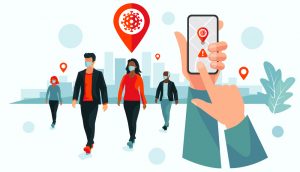
During Covid-19 and the rapid development of the Internet, the issue of privacy has been given a new significance. People enjoy the free and convenient services and security provided by the Internet. And only when personal privacy is illegally exploited and causes substantial consequences for the user that the issue of privacy is reasserted (Flew, 2021). In fact, most people believe that their personal data is now less secure and that it is impossible not to be tracked during their daily lives. Therefore, they acquiesce to the collection of personal information in the online environment, even if it is not based on the user’s informed consent(Pew Research Center, 2019).
There is a growing focus on the value, potential and risk to our personal data. But do people in fact really understand the extent to which platforms phone and use their personal data for commercial purposes and how to assess the value or quality of the services they receive from them (Flew,2019)? The prevalence of platforms and the weak control users have over their personal information has led to people worrying about privacy without really protecting themselves, which is why threats to privacy have occurred repeatedly in the digital age.
The protection of personal privacy under Covid-19
So, how to combat potential privacy breaches?
Strengthening the enactment and regulation of laws
We should propose constructive guidelines and necessary legal restrictions on the collection and use of personal information during the Covid-19. Not only for official software and programs implemented by the government, but also for companies that use the public’s fear of Covid-19 to illegally collect users’ information. This will minimize unnecessary privacy leakage. In addition, the criteria for disclosure of personal information should be specified (Flew, 2019). Clarify what information should be released and what information should not be released. This will ensure the public’s right to know and minimize the risk of privacy leaks for those involved.
Enhance personal awareness of privacy problems
The vast majority of users do not disable cookies when using platforms or websites, and ignore the consequences of using cookies (DBS, 2018). When personal data is collected, users are unconscious when they have suffered a privacy breach. Most users don’t really pay attention to the privacy policies and terms of service that they encounter on a regular basis(Pew Research Center, 2019). Even if users are concerned about the risk of their privacy being compromised, the lack of expertise makes it difficult to stop the collection of personal data using professional technical tools. To address this situation, it is important to strengthen the popularisation and dissemination of information on privacy protection in the digital age. And to inform and instruct citizens on how to protect their own data.

Secondly, there is a need to raise the awareness of privacy protection among the relevant staff. The unauthorized action by some unscrupulous companies and the abuse of information which was held by relevant departments on the Internet indicate a lack of awareness of privacy protection among the staff. Therefore, education and training for staff on privacy protection should be strengthened to enhance their awareness and responsibility.
Make progress in Technology iteration
The government could develop special software for storing and sharing information. Avoid passing on personal information while using other social platform software. Prevent privacy breaches at the origin.
Blockchain technology can be used flexibly to prevent hacker attacks. Blockchain technology stores personal information in a vast network of computers that constantly check and verify information with each other (Fradom, 2020). This makes it more difficult for hackers to steal information and makes it easier to detect anomalies.
Conclusion
During the COVID-19 pandemic, personal privacy breach has occurred frequently, and Privacy and security have become one of the biggest concerns (Flew, 2021). The frequent privacy breaches during Covid-19 were attributed to a mismatch between network technology and network security. The instability of network technology cannot fundamentally guarantee the relative security of users on the Internet. Secondly, users’ attitudes towards privacy were not clear. On the one hand, users believe that their privacy should be protected, but they are unable to understand and truly protect their privacy.
For these reasons, the security of online privacy should find a corresponding support point to be modified. Improving laws and regulations to regulate the use of personal information from a legal level. Raise awareness of privacy protection among individual users and strengthen the research and development of technology. The protection of privacy does not only lie with the individual, but also with society and the law.
References
DBS. (2018). How Website Cookies Affect Your Data Privacy. Retrieved from https://www.dbswebsite.com/blog/website-cookies-and-data-privacy/
Flew, T. (2021). Regulating Platforms. Cambridge: Polity, pp. 72-79.
Flew, T. (2019). ‘Platforms on Trial’, Intermedia 46(2), pp. 18-23.
Fradom. (2020). How blockchain technology keeps data secure. Retrieved from https://www.fraedom.com/496/blockchain-technology-keeps-data-secure
Faziloglu, M. (2020). Privacy Risks to Individuals in the Wake of COVID-19. Retrieved from https://iapp.org/resources/article/white-paper-privacy-risks-to-individuals-in-the-wake-of-covid-19/
Nabe, C. (2020). Impact of COVID-19 on Cybersecurity. Retrieved from https://www2.deloitte.com/ch/en/pages/risk/articles/impact-covid-cybersecurity.html
Pew Research Center. (2019). Americans and Privacy: Concerned, Confused and Feeling Lack of Control Over Their Personal Information. Retrieved from https://www.pewresearch.org/internet/2019/11/15/americans-and-privacy-concerned-confused-and-feeling-lack-of-control-over-their-personal-information/
P.Romansky, R., & S. Noninska, I. (2020). Challenges of the digital age for privacy and personal data protection. Mathematical Biosciences and Engineering: MBE, 17(5), 5288–5303. https://doi.org/10.3934/mbe.2020286
Sobers, R. (2021). 98 Must-Know Data Breach Statistics for 2022. Retrieved from https://www.varonis.com/blog/data-breach-statistics
Wang, T., Guo, L., & Bashir, M. (2021). COVID‐19 Apps and Privacy Protections from Users’ Perspective. Proceedings of the Association for Information Science and Technology, 58(1), 357–365. https://doi.org/10.1002/pra2.463
Yip, W. (2020). China Covid: Infected woman defends herself after public shaming. Retrieved from https://www.bbc.com/news/world-asia-55270999
Zhang, Q., Gao, J., Wu, J. T., Cao, Z., & Dajun Zeng, D. (2022). Data science approaches to confronting the COVID-19 pandemic: a narrative review. Philosophical Transactions of the Royal Society of London. Series A: Mathematical, Physical, and Engineering Sciences, 380(2214), 20210127–20210127. https://doi.org/10.1098/rsta.2021.0127
Zhang, W. (2020). Chengdu Woman Bullied, Slut-Shamed After Contracting Coronavirus. Retrieved from https://www.sixthtone.com/news/1006550/chengdu-woman-bullied%2C-slut-shamed-after-contracting-coronavirus