Introduction
Free expression is a fundamental right that is essential to human beings and is one of the natural human rights recognized by the laws of many countries. The value of free expression is diversified, and every citizen has the right to exercise free expression, which is conducive to the promotion of social democracy, social equality, and the self-realization and development of citizens, including both individual and public interests. The protection of free expression also reflects the degree of democratization of a country and the importance it attaches to citizens’ rights. At the same time, free expression enjoys a high degree of liberalization due to its important social value, which means that the boundaries of freedom are blurred, and some of the expressions stray in the middle ground between reason and law, and hate speech is one of them.
A plethora of racial discriminations, hate crimes, and other such problems have been growing recently, since with the advent of the information era, it has become easy to spread hate speeches through the internet, while the disparity in national laws on this matter and the paucity of international treaty regimens make it more difficult to solve According to Bian and Chen (2021), generally, there is an element of hatred in a hate speech, despite hate speech having no uniform definition, with content that is insulting, defamatory, or creates a hostile environment; it is intended to promote or incite hatred; besides being identifiable depending upon the common features such as religion, race, gender, and ethnicity, it is directed at specific groups or individuals. An Australian study on the use of social media by Aboriginal people suggests that when some Australian “Aboriginal” identities are identified online, they may result in overt forms of racism through prejudicial and discriminatory comments (Carlson & Frazer, 2018).
As this post will mention, hate speech is a specific type of speech that has a boundary with free speech. However, this boundary may have different standards for different subjects. Facebook banned a trailer for an Australian broadcaster’s comedy show in 2015 simply because it included a topless photo of two female Aboriginal Australians. However, from the perspective of traditional Australian culture, the content of the trailer is still within the scope of free expression. The purpose of this paper is to examine the relationship between the protection of free expression and the regulation of hate speech, and to explore the real boundary between hate speech and free expression on the Internet.
Facebook’s “ban” on the ABC
According to Matamoros-Fernández (2017), Facebook imposed a “ban” on a trailer for an Australian Broadcasting Corporation (ABC) comedy show in April 2015, flagging the video as “offensive” and claiming it violated its platform’s nudity policy because the show’s trailer included images of two topless women participating in a traditional ritual (Aubusson, 2015).

Figure 1
Retrieved from: https://www.dailymail.co.uk/news/article-3490841/Facebook-slammed-removing-posts-topless-Aboriginal-women.html
In response to Facebook’s move, Australian indigenous activist and author Celeste Liddle took to her Facebook page, where she attached the video that was removed from the platform and posted a message condemning Facebook. Nevertheless, several ‘malicious people’ kept flagging her post repeatedly, and as a consequence, Facebook removed the video and locked out Liddle temporarily, to her utter surprise.
It didn’t end there; Liddle delivered a keynote speech discussing colonialism and indigenous feminism a year later, accompanied by a picture of two topless indigenous women. Liddle quickly received a temporary injunction from Facebook after sharing the link on her Facebook page. Facebook claimed that Liddle had posted images of a “pornographic nature” that violated its guidelines. Facebook adamantly defended its restrictions on contents related to nudity with the contention that some viewers ‘may be culturally offended by such content’. Nonetheless, it offered a public statement to this effect with advice to the users to avoid using the contentious image while sharing the presentation by Liddle.
The above cases are essentially the friction between hate speech and free expression. Facebook removed the photo of the two topless Aboriginal Australian women because it deemed the photo to be “offensive”; in Liddle’s view, the speech and photo she posted were not out of the realm of free expression. Facebook’s complete ban on racist content against Aboriginal Australians demonstrates the platform’s lack of understanding of the image of Aboriginal Australians. When engaging in activities considered unethical superficially, the individuals involved in each such event tend to believe that their actions were in the least unproblematic, or noble in a certain way (like in the former case), as pointed out by Massanari (2017).
The Balance between Hate Speech and Free Speech
The international community has granted universal recognition to both, the need for restriction of hate speeches as those which conflict with free expression, and the need for the protection as a fundamental human right, the freedom of expression. In the Internet era, free expression has become an indispensable attribute of social media, and social media platforms, including wikis and Facebook, have been transformed into platforms where anyone can share their opinions (Hassan, 2020).
Reconciliation of the various values of dignity and freedom along with the resolution of the conflict between freedom of expression and hate speech could be achieved effectively by imposing justifiable restriction on free expression and by identifying hate speech depending on the constituent elements involved in it. Nevertheless, the absence of any guidelines or principles applicable universally for restricting free expression, and no standard parameter for identifying a hate speech, like its concept, could hardly be neglected. New Zealand witnessed the Christchurch shooting on March 15th, 2019, which was broadcast live on social media platforms by the attacker (Hassan, 2020). The international community has been calling for Internet regulation in the wake of this tragedy, but regulation has been slow to take hold, precisely because the balance between hate speech and free expression has been difficult to find.
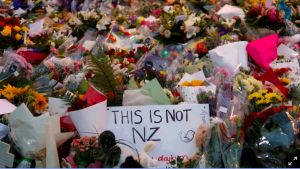
Figure 2
Memorial ceremony for victims of Christchurch terror attack
Retrieved from: https://medium.com/hate-speech-or-free-speech-can-we-regulate-social/hate-speech-or-free-speech-can-we-regulate-social-media-8213b6e37cb9
Internationally, most countries and regions have banned racial discrimination across the board, while some countries have not, reflecting the international community’s difficulty in regulating hate speech in an era of rapid Internet development: ostensibly, something that is free completely in one country, could be tacitly prohibited in another. Besides differences with regard to the legality or illegality of an issue or concept, the difference in national laws could cause different outcomes and interpretations of the same issues. The diversity and the complexity regarding the concept of hate speech along with the corresponding rules, could be the reason for the difference in the national laws. According to the British news agency Reuters, Facebook temporarily allowed users to post hate speech on its platform to “kill Putin” (Rathanasekara, 2022) on March 10th, 2022. This adjustment to violence and hate speech is a form of political expression that Facebook allows users to engage in at certain times.
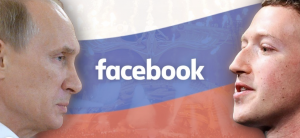
Figure 3
Retrieved from: https://en.newswave.lk/22343/
The Reasonable Boundaries of Hate Speech and Free Speech
However, despite the differences in concepts, although it could be the broadened scope of the hate speech, or the focus of the scholars on the individual characteristics such as religion or race in every country, the definitions of several legal interpretations in this regard illustrate obvious similarities. Thus, it could be surmised that convergence of concepts or their unification is possible, despite the different rules prevailing. Two approaches could be considered for this problem: First, a selective and controlled expansion of the concept providing countries the discretion to practice judiciously, by loosening and expanding the scope of a hate speech to include as much as possible, as to what would constitute a hate speech, besides making it possible to judge it by the constituent elements that result in damage, the contents of expression, and the object of the speech; second, the concept of hate speech can be clearly defined as a generally acceptable scope for countries. universally acceptable, such as limiting the scope of hate speech, selecting race and religion and increasing the possibility of international acceptance of common rules to promote the unification of international rules on this basis. In the above case of Facebook’s “ban” on the Australian Broadcasting Corporation’s comedy show trailer, if Facebook had clearly defined hate speech as universally acceptable to Australian citizens, the subsequent discussions on the matter would not have existed.
There could be advantages and disadvantages to both approaches mentioned above. The scope of a hate speech is difficult to control and as in the first instance, in case the scope happens to be very broad, it could leave the concept of unification meaningless, giving excess discretion for judicial practice. Whereas, in the second instance, there would be likelihood of the scope of the concept being restricted too narrowly, with the need for exploring what could be acceptable generally to all the countries.
There is a general consensus in the international community to provide protection of the highest degree with relevant restrictions to freedom of expression. The crux of the problem is the difference in national laws and the paucity of international rules that render the effective managing of the networks breaking through the national borders, very difficult. It is in the differences in regulations on hate speeches and national laws that the root of the problem is vested, but in essence, it lies in the difference in the choice between different values, i.e., freedom versus dignity.
According to Gong (2013), Libertarians give free expression a higher status, but they lack an irrefutable justification for it. The strongest justification is that free expression allows for the generation of freely expressed opinions and for people to judge for themselves what is true and correct. The response to hate speech should be a broader debate in which rational and correct speech is used to suppress hate speech. It should be noted, however, that it is doubtful that such discretionary speech can be classified as “correct”.
Freedom cannot be recognized if the reverence for it brings with it the violation of other human rights. Since there is evident conflict between the freedom of expression and a hate speech, the preservation of the former and the harmony and stability of the society makes it necessary to regulate hate speeches through law, and that restricted freedom is a legitimate one. During the COVID-19 pandemic, racist slurs and hate speech proliferated in parts of social media, with some even blaming the spread of the virus on the Roma, the largest minority in Romania (UN News, 2022). Such aggression against the Roma can in no way be considered free expression.

Figure 4
A poor Roma family on the streets of Romania
Retrieved from: https://news.un.org/en/story/2022/04/1115752
The protection of free expression as one of the fundamental human rights has been recognized by the international community, one of the important reasons is that the full expression of speech is related to the level of democratic development of a country. Adequate free expression can provide the public with an effective means of monitoring public power, which is an important manifestation of democratic politics.
For human society to eliminate hatred and to live in harmony, it is imperative to have an integration of the different ideas, tolerance, and the convergence of values. Nonetheless, the convergence of basic values related to the development and survival of humans does not amount to elimination of the various voices. The joint efforts of the international community towards common development are promoted precisely due to the universal need for protection of human rights. Seeking a common ground while reserving differences and for the harmonious development of the international community, it would be imperative to accept the various concepts of the different countries, cultures, and regions, and the formulation of the common rules, regulations, and systems. Dignity and freedom should not be neglected ever.
The traditional media’s mode of communication is more inclined to single output, which is more likely to appear one-sided or even become a tool to incite public opinion, while the Internet breaks through national boundaries and gathers different information from various countries, and the interactive nature of the Internet allows different opinions to be expressed. To ensure that the opinions of the people could be expressed fully, guaranteeing the right of the citizens to know fully, would lead to more efficient and easier communication between the public and the government, besides with people from different countries. At the same time, it is also necessary to play the regulatory function of social media. Historically, in media regulation, control over the content and its openness has been achieved by imposing responsibilities and obligations on the creators and publishers of content (Moore, 2021).
Therefore, one of the important reasons for countries that highly advocate free expression and then treat hate speech loosely is the maintenance of democracy and freedom. According to Rousseau (1999), For participation in the governance of a country, it would be the prerequisite for the people to have free thinking, speaking openly, and the direct participation in public affairs. Precisely, for this reason the freedom of expression was defended and placed in the First Amendment of the Constitution by the tolerant school represented by the United States.
Conclusion
In conclusion, there is a reasonable boundary between hate speech and free expression on the Internet. Once the boundary of free expression exceeds the boundary and causes infringement on a particular group, then it turns into hate speech. On the other hand, the high-speed flow of information has brought about the collision between different nationalities and different regional cultures in the network era, and some “hate speech” has not actually exceeded the boundaries of free expression, which needs to be viewed with a dialectical and unified concept. Nevertheless, the possibility of transnational terrorist and hate crimes have increased due to the spate of hate speeches by persons from different countries, so we must rely on social media and public supervision, as well as legal regulation at the international and domestic levels to prevent hate speech from flooding cyberspace and bringing more harm and turmoil to society.
Reference:
Aubusson, K. (2015). Facebook pulls clip for ABC show ‘8MMM’, claiming images of Aboriginal women breached nudity policy. Sydney Morning Herald.
Bian, Q., & Chen, D. (2021). “Fragile” Intelligence and “Torn” World: The definition, regulation and algorithmatic dilemma of “hate speech” in major Western social media. China Book Review (9), 18.
Carlson, B., & Frazer, R. (2018). Social media mob: being indigenous online.
Gong, Y. (2013). Research on the legal regulation of hate speech. Xiamen University Press.
Hassan, A. (2020, January 02). Hate speech or free speech: Can we regulate social media? Retrieved April 8, 2022, from https://medium.com/hate-speech-or-free-speech-can-we-regulate-social/hate-speech-or-free-speech-can-we-regulate-social-media-8213b6e37cb9
Massanari, A. (2017). #Gamergate and The Fappening: How Reddit’s algorithm, governance, and culture support toxic technocultures. New Media & Society, 19(3), 329–346. https://doi.org/10.1177/1461444815608807
Matamoros-Fernández, A. (2017). Platformed racism: The mediation and circulation of an Australian race-based controversy on Twitter, Facebook and YouTube. Information, Communication & Society, 20(6), 930-946.
Moore, M. (2021). Regulating Big Tech: Policy Responses to Digital Dominance. Oxford University Press.
Rathanasekara, S. (2022, March 11). Facebook allows to kill Putin. Retrieved April 8, 2022, from https://en.newswave.lk/22343/
Rousseau, J. J. (1999). Social contract (p. 134). Oxford.
UN News, Human Rights. (2022, April 7). Roma rights advocates warn of rising hate speech: Many ‘don’t even know’ they’re being racist [Press release]. Retrieved from https://news.un.org/en/story/2022/04/1115752