Introduction
With the rapid growth of internet platforms, people’s amount of time and effort spent on online platforms has also increased. Online communities have become a socially problematic presence, and online harassment is one of the emerging problems. Online harassment can describe as a very infamous form of harassment. The harasser can cause varying degrees of harm to the victim without having to contact them in person.

Figure1: Online Harassment (Frangou, 2019).
A report published by the Pew Research Centre claims that online harassment has become a widespread phenomenon in the online community (Flew, 2021, p.91). Forty-one per cent of internet users reported experiencing online harassment in 2017 alone (Flew, 2021, p.91). This makes the issue of internet governance one that cannot ignore. However, the governance of platforms does not apply in the long term to the changing forms of online harassment. With the emergence of user disguises, the extent of online harassment has become more challenging to detect and manage. As the governance of platforms cannot sustain control over new forms of online harassment, it becomes critical to analyse and address online harassment by understanding how it manifests itself and its impact on the targets (Golbeck, 2018).
This blog aims to take the most primitive form of online harassment as an entry point to critically analyse how online harassment has escalated and evolved step by step under the changing Internet governance to reach the current point where it is so difficult to eradicate. While analysing the evolution of online harassment, this blog will also critically analyse the escalation of online harassment due to user disguise and the new difficulties posed to the governance of internet platforms, using a specific case as a lens.
The definition of online harassment
When we analyse the definition of online harassment, it becomes evident that “harassment” is a social problem in itself. Online harassment can then be defined as a social problem on the internet. The difference is that online harassment excludes physical violence (Wolak, Mitchell, & Finkelhor, 2007), which means that online harassment usually represents actions that do not require anything other than verbal harassment. It is worth noting that although online harassment has, in some cases, turned into mass hate speech (Flew, 2021, p.91), there is a difference between them. The category encompassed online harassment refers to sexual harassment, physical threats, or persistent harassment (Flew, 2021, p.91).
Moreover, the internet provides a space where many forms of harassment can occur (Greenhalgh‐Spencer, 2019), so online harassment can also be categorised as direct online harassment and indirect online harassment. Direct online harassment can be attributed to sending verbally inappropriate online content to another person. Indirect online harassment, on the other hand, implies posting or sharing false content about people on online platforms. Indirect forms of harassment also include posting fake photos or personal details that have been altered without the victim’s consent, thereby undermining their credibility and causing them emotional distress (Waisbord, 2020).

Figure2: Online harassment. (RAPPLER, 2020).
The most common online harassment in early online communities – Internet trolls
We can trace the emergence of the concept of internet trolls back to the earliest days of online communities. We collectively refer to people in early online communities who tried to disrupt online conversations as internet trolls (Poland, 2020). Much of the online harassment brought about by these internet trolls in the early days of the internet revolved around offensive name-calling and purposeful humiliation. Online harassment caused by these internet trolls seems to be an easy fix, as users can ignore what they say to silence them. However, as the unwarranted abuse fuels prejudice and intimidation against the target group, they can no longer live a relaxed life free from fear and harassment (Flew, 2021, p.93), which leads to the fact that people can no longer continue to ignore the seriousness of online harassment. Research has shown that prolonged exposure to online harassment can be psychologically damaging (Poland, 2020), and this damage does not vary by age. People of any age who experience online harassment can experience serious consequences and effects on their mental health. At this point, the unified governance of online platforms became particularly important.
Initial unified governance of platforms
The trend toward finding solutions to the problem of online harassment has become necessary to protect the internet platform as a productive open space (Golbeck, 2018). On the premise of the onslaught of online harassment and its impact on online society, internet platforms have initiated a preliminary unified approach to governance. For different cases of online harassment, platforms offer different types of reporting and a variety of technical management mechanisms for users to report controversial content, not only filtering for specific words and links but also providing blacklisting technical features (Matamoros-Fernández, 2017).
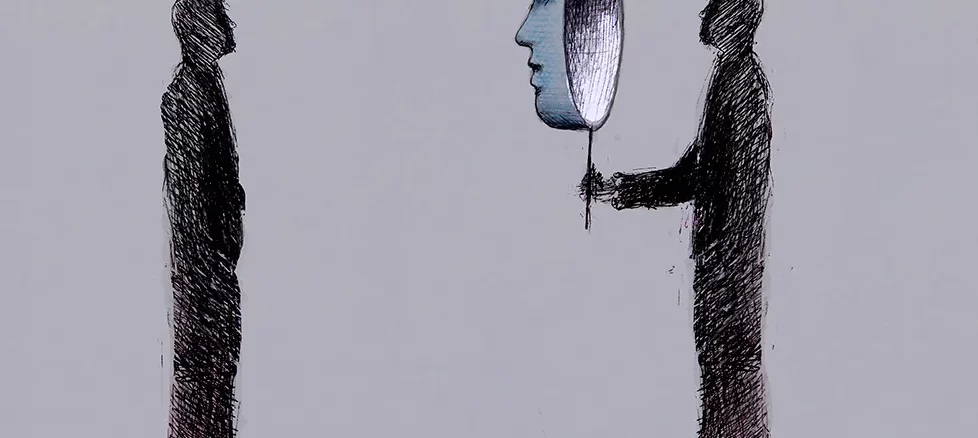
However, the initial internet governance did not maintain stability and peace for an extended period. The online harassment of specific targets on the internet by some people with disguised identities has plunged the online community back into chaos. In many instances, the disguise of users does not come from a one-way identity disguise. While harassers disguise their identities online, many underage users disguise their real age and thus become targets of harassment.

Figure3: Identity in disguise (Esafety, 2022).
Case study – Escalation of online harassment caused by user disguise
User disguise is not confined to online harassers with ulterior motives. For some tragedies, the two-way disguise of user identity is an irrefutable fact. Due to these two-way disguises, the impact of online harassment greatly increased, and the consequences can be fatal.
A thirteen-year-old American girl, Megan Meier, committed suicide after she became friends with a boy named Josh Evans on MySpace due to his online harassment (Matthew, 2008). The investigation revealed by Megan’s parents mentioned that the boy’s identity, Josh, had been disguised by the mother of one of Megan’s friends (Klepper, 2022). The woman, Lori Drew, disguised herself as a young boy and used a positive and friendly attitude to gain Megan’s trust. She then changed her attitude and used personal information about Megan to insult and harass her. The harassing online messages included insults such as “Megan is a slut” and “Megan Meier is fat” (Moreno, 2011).

Figure 4: Online harassment, real harm. (Associated Press, 2022).
There are two key points to note in this case study. Firstly, Megan Meier, who was 13 years old, did not reach the age to use MySpace. She could access the social media platform because her mother had helped her disguise herself on the platform in her own identity. Also, Lori Drew, as a harasser, could not escape the fact that she disguised her identity to gain the trust of the others. Furthermore, although The judge ultimately overturned Lori Drew’s cyberbullying conviction, we cannot deny that her actions constituted online harassment of Megan Meier and indirectly contributed to her death.

Figure5: Friend Game Behind the online hoax led to a girl’s suicide. (Collins, 2008).
Identity disguise online is a double-edged sword. As harassers use fake identities in online communities to spread malicious and harmful resources, people try to protect their online privacy by disguising themselves to prevent their personal data from being harassed by cybercriminals or marketing companies (Irvine, 2022). However, this also means that some people use disguises to avoid the mandatory age requirements of some social media platforms. For example, Megan Meier disguised her mother’s account as a MySpace user when she did not meet the age requirements, which led to a side effect of online harassment.
Therefore, the internet provides a certain amount of invisibility and anonymity for the perpetrators (Khurana, Bleakley, Jordan, & Romer, 2015). While increasing the potential for rapid dissemination of information to a broader audience, it can also lead to more serious negative effects and consequences (Khurana et al., 2015). In the case of Megan Meier, although the online harassment did not escalate into offline abuse and assault, the use of disguised accounts to harass unsuspecting teenagers became a reality. It led to the suicide of an underage girl.
Escalation of online harassment leads to new internet governance techniques
The escalation of online harassment has forced internet platforms to face up to the development of new governance tools. Platform policies can implicitly discourage bad behaviour while also encouraging certain types of cultural integration (Massanari, 2017).
- Twitter’s authentication logo: In terms of quickly identifying users in disguise, Twitter’s latest authentication technology has brought some improvements to reduce online harassment. For example, celebrities can apply to get an exclusive verification icon through their real name and details, representing the authenticity of the account owner’s identity, thus reducing the chance of someone disguising the celebrity identity to harass users or harm society.
- Facial recognition login systems: The introduction of facial recognition systems on many online platforms has significantly reduced the likelihood of user disguise. People are randomly asked for facial recognition when using the internet platform. Accounts that do not pass the facial recognition system are subject to different levels of bans, thus avoiding faked identity logins and reducing the risk of online harassment due to disguised user information.
- Parental supervision for adolescents: A 2005 survey showed that 89% of young people harassed online were 13 to 17 (Wolak, Mitchell, & Finkelhor, 2007). With the increasing use of the internet today, people are becoming particularly concerned about teenagers’ dangers from online services (Woods & Perrin, 2021). Even though 68% of those surveyed said they would make contact when they saw someone suicidal online (Carlson & Frazer, 2018), there is still a significant risk. As a result, parental supervision, proposed for adolescents, has become the latest target. In order to ensure that children of all ages can use online platforms safely, it is of utmost importance that parents know which products are available (Lindsay & Krysik, 2012, p.716). It may be possible to mitigate the problem of online harassment with reasonable parental supervision.
The still-existing loophole for online harassment
Internet platforms have provided some recent solutions to the problem of online harassment due to user disguise, but there are still major loopholes. The anonymity mechanisms and freedom of expression promoted by today’s online platforms are the most critical loopholes for online harassment. The possibility of limiting freedom of expression through new technologies has started to merge with public or private regulation (Ricknell, 2020), which means that it is impossible to eliminate all possibilities of online harassment while demanding absolute freedom of expression. For today’s online platforms, the escalation of online harassment caused by user disguise will require more time to explore the most balanced method of governance.

Figure6: Local newsrooms deal with online harassment daily. (Martin, 2020).
Conclusion
The Internet community has long struggled with the problem of online harassment. Statistics show that the number of online platform users who receive online harassment remains at a high level. After introducing the definition of online harassment, this blog analyses how early online harassment escalated from offensive name-calling and purposeful shaming with the advent of platform governance, eventually leading to a more intractable online harassment problem caused by user disguise.
At the same time, this blog critically analyses and understands the case of the suicide of thirteen-year-old Megan Meier, a minor girl, to demonstrate how user disguise on both the part of the harasser and the harassed can be a contributing factor to tragedy. In addition, with newer means of Internet governance, the problem of online harassment has been improving to some extent. However, there is still a long way to go in developing and balancing the need for anonymity and freedom of expression in today’s society to do everything possible to reduce the ongoing social impact and harm caused by online harassment.
(Word count:1981)
References:
Carlson, B., & Frazer, R. (2018) Social Media Mob: Being Indigenous Online. Sydney: Macquarie University. https://researchers.mq.edu.au/en/publications/social-media-mob-being-indigenous-online
Flew, Terry. (2021). Regulating Platforms. Cambridge: Polity, pp. 91-96.
Golbeck, J. (2018). Online Harassment: A Research Challenge for HCI. In Online Harassment (pp. 1–2). Cham: Springer International Publishing. https://doi.org/10.1007/978-3-319-78583-7_1
Greenhalgh‐Spencer, H. (2019). Cyber Safe Curricula and Online Harassment. Educational Theory, 69(1), 73–89. https://doi.org/10.1111/edth.12353
Irvine, R. (2022). Fake your IDENTITY ONLINE. Computer Act!Ve, 50-53,55-57. http://ezproxy.library.usyd.edu.au/login?url=https://www-proquest-com.ezproxy.library.sydney.edu.au/magazines/fake-your-identity-online/docview/2615454279/se-2?accountid=14757
Khurana, A., Bleakley, A., Jordan, A. B., & Romer, D. (2015). The protective effects of parental monitoring and internet restriction on adolescents’ risk of online harassment. Journal of Youth and Adolescence, 44(5), 1039-1047. http://dx.doi.org/10.1007/s10964-014-0242-4
Klepper, D. (2022). Online harassment, real harm: Fixing the web’s biggest bug. Retrieved 6 April 2022, from https://www.clickondetroit.com/health/2022/02/16/online-harassment-real-harm-fixing-the-webs-biggest-bug/
Lindsay, M., & Krysik, J. (2012). ONLINE HARASSMENT AMONG COLLEGE STUDENTS: A replication incorporating new Internet trends. Information, Communication & Society, 15(5), 703–719. https://doi.org/10.1080/1369118X.2012.674959
Massanari, A. (2017). #Gamergate and The Fappening: How Reddit’s algorithm, governance, and culture support toxic technocultures. New Media & Society, 19(3), 329–346. https://doi.org/10.1177/1461444815608807
Matamoros-Fernández, A. (2017). Platformed racism: the mediation and circulation of an Australian race-based controversy on Twitter, Facebook and YouTube. Information, Communication & Society, 20(6), 930–946. https://doi.org/10.1080/1369118X.2017.1293130
Matthew, G. (2008). Lesser conviction in MySpace suicide case. FT.com.
Moreno, G. (2011). Cases of Victimization: Case 1: Megan Meier (Missouri, 2006). Preventing School Failure, 55(2), 70–70. https://doi.org/10.1080/1045988X.2011.539465
Poland, B. (2020). 10. Gendered Harassment, Abuse, and Violence Online. In L. O’Toole, J. Schiffman & R. Sullivan (Ed.), Gender Violence, 3rd Edition: Interdisciplinary Perspectives (pp. 157-173). New York, USA: New York University Press. https://doi-org.ezproxy.library.sydney.edu.au/10.18574/9781479801794-020
Ricknell, E. (2020). Freedom of expression and alternatives for internet governance: prospects and pitfalls. Media and Communication (Lisboa), 8(4), 110–120. https://doi.org/10.17645/mac.v8i4.3299
Wolak, J., Mitchell, K. J., & Finkelhor, D. (2007). Does Online Harassment Constitute Bullying? An Exploration of Online Harassment by Known Peers and Online-Only Contacts. Journal of Adolescent Health, 41(6), S51–S58. https://doi.org/10.1016/j.jadohealth.2007.08.019
Woods, L & Perrin, W. (2021). ‘Obliging Platforms to Accept a Duty of Care’, in M. Moore & D. Tambini (eds.) (2021), Regulating Big Tech: Policy Responses to Digital Dominance. Oxford: Oxford University Press, pp. 93-109.
Waisbord, S. (2020). Mob Censorship: Online Harassment of US Journalists in Times of Digital Hate and Populism. Digital Journalism, 8(8), 1030–1046. https://doi.org/10.1080/21670811.2020.1818111
Image References:
Associated Press. (2022). Online harassment, real harm: Fixing the web’s biggest bug [Image]. Retrieved from https://nypost.com/2022/02/16/online-harassment-real-harm-fixing-the-webs-biggest-bug/
Collins, L. (2008). Friend Game. Behind the online hoax that led to a girl’s suicide. [Image]. Retrieved from https://www.newyorker.com/magazine/2008/01/21/friend-game
Esafety. (2022). Anonymity and identity shielding [Image]. Retrieved from https://www.esafety.gov.au/industry/tech-trends-and-challenges/anonymity
Frangou, C. (2019). The growing problem of online harassment in academe [Image]. Retrieved from https://www.universityaffairs.ca/features/feature-article/the-growing-problem-of-online-harassment-in-academe/
Martin, A. (2020). Local newsrooms deal with online harassment daily. [Image]. Retrieved from https://www.poynter.org/reporting-editing/2020/local-newsrooms-deal-with-online-harassment-daily-here-are-3-things-to-help-ahead-of-the-2020-elections/
RAPPLER. (2020). Over half of young women in PH experience online harassment – global study [Image]. Retrieved from https://www.rappler.com/moveph/over-half-young-women-philippines-experience-online-harassment-plan-international-study-2020/