Introduction
Digital rights today are a critical social issue. As new digital technology has brought an increasingly convenient platform for all businesses and self-employers, It becomes worrying about finding that various situations can occur that the human rights of right to information, right to privacy and personal integrity, and right of not being victims of objectification are violated on digital platforms. Even that is a blink of the iceberg. From cases such as Facebook’s leak of data to a third party without permission from the users whose data were used by Cambridge Analytica to the Amazon controversy of monitoring employees via data collection, digital rights within different scenarios have been violated and, to a certain extent, unknown to the general public unless media have leaked the scandals. Thus, this post will try to analyze the four dimensions of digital rights today and comes up with a thesis that the four domains of digital rights are human rights and still have many rooms to improve while the four domains are plagued by their own issues.
Digital rights as multiple rights and human rights
Of course, to begin with, we must define and categorize what is digital rights. Digital rights are part of human rights. However, the social investigation shows that many citizens will often forget the digital sphere’s interference with rights. For instance, American citizens are known for their sympathy for human rights causes. However, only 24% have a serious concern that technology might infringe on their privacy in terms of digital rights. Most of the 30% understand the issues but do not have sufficient worry to equal it like regular human rights violations.(Auxier and Anderson,2019) Times passed by, and 20 years later, more than 50% of US citizens distrust corporations and governments to handle their privacy, but is privacy all of the digital rights?
According to Goggin(2017), the answer is no. Digital rights encompass a wide range of rights. This includes four categories: privacy and data analytics, government surveillance digital rights at work, and digital speech rights. The four dimensions of rights offer a significant extension of the regular right concept and can influence the regular rights outside digital platforms. Karppinen(2017), for instance, argues that the introduction of new digital technologies can improve human rights on a global scale. An example of this is the GNI accords, which foster the digital corporate giant’s responsibility to solving suitable human cases. As an initiative that covers privacy, government surveillance, harm speech, and free speech, it can be seen as a pioneer in dealing with digital rights as a whole.
The classical issue of privacy

The most classical issue of digital rights is perhaps the issue of privacy. Privacy can refer to the ability to express oneself selectively without fully exposing all the information to the public. This information includes sensitive information to personal spaces and exposing them to the public or acquiring them without the person’s consent.
For instance, the famous social media corporation Facebook has perhaps the most severe privacy scandal in the history of digital rights. In 2018, Facebook was leaked for large-scale harvesting data- 67 million users without their consent throughout a quiz. (Criddle,2020) This violation of privacy’s harvested information is then transferred to a third party called Cambridge Analytica, which is not acting as a neutral organization but rather as a political lobbyer here. The clients are, in this case, politicians who want to take advantage of knowing public opinions and take advantage of such intel. From Donald Trump to the Brexit movement, one can not doubt how the rise of the two political populist movements has taken advantage of the already leaked private information. On the other hand, while today, more and more concerns are drawn to digital privacy rights three years after facebook’s 2018 scandal, and Facebook is declaring an initiative to solve its infamous privacy issue, It is noticeable that large digital platforms are not limited to Facebook, and the threat of privacy leakage is not guaranteed to be solved whether by joint-regulations from states, NGOs or corporation themselves.
The classical issue of privacy is still an issue; despite getting its infamous recognition from the victims and regulators, new privacy violations will still be discovered in the future as the best case. The worst-case – not even being discovered. A suggested solution can be found in curbing the unrestricted power of the corporation by putting more efforts of the state into regulating the corporation’s access to the data, while the NGO can act as a watchdog function and report any cases of private corporation’s access of user privacy. Despite not being able to completely eliminate the possibility of privacy invasions, more social awareness and efforts between state and NGOs have made corporations like Facebook to re-orient themselves to fix the issue, like Zuckerberg’s claim (Pita and Durate,2020) about how Facebook is going to reform on its privacy mechanics.
The issue of surveillance
Of course, perhaps not only corporations will infringe on the digital private information of the users. The government has also been accused of violating digital rights and causing privacy issues, but these measures to collect personal information would invoke far political controversies and debates. While corporation collection of personal data is a clear sign of transgression of their expected functions, governments worldwide have a clear need to collect personal information for various uses, including national security and, to some extent, the protection of the user. This embarks even more debates. For instance, the infamous PRISM project leaked by Edward Snowden has shown that a cross-state massive surveillance project that spies on emails, documents, photographs, and almost all aspects of digital communication. (Greenwald,2013)
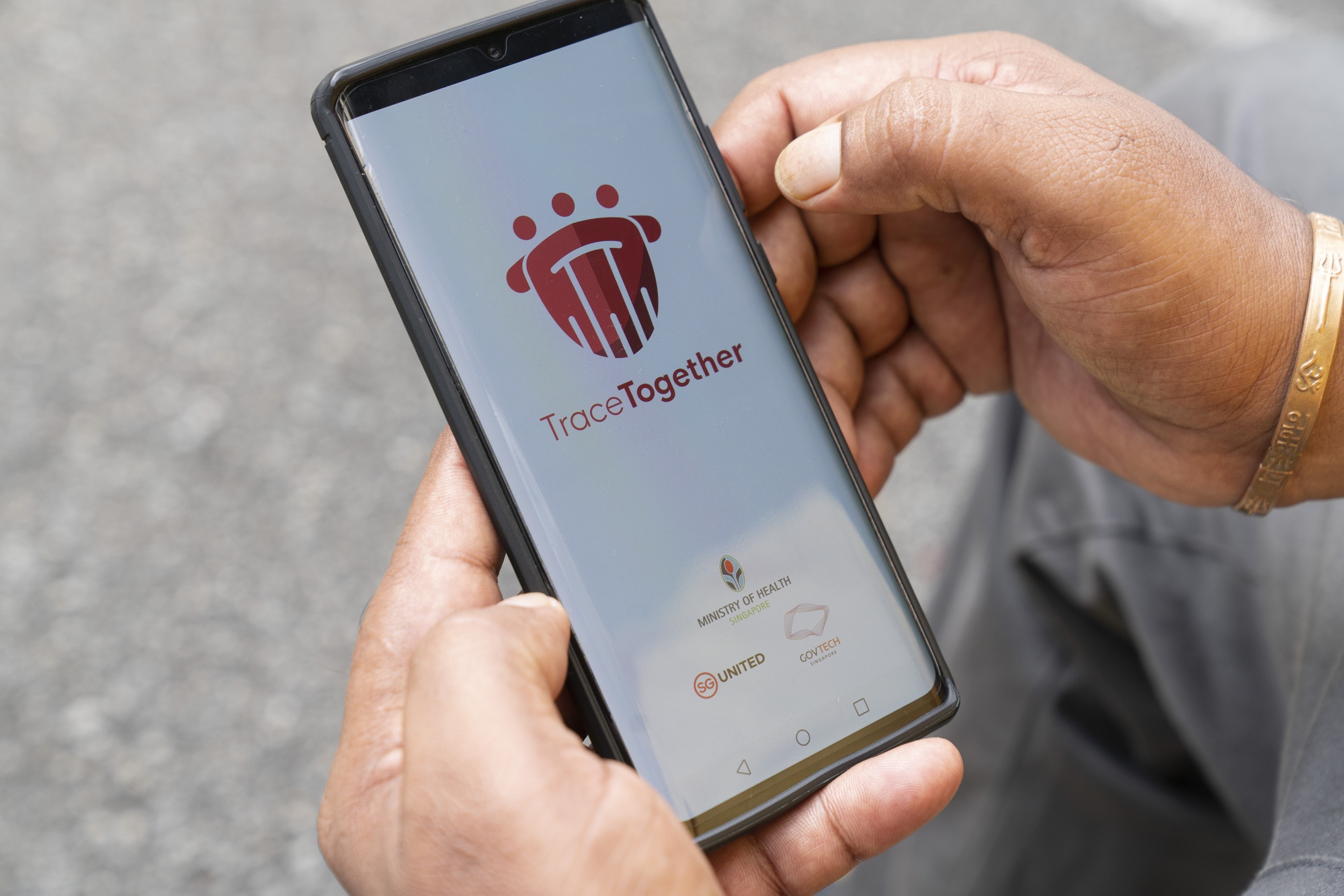
Faced with the accusation of infringing personal rights, the defendant of government measures in surveillance makes a rebuttal that it is a mandatory evil. Without surveillance and interference on digital platforms, it would be hard to deter crime and terrorist violence. Furthermore, government intervention in platforms might be necessary to protect digital rights in certain aspects. For instance, the Singaporean government project of anti covid software “Tracetogerther” saw an overreaching complex case. In times of pandemic, government powers to contain the pandemic can argue as justified. However, since the application collects almost all aspects of contact with the user and records personal information, a serious issue of the government having unregulated access to users’ information happens. (Han,2021)
Thus when faced with the issue of surveillance, it would not be hard to find that the government has a more powerful position than the individual and might have unrestricted power to access information from the induvial. Despite good intentions and positive feedback in many cases, The issue cannot be easily dismissed to say that all government surveillance is ethical and has not trespassed fundamental rights of man. An example of regulating the state power through a joint effort of global companies and global NGOs might be able to improve the situation—As the GNI initiative member’s goal, the corporations and NGOs who participate in signing this trans-national accord have formed a consensus in boycotting known state- governments that trespass its ability in Internet governance, like Cameroon and Nigeria. (The GNI principles,2008)
Right at work?

While almost everyone cares about the respective digital rights as users of platforms, today’s online rights scapes’ violators are not simply limited to the digital platform themselves. Think about it: you go home and use TikTok for entertainment. You may now worry that TikTok has infringed your rights when using it as entertainment. The workers of the TikTok corporation may share similar worries about being toys by the digital corporate giants. Digital rights at work can be referred to as the rights of workers who are not using digital platforms but may be victims of human rights violations that may be limited to digital platforms and exploited by digital methods. Furthermore, Goggin’s explanation of digital domains of rights there includes not only Digital privacy at work but Gig economy and working from home’s exploitation issue and the workplace’s social media requirements.
Compared to the other digital rights issues, which are centered around the concern of platform users or customers, the issue of digital rights at work is even more severe around the globe. Today’s economic development saw a large gig economy sector. In the three perspectives, self-employed employees are often subjected to poor conditions of both economic rights and digital rights at work. For example, the corporation Uber collects the data from the driver-workers, while the corporations are not transparent on how they will use all the personal data collected. The workers of Uber are also self-employed, which fails to enjoy workers’ rights and faces more serve exploitation, and cannot win against the corporation in defending their rights with precarity. (Russon,2021)
As Covid has further blurred the lines between work and home via advances in tech, more and more jobs are moved into digital workplaces. However, things are not at their worst. The issue of digital rights at work has been heavily concerned by Australian citizens. (Goggin,2017) The subject gains more social awareness due to the extensive digital platforms that Australian citizens use at work. A potential solution to this might also saw in such social awareness that formats a joint struggle by unions and NGOs and in a legal case that sues Uber, which helps the self-employed gain labor protection. (R
Digital rights and Freedom of Speech

If the right of Freedom of speech and expression is not discussed in the list of digital rights, then the concept of digital rights as an extension of human rights is not even a lively topic. The Freedom of speech is an integral part of human rights in the domains of political rights and civil rights. The governance of digital platforms by either the state or corporations cannot ignore the need for the Freedom of speech as a guaranteed digital right online. As such, this domain of right is the most protected one, with states, corporations, and NGOs trying to improve the situation of digital rights to free speech. For instance, the GNI-Global network initiative. The initiative is a joint agreement by NGOs, corporations, and governments to build an online freedom-speech-friendly environment that limits the government’s potential abuse of power in online spaces. In the initiative, Participating companies will respect and work to protect the Freedom of expression of their users by seeking to avoid or minimize the impact of government restrictions on Freedom of expression. Furthermore, it asks corporations to stand up against unethical government actions to act as regulators of government violations. Thus it might be obvious: At least the digital rights of Freedom of speech are well-guaranteed with high social awareness.
However, today’s changing mediascapes saw the debate of whether digital rights and Freedom of speech need less regulation, particularly with the political debate on online harm and how free speech rights can extend. In the case of Australia, Only 37% of the Australian citizens support a complete form of free speech online, while the other 63% are reluctant and think a balance is needed. (Goggin,2017) Unlike previous domains of issues, the idea to balance the Freedom of online discussion and potential harms caused social controversies that have no specific, absolute answer. For instance, while platforms like Facebook and Twitter allow their users to enjoy a significant right of Freedom of speech, online harms like discrimination and hate speech spread like the covid virus theme-based tags #Wuhanvirus, with far-right proponents agitating for violence against people with Chinese ethnicity.(Itttefaq,2022) Thus, the necessity to restrict the absolute Freedom of speech appeared. On the one hand, Platforms like Facebook have outlined their own self-regulatory rules to combat hate speech while promoting genuine Freedom of speech. On the other hand, states like Australia have their own regulatory role in searching for a balance. However, to achieve more balanced results, organizations like UN Human Rights argue for a larger trans-national consensus to moderate content-specific restrictions and ignorance of harmful speech problems. (Hicks,2021)
Our conclusion
This blog discussed four categories of contemporary digital rights—the domains of privacy, government surveillance, digital labor rights, and the Freedom of speech in the digital sphere. It is noticeable that the four domains face their issues: privacy is the most infamous one, state surveillance saw an overreaching of state power while it might be necessary, the digital rights at work saw a multi-vector form of exploitation, and the issue of free speech is guaranteed but faces moral dilemmas in protecting individuals from online harms.
In conclusion, there is still a long fight. A fight that probably has no end in improving the digital rights of men. Just as how Michelle Bachelet, the UN human rights chief quote” the fight for human rights is a never-ending process” (2018) the fight for digital rights as human rights is also a non-ending process, with more government and NGO attention needed to regulate corporation’s collection of data, a clear objection by the government to regulate its potential misuse in surveillance, an increase of digital labor rights for the working class and a global consensus in balancing Freedom of speech and regulating online harms like hate speech. As part of human rights, the four domains face their own issues and have a lot of room for improvement.
References :
Goggin. G(2017). Digital Rights in Australia. The University of Sydney. https://ses.library.usyd.edu.au/handle/2123/17587
Russon, M. (2021). Uber drivers are workers, not self-employed, Supreme Court rules. Retrieved 8 April 2022, from https://www.bbc.com/news/business-56123668
Auxier, B., Raine, L., & Anderson, M. (2019). Americans and Privacy: Concerned, Confused and Feeling Lack of Control Over Their Personal Information. Retrieved 8 April 2022, from https://www.pewresearch.org/internet/2019/11/15/americans-and-privacy-concerned-confused-and-feeling-lack-of-control-over-their-personal-information/
Han, K. (2021). Surveillance in the name of Covid-19. Retrieved 8 April 2022, from https://restofworld.org/2021/trace-together-forever/
Karppinen, K. (2017). The Routledge companion to media and human rights.
Pita, R., & Duarte, M. (2020). Case Study: Facebook In Face of Crisis. Retrieved 8 April 2022, from https://repositorio.ucp.pt/bitstream/10400.14/29693/1/152118129_Raquel
Russon, M. (2021). Uber drivers are workers, not self-employed, Supreme Court rules. Retrieved 8 April 2022, from https://www.bbc.com/news/business-56123668
Ittefaq, M., Abwao, M., Baines, A., Belmas, G., Kamboh, S., & Figueroa, E. (2022). A pandemic of hate: Social representations of COVID‐19 in the media. Analyses Of Social Issues And Public Policy. doi: 10.1111/asap.12300
Criddle, C. (2020). Facebook sued over Cambridge Analytica data scandal. Retrieved 8 April 2022, from https://www.bbc.com/news/technology-54722362
The GNI Principles. (2008). Retrieved 8 April 2022, from https://globalnetworkinitiative.org/gni-principles/
Greenwald, G. (2013). NSA Prism program taps in to user data of Apple, Google and others. Retrieved 8 April 2022, from https://www.theguardian.com/world/2013/jun/06/us-tech-giants-nsa-data
Bachelet, M. (2018). INTERVIEW: Advancing human rights, a ‘never ending process’ says new UN rights chief. Retrieved 8 April 2022, from https://news.un.org/en/interview/2018/10/1023472
Hicks, P. (2021). Press briefing: Online content moderation and internet shutdowns. Retrieved 8 April 2022, from https://www.ohchr.org/sites/default/files/Documents/Press/Press_briefing_140721.pdf
Links for pictures in blogs:
https://www.google.com.hk/url?sa=i&url=https%3A%2F%2Fwww.bloomberg.com%2Fopinion%2Farticles%2F2021-01-03%2Fsingapore-s-covid-success-isn-t-easily-replicated&psig=AOvVaw2JVhpQFm0ZcAZt3lVzd-sO&ust=1649497807577000&source=https://globalnetworkinitiative.org/images&cd=vfe&ved=0CAgQjhxqFwoTCLDs36mYhPcCFQAAAAAdAAAAABAI
https://globalnetworkinitiative.org / gni-logo-left/