
Introduction
In today’s digital society, countless information is flooding the Internet platforms. These messages contain a lot of harmful content. These include Internet violence, racism, pornographic violence, hate speech, vulgar idolatry,and so on.These negative contents have greatly damaged the friendly environment of the Internet and caused a great negative impact on the physical and mental health of Internet users.
In this situation, many famous social media platforms have maintained a indulgent attitude towards these contents instead of blocking them, which undoubtedly contributes to the power of these harmful messages. It is not enough for Internet users to stop these bad behaviors by their own self-consciousness.
In my opinion, platforms cannot be neutral to these harmful information, and platforms must resolutely resist and crack down on them as a way to maintain the online environment and the order.In this blog, I will explain the necessity of platform content moderation and discuss the specific measures of content moderation by quoting specific cases.This can provide some suggestions for the Internet platform content moderation mechanism.
Reasons for content moderation
First of all, I think it is imperative for platforms to moderate content. The rise of the Internet and the advent of social media apps has given people more opportunities and venues to express their opinions. Everyone has the freedom of speech, which is a basic human right.
But the Internet, as an open platform, is decentralized in nature. There are almost no conditions for people to speak on the Internet, which inevitably leads to the emergence of such uncomfortable contents. At the same time information can be spread to every corner of the platform in a short period of time on the Internet, and there are countless people who can receive this information. At the same time, the anonymity of the Internet makes it difficult to hold speakers accountable. It is difficult for people to find out who is the original publisher of harmful speech. Anonymity also adds a kind of mental protection to many Internet users, who feel they can publish harmful speech without being traced.
This allows many Internet users to throw themselves into the wave of publishing harmful information with no regard for the bad influence.Therefore, it is important that the platform moderate the content.
In addition, these objectionable messages can have a great negative impact on the Internet environment as well as the physical and mental health of Internet users.Taking vulgar idolatry as an example, although this type of information may not sound as harmful as racism or pornographic violence, its negative impact is just as great. In fact, it is often wrapped in undesirable elements such as online violence and hate speech.
On the Chinese Internet, the fanatic fan community has a name called “Fan Quan”. The Fan Quan is not just an ordinary group of fans, but a highly organized group of avid fans. Within the Fan Quan, there are many small groups formed by the members to worship their idols. Some of these groups are responsible for pushing their idol’s new movie or album to the top of the hot list, while others are responsible for manipulating comments on online platforms and attacking negative reviews of their idols. In addition, the Fan Quan has very strong financial power. In 2018, a celebrity’s Fan Quan raised 580,000 RMB, nearly $100,000, in just one hour in the Fan Quan. These funds were used to support their idols.
On the other hand, these fanatical fans have a very bad effect on the online order and public order. On the internet, the Fan Quan has caused a lot of privacy leakage problems. In China’s social media, apps such as Weibo and Douban are important activity platforms for the Fan Quan, and also important apps for ordinary netizens to get information about celebrities.
But on these apps, there are people who openly sell information about celebrities’ schedules and the hotels they live in, and even leak celebrities’ home addresses and cell phone numbers on the platform, and some fans are even induced by this information to find celebrities’ residences directly.This action undoubtedly violates the privacy of the idol and disturbs the private life of the star.At the same time, with the Fan Quan defending the reputation of their idols on various platforms, online violence can easily arise between different Fan Quan. Some fans can lose their minds in the process because they love their idols too much, thus verbally abusing others, making hate speech, and in some cases, even forming large-scale cyber conflicts. The targets of fan attacks include almost all ordinary netizens who make unfavorable comments about their idols, and even other celebrities can become the targets of their cyber violence.
In reality, the majority of members in the Fan Quan are teenagers. The under-aged fan groups tend to be less mature in minds and lack rationality. Online violence and leaks of personal information about celebrities often occur among the Fan Quan. Whether teens are directly involved or not, these excesses are likely to have many latent and negative effects on teens.
Therefore, it can be found that such objectionable content as extreme idol worship can cause great damage to the online environment and to the minds and bodies of Internet users. Just like pornographic violence and racism, it needs to be severely regulated by the platforms. However, in addition to the platforms themselves, the government should also intervene in the fight against harmful information.
Case study
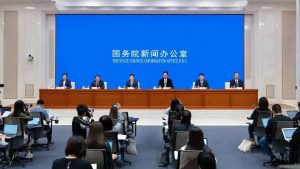
Starting in June 2021, the Chinese government launched an Internet content moderation campaign called “Qinglang Operation” in conjunction with major Chinese online platforms, and the campaign has continued to the present day. The core of this campaign is to moderate objectionable information on the Internet.
The campaign covers a wide range of Internet content, including online violence, malicious marketing, hate speech in the Fan Quan, defamatory and disinformation speech, and privacy leaks. The campaign has been very effective so far, with more than 22 million illegal and unhealthy information removed, 1.34 billion accounts punished, more than 7,200 anchors banned, more than 2,160 applications taken down, and more than 3,200 websites shut down.
In addition, many famous Chinese social media platforms including Weibo, Tik Tok, Douban, etc. have made a lot of adjustments to their content sections under the requirements of Qinglang Operation.Therefore, it can be seen that the Qinglang Operation has achieved great success.
From China’s experience, the maintenance of online order cannot be achieved without a strong moderation mechanism. This requires strong government intervention and cooperation from the platform side. At the same time, I believe that creating a good Internet environment also requires a high sense of responsibility on the part of the platform and the improvement of the quality of Internet users themselves. The government, the platform, the netizen tripartite cooperation in order to achieve the real harmony of the network environment.
First, the government needs to play a leading role in the moderation of Internet content. Harmful information on the Internet, not a virtual problem but a social problem, it can have a very negative impact on the social climate. And not all platforms have a sense of social responsibility, some platforms not only will not remove harmful information, but think that these statements can bring attention and profits to the platform, so the platform to remain neutral to the content. Government intervention then becomes critical.
The government has a strong deterrent effect on online violence, the government’s authority has a guiding role in the handling of harmful information and can guide the Internet in a healthy direction.The government needs to innovate ways to moderate online information and promote the establishment of laws and regulations to sanction harmful online information and impose severe sanctions for such behavior.
At the same time, the government should increase the supervision of major social media platforms and create accounts to publish authoritative information on these platforms. In case of controversies on online platforms, government accounts need to immediately give authoritative explanations and guide public sentiment.At the same time, the government should play a leading role and unite all levels of society to participate in the governance of the network environment.
For the platform, the platform should establish a sense of responsibility, adhere to social ethics, and do a good job of information audit. Information audit is one of the most effective ways to solve the spread of harmful information. For the post of netizens, the platform must conduct strict sifting, and the platform must block or delete the post with offensive and and agitating contents in time. The platform should never think that these remarks can bring attention to the platform, and condone the spread of these remarks. Although this method has a certain lag in time, it can also play a good effect.
At the same time, platforms should actively cooperate with government departments and comply with government regulations in the network. During Qinglang Operation, platforms such as Weibo actively enforced the Chinese government’s requirements and banned many celebrity fan groups that made offensive comments. The platforms’ compliance with government policies has effectively maintained the platform atmosphere.
In addition, the platform needs to implement the principle of real-name user registration, which means that users need to enter their real identity information when registering for an account. Identity information is strictly kept by the platforms, and the platforms must ensure that this data will not be leaked, while this can restrain the harmful behavior of Internet users. Certain Internet users publish harmful information, the platform can identify his real identity and punish him according to the actual situation.
At the same time, the government and the platform need to enhance the awareness of Internet users and call on them to improve their personal quality and speak civilly online. Internet users need to be clear that the Internet is not a place outside the law, and people cannot make harmful comments online at will. At the same time, when people find harmful speech online, they should immediately report to the platform or the relevant government departments to help the government and the platform to build a harmonious network environment.
In the Qinglang Operation, Chinese government departments set up special reporting areas to encourage people to report harmful information and help maintain the harmony of the Internet.Only by tackling the root of the problem can we completely solve the problem of harmful information on the Internet and maintain a good Internet environment.
conclusion
In conclusion, a harmonious Internet environment cannot be created by one person or one platform alone; it requires the joint efforts of all parties to moderate online content. The government needs to play a leading role in improving the Internet environment, but platforms also need to adhere to professional ethics, and platforms need to take the initiative to censor content and remove and block harmful information promptly. At the same time, Internet users should improve their own quality and awareness, never speak indiscriminately on the Internet to destroy the harmony of the network, and Internet users need to decisively stop the spread of harmful information. A harmonious network requires the joint efforts of all people.
References
Flew, Terry (2021) Regulating Platforms. Cambridge: Polity.
House of Commons Home Affairs Committee. (2017). Hate Crime: Abuse, Hate and Extremism Online (No. HC609). London: House of Commons.
Zhang Junli&Fang Mingdon.(2022).Lost Carnival: Characterization, Causes and Governance of Anomie of “Fan Circle Culture” .Contemporary Youth Research,(2),88-93.
Yueying Wu.(2020). Criticism and reflection: The chaos of the “rice circle” under the gate-keeper’s loss of words. Youth Journalist,(23), 19-20. doi:10.15997/j.cnki.qnjz.2020.23.010.
Liu Na. (2021). Exploring the moral education of youth under the influence of “rice circle culture”. Educational Exploration,(11), 67-70.