I believe that everyone has posted personal remarks on public social media at one time or another. When you speak out on the Internet, do you worry about the platform leaking your privacy or doing damage to your rights? Do you consider whether such speech will violate the rules of the platform? Do you worry about whether such speech will violate the rules of the platform? Have you ever had your account suspended for personal statements that are against the rules of the platform? If your answer is yes, congratulations on your participation in Internet governance.
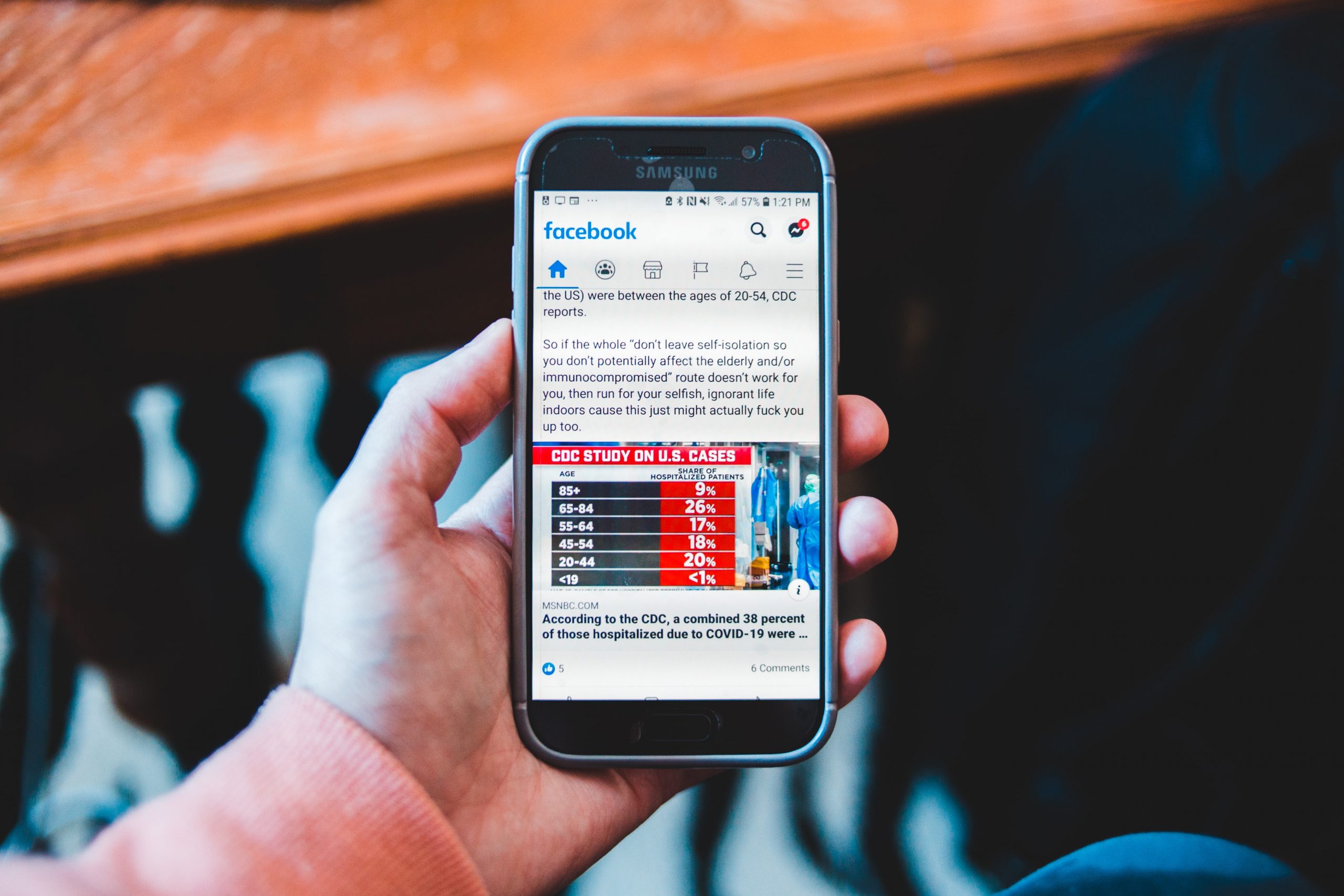
People are using Facebook in their daily lives. https://unsplash.com/photos/Qv2QUwFmiL0
Nowadays, people are increasingly using social media to share their lives, communicate with their friends, and post their thoughts and opinions. More and more people are getting in touch with and using the Internet, and the number of Internet users is rising day by day. The Internet, which was a novelty a decade ago, is gradually becoming a necessity in people’s lives, and we rely on it and cannot live without it.
At the same time, a new problem has emerged: how to effectively govern online social media and platforms? This is not an easy task, and various issues are waiting to be explored and discussed, such as who should be the main actor to govern the Internet, whether it is the social media and companies themselves, the state government, or the users themself? Besides, to what extent should it be regulated? How to keep a good balance between Internet governance and citizens’ privacy and rights?
This blog is going to answer these questions, starting with an introduction to what Internet governance is, talking about how it affects our online activities, and then giving you some examples of real-life cases that happened. Finally, I will provide some of my personal views and suggestions on these issues.
How does Internet governance change our online activities?
To answer this question, we first need to understand what Internet governance is. Internet governance refers to the use of various policies and laws to supervise and manage the behavior and content of the Internet, which aim at promoting the development and use of the strengths and weaknesses of various Internet actors and participants.
Internet governance does not become mysterious because there is a word Internet with it; it is similar to all other forms of governance, except that the key role has changed from real life and society to the virtual Internet.
This is what Internet governance is. So, how does Internet governance influence our daily online activity and behavior?
This month, Wang Jixian, a 36-year-old man living in Odessa, made vlogs that openly criticized Russia for the invasion, when he was trying to show he was still safe to his parents. He posted it on YouTube, and after that, he quickly got more than 100,000 subscribers. More and more people followed him to watch his new videos to find out what’s happening in Ukraine in real-time. Meanwhile, he also got many criticisms from Chinese nationalists, who describe Wang as a national traitor and ask him to clarify his position.
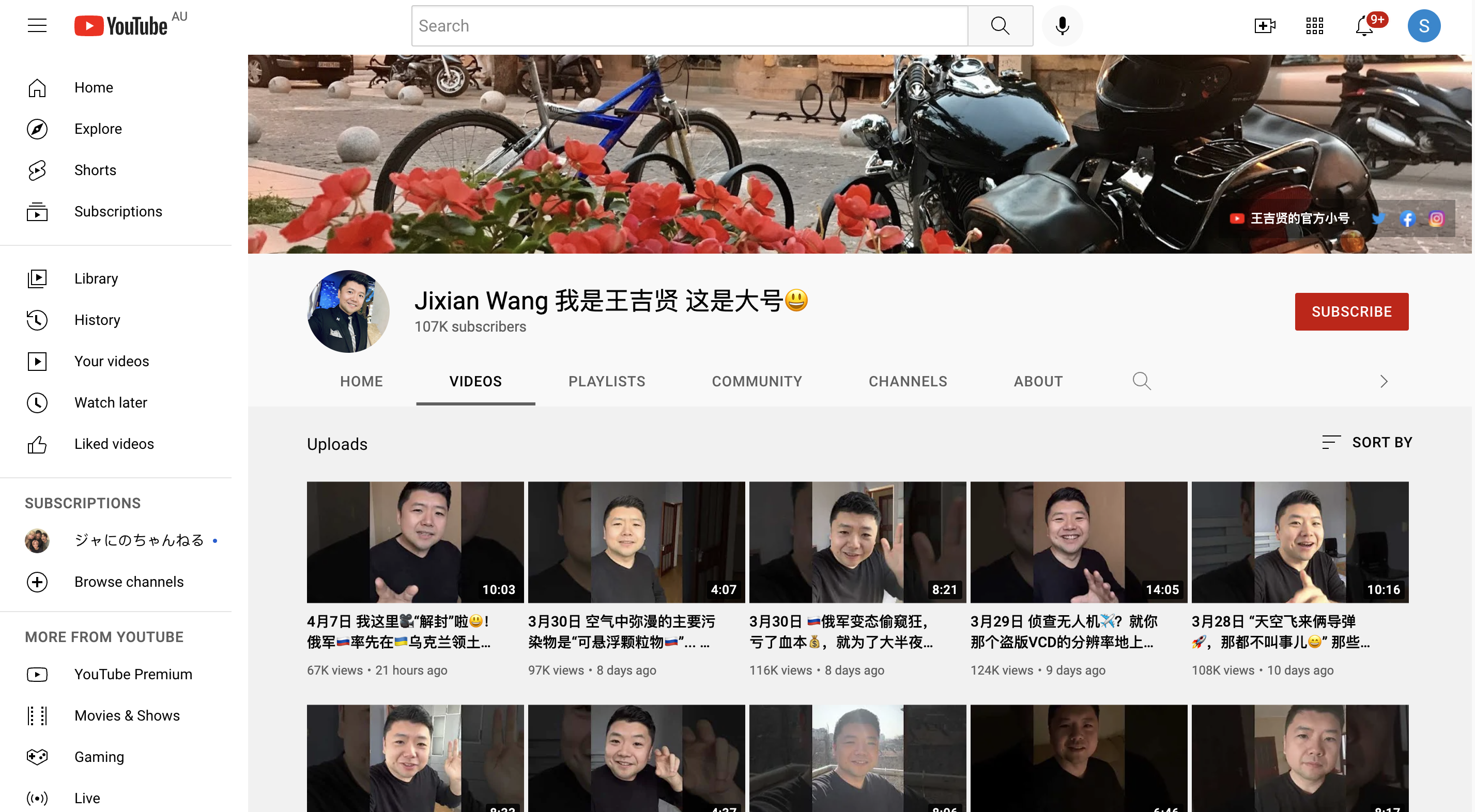 Wang’s YouTube Account. https://www.youtube.com/c/hellojixin/videos
However, on March 28, Wang’s account was suspended by YouTube for a reason that there is “violent content” in his latest video. Wang got confused because he didn’t post anything relating to violence, there isn’t any violent footage or photo in his video. So Wang appealed to YouTube to ask for a cancelation of the suspension. Many users on YouTube spoke out and supported Wang, and finally, Wang’s YouTube account came back again after a whole week.
According to this case, we can see that Internet governance does a lot. When YouTube noticed that there might be some violent content in Wang’s vlog, they suspended the account immediately, so Wang wasn’t allowed to use his account to post freely. In this way, his online activities were deeply changed and affected by Internet governance from YouTube.
Therefore, on the one hand, as a result of increased Internet regulation, the first thing many people feel is a stranglehold on freedom. For example, freedom of speech means you have the right to express your opinion freely, but if this right is restricted by policy and law, it can easily infringe on everyone’s freedom. If the platform stipulates that some words cannot be said, then users will be bound in expressing their speech, and the right to expression cannot be completely realized.
To put it more nervously, it would be horrible if one day you posted a personal insight online and it was spread around, then a staff of the platform thought your insight violated the rules of network management, he immediately contacted you to ask for the deletion and suspend your account, even used government power and the police rang your doorbell to talk to you.
 Become afraid of speaking on the internet. https://unsplash.com/photos/_UeY8aTI6d0
What’s more, social platforms and the companies they belong to hold a great deal of power over the operation of the platforms. All users are required to agree to the terms and conditions of the policies given by the company before starting using and creating an account, and we can only agree to this agreement, or we are not able to use the social software or the platform properly, which indirectly deprives us of the right to negotiate the terms.
In addition, the right to privacy is at risk. Internet governance has the potential to leak user information, which makes people use social media platforms with concern for the security of their privacy. Internet platforms usually indicate when users register for an account that they require very private information such as name, phone number, email address, etc., but no one knows if this information is adequately protected.
On the other hand, there are also some advantages. When YouTube found something inappropriate on its platform, it acted very quickly and efficiently. Through strict censorship management, social media platforms can have a better communication environment, and avoid personal attacks, hate speech, and other extreme speech.
For example, in 2021, Trump’s Facebook and Instagram accounts have been suspended by Facebook Inc for two years. As Facebook illustrated, Mr. Trump’s actions were “a severe violation of our rules”. The new policy of Facebook implied that users especially public figures are not allowed to go against the rules by inciting unrest or violence. This kind of policy can help to create a fresher environment for Internet social media.
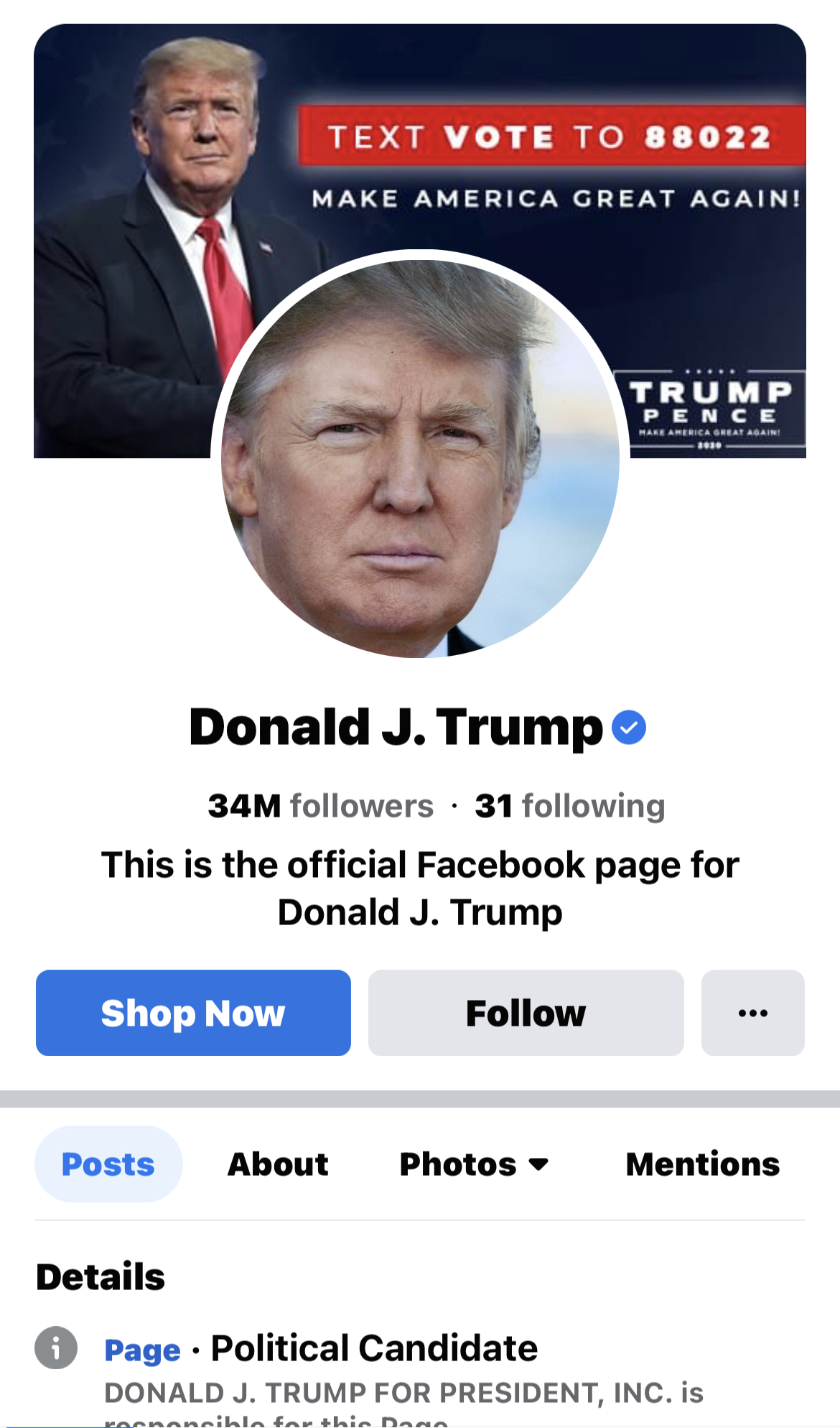
Trump’s Facebook Account. https://www.facebook.com/DonaldTrump
How to balance Internet governance and digital rights?
1) Be aware of the main role of internet governance
I believe that policies and regulations should be created for the management of Internet social platforms, in which the main body of Internet management should be clarified to solve the problem of abuse of power by the government or the platform to infringe on the legitimate interests of citizens caused by the current unclear main body.
I think the best subject of Internet management at present is still the Internet platform itself, and most of the management responsibility should be taken by the platform. The rest of the management responsibilities can be assigned to the government, other social organizations, and the user. However, no matter which party manages the main body, it must not hold too large a proportion of power, otherwise, it will reappear centralized power and affect the realization of the rights of each subject.
As in Wang’s case, his account was suddenly suspended by YouTube one day while he was posting videos normally. However, should the decision to suspend him has been made by YouTube? Or is there a conflict of interest between the state and government involved, or was the decision by YouTube as a result of being reported by other Chinese users? None of this is so clear that we can’t know whether Wang’s account was suspended by the platform, by the government, or by a user report.
Therefore, in order to protect digital rights, we need to further clarify the subjects of executive management and divide the responsibilities of all parties.
2) Establish rules and regulations for rights protection and enforce them strictly
What can be published, what cannot be published, and what is the line between freedom of speech and hate speech? All these issues need to be implemented through clear and specific regulations.
Nowadays, there are often cases of normal and legal content posted on personal accounts being suspended from the platform, which will undoubtedly discourage online users from speaking and sharing. Everyone has the right to free speech, also online platforms should remedy harmful speech, but the situation needs to be distinguished more carefully and not generalized.
Still using Wang’s event as an example, as Wang himself said, the suspension of his YouTube account is very inexplicable. YouTube claims that his videos contain violent and gory content, but Wang himself is unaware of any similar parts in the videos he shot. His right to free speech was taken away without evidence.
If we want to protect everyone’s digital right, the right of freedom of speech or privacy, we should figure out how should content be determined if it is violent, and what basis can be used to determine it. Whether we use algorithmic bots to determine or use human beings to determine, as long as we do not have specific rules in place, we are prone to misjudgment.
More importantly, after determining the subject of implementation and policy laws, each power body should strictly follow the regulations. At the same time, the subjects should form a model of mutual restraint and supervision. For instance, the governance behavior of the platform should be as transparent as possible, and open to other users. If users find improper management behavior, they can correct the platform.
3) Rules need to be developed with the supervision and accountability
As I mentioned earlier, a series of policies and laws need to be established to clarify the subject of oversight and protect the legal rights of users.
In establishing and developing these policies, other risks may arise, and if the platform is allowed to wrap up all the policy development process without being open to the public and behind closed doors, the policy regulations that are eventually formed will be null and void.
Both the platform and the government as the main body of Internet regulation should be subject to public supervision and should establish a sound accountability system to avoid the problem of empowerment and monopoly of power for themselves.
 Work together. https://unsplash.com/photos/Zyx1bK9mqmA
In recent years, major social platforms and companies have devoted a great deal of attention to the issue of Internet governance and users’ digital rights. While there are still occasional news stories of wrongful account suspensions that affect users’ rights, I believe the overall trend globally is moving in a positive direction. Many companies have learned from past examples and have made adequate adjustments to their policies and regulations. Now we need to focus more on how to make these policies work and not just a piece of paper. If we want to have fun surfing the Internet and avoid worrying about “whether you can say this or not,” we should put more effort into studying how to strike a balance between protecting digital rights and governing the Internet.
In the Internet era, everyone is a participant. Each participant enjoys the convenience brought by the Internet, and at the same time has to bear the responsibility of the Internet. Internet management has a long way to go, and although the Internet has been around for many years, there are still a large number of governance issues that need to be addressed.
Internet governance is not just the work and tasks of Internet platforms and companies, nor is it a problem that can be solved by the government moving its hands. Internet governance depends not only on platform companies and the government but also on the users themselves. All social subjects do their part and try to do their part for Internet governance to create a better network environment.
Reference List:
Bygrave, L. A., & Bing, J. (Eds.). (2009). Internet governance: Infrastructure and institutions. Oxford University Press, Incorporated.
Suzor, N. (2019). Lawless: The Secret Rules That Govern our Digital Lives. Cambridge: Cambridge University Press. doi:10.1017/9781108666428
Flew, Terry. (2018). Platforms on trial. InterMedia, 46(2), pp. 24-29.
DeNardis, L., & Hackl, A. (2015). Internet governance by social media platforms. Telecommunications Policy, 39(9), 761-770. doi:10.1016/j.telpol.2015.04.003
Bansal, G., & Nah, F. F. (2022). Internet privacy concerns revisited: Oversight from surveillance and right to be forgotten as New Dimensions. Information & Management, 59(3), 103618. doi:10.1016/j.im.2022.103618
Yitong Wu, C. (2022, April 05). YouTube suspends channel of an Odessa-based Chinese programmer, Citizen journalist. Retrieved April 8, 2022, from https://www.rfa.org/english/news/china/youtube-04052022125946.html
Facebook suspends Trump accounts for two years. (2021, June 05). Retrieved April 8, 2022, from https://www.bbc.com/news/world-us-canada-57365628