 (Quanta-magazine, Antoine Dore Illustration, Image source: https://www.antoinedore.com/quanta-magazine)
 (Quanta-magazine, Antoine Dore Illustration, Image source: https://www.antoinedore.com/quanta-magazine)
Intruduction
With the development of artificial intelligence systems and machine learning algorithms, the combination of algorithms and digital media affects almost all aspects of the internet community, even the public sectors are trying to use the algorithm to automate both simple and complex decision making processes. When the individual and society are wallowed in the benefits of these innovations, the emerging technologies also creates a huge impact to our internet culture in the social media era, raises some challenges due to its working or idealised logic based on the furtherance of user’s viewing characteristic, in addition, the bias and discrimination problem which provide by monopoly and concealed behind the algorithm is becoming more serious.
The following content of this blog is going to discuss the biases and discrimination through algorithms which hidden in the development of monopoly and the changing of viewing feature in the new media era, and there are new challenges for the user and public sector. This blog will focus on the case studies on Google search engine and Youtube, and how the current legislation protects the public from the manipulation of the information empire of Google.
Viewing in new media era
When the internet has become the primary selection of mass media, the implication is that the new media viewer becomes completely different. The algorithms of google provides us with a lot of efficient information ingestion and youtube has a more direct culture value output through videos, even the viewer can be a great content creator when they are familiar with the algorithm. The viewer in today’s internet environment is not just simply absorbed and positioned compared to the earlier forms of viewing, the new relationship between viewing and new media technologies was reconceived as using, interacting, and searching (Shimpach, 2011), the ways that we capture or propagate information seems to become more diversified. However, according to Regulating Platform (Flew, 2021), the algorithm also has an incredible improvement due to the development of computing power and the increased amounts of data available for processing, which attribute to the consistent growth of computational processes that relate to the user’s interaction with the data sets. Meanwhile, the author also suggests that the more we engage with online activities, the algorithm will not just become more effective, but also has more influence about what we think and how we act (Flew, 2021).The social significance of algorithm shapes the public’s sense in an invisible way, but the algorithm is designed by different institutions and agencies, therefore, there will be some risks associated with the rise of inforamtion monopoly when those particular platforms take the market advantages, the existed bias and discrimination within the information society will be consolidate and reinforced by the growth of platform algorithm, then delivered a more profound impact on the whole social groups .
The Information Monopoly
According to the antitrust lawsuit report from the United States Department of Justice (2020), Google today has become a giant monopoly gatekeeper for the internet, its market value is around one trillion dollars and annual revenue exceeds 160 billion dollar; in the suit, the lawyers from the justice department mentions that Google in recent years is continuing using anti-competitive tactics to consolidate its monopoly position in the market of general search services, search advertising, and general search text advertising through the automated learning of algorithms. Every year, Google pays huge amounts of money to those distributors, which including popular digital device manufacture and major wireless carrier, such as Apple and AT&T, the following tying arrangement requires the distributor to follow the agreement, such as putting Google apps or search engine in a prime position of their product, meanwhile, Google also trying to foreclosed the competition in internet search area by denied other competitor’s distribution and their product recognition, the result of these action lead to the Google search engine has taken up around 90 percent of all general search engine queries in the United States (the United States Department of Justice, 2020). But most importantly, Google monetizes the collateral data associated with searching through its algorithm, and the enormous scale, variety and velocity of data boosting the evolution of Google’s algorithm, thus it maintains its monopolies.
There is an example that illustrates how the algorithm of Google search engine influences its domestic market and causes bias in economic opportunity. According to Hard-Coding Bias in Google “Algorithmic” Search Results (Edelman,2014), the author points out that Google has a series of hard-coded rules in order to put its own links at a primary position when the user uses the Google search engine for some typical queries. Edelman developed a “comma test” search tool as a diagnostic procedure to test the tampering from Google’s hard-coding by searching medical symptom and stock ticker; as the result, Google’s subsidiaries such as Google Health and CSCO are always receive a valuable placements, even they are much less popular than the other service which ranking by evaluating media called Comscore; meanwhile, Google still states that they are not using these kinds of tactics to manipulate the algorithm and arguing that the antitrust review is not necessary for the search result which generate from algorithm (Edelman,2014). Users supposed to satisfy the information equally from different aspects when they have limited cognition for an certain area, however, the intentional manipulation of search algorithms from the information monopoly violates the legislation and regulation, and not just brings free advertising for Google’s own property, but also restricts the information for other competitor companies, aggravates the antitrust problem, and raises bias in economic opportunity, even though it claims that the algorithm has been modified to avoid the inequity after several years.
Youtube
The youtube’s algorithm personalization system, which operates as Google’s subsidiaries is another example that illustrates how the algorithm from information monopoly reinforced the bias and discrimination. The algorithm personalization system of youtube is powerful in representing the user’s interest, and it continuously categorizes and recommends them to the user. Some researchers point out that the algorithm of youtube is visualized in three main systems, they include the selection system on youtube homepage; search engine which can generate suggestions from user’s feedback; and the suggested videos for viewers to watch next, these factors affect the user’s view count through the mix of personalization, video performance and external factors (Cooper, 2021). In total, youtube currently has 2 billion users and gets 14.3 billion visits per month, and the users spend almost 24 hours each month on the youtube mobile app (Statista, 2022).
Today, youtube is the second largest search engine in the world (the first is Google), however, the irrelevant, hateful and biased contents still appear on the user’s screen via youtube ‘s algorithmic based recommendation system. According to Flew (2021), Google tends to delete those videos on youtube which are against copyright rules as soon as they can, but when the material involves hateful or illegal content, the action of Google turns dull and indifferent. Some supporters of Google claim that sometimes when the application detects the changing of a user’s profile, the recommendation system will suggest some different and performance-well videos for the user, and the unclear definition of “borderline content” also makes it more difficult for algorithms to categorize user’s preference. However, the Mozilla Foundation, which is a community that works to ensure the internet resource remains collective, suggests that the algorithm recommends videos from youtube actually violate the platform’s own policies (Mozilla,2021). Therefore, they took a crowdsourced investigation via RegretsReporter- a browser extension that allows the users to report youtube videos that they define as inappropriate, and the foundation used the result to analyze how YouTube’s recommender system was functioning (Mozilla,2021). This 10-month long investigation drew on data from more than 37,000 YouTube users who installed the extension, the result of the investigation indicates that the recommendation system of youtube is continuing feeding some hateful and biased content to their users by using clickbait and disinformation (Mozilla,2021).
Moreover, the situation between non-English speaking countries and anglophone countries is different. The author uses two data analyzes to suggest that YouTube’s recommender system does not treat people fairly. For example, the inappropriate reports related to pandemics are 22 percent higher in which countries use non-English as their first language than those english-language countries, and the rates of inappropriate reports are 60 percent higher in those countries which do not have English as a primary language, nonetheless, these inappropriate videos acquire 70% more views per day than other videos (Mozilla,2021). The research points out that the algorithmically-controlled personalization system are disrupting the source of information in current new media society by presenting bias or discrimiantion content to different individual, when the source of information become partial and divided, or even aligned to partisan interests of the monopoly, this phenomenon will eventually reinforce bias and discrimination to the people in different groups.
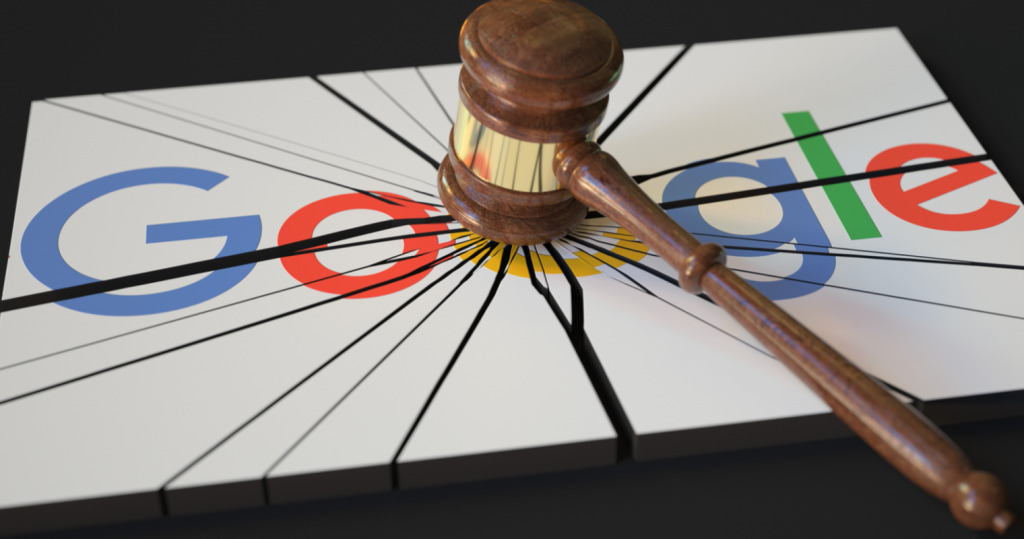 (Google Cautions Businesses About Anti-Tech Legislation, 2022, Image source: https://www.searchenginejournal.com/google-cautions-businesses-about-anti-tech-legislation/437462/ )
Resist algorithmic bias
As algorithms are continuing impacts the public in different aspects and raises bias and discrimination, the public sector also focus on how to governance this serious problem. For instance, there are some recent anti-tech bills that proposed to regulate algorithm and resist the discriminatory behavior from those large platform companies. One of them called the “Justice Against Malicious Algorithms Act” (JAMA Act, H.R. 5596, 2021), this bill sponsored by House Energy and Commerce Committee, and it suggested that the government should enforcement the content moderation work of large platform and amend section 230 of the Communications Act of 1934, because these provider of interactive computer service behave badly on how they balance the “personalized algorithms”, and it is important to limit their liability protection advantages when they known or make the “personalized algorithms” (Mullin, 2021). Meanwhile, there was another bill sponsored by the senator Tom Malinowski and 32 others, he introduced the “Protecting Americans from Dangerous Algorithms Act” and also points out that the vague definition of section 230 of the Communications Act of 1934 provides immunity for those large platforms and increases the bias and discrimination. Furthermore, there are also some bipartisan efforts that indicate the significance of regulating large platforms which using algorithms to get unequal benefits, such as the “American Innovation and Choice Online Act”(Klobuchar, 2021), therefore, the reflection and restore of current legal and ethical framework becomes an essential part of diminish biases and discrimination that hidden in algorithms. In addition, it is also important for the large platform to take their responsibilities to monitoring and ensuring the algorithmic fairness under legislation, use active and competitive market tactics to avoid the form of monopoly which also encourages the innovation of algorithms, and promotes the idea of algorithm to the public and raises social awareness.
Conclusion
In conclusion, although the algorithm in modern society improves our experience in using, interacting, and searching through large platforms, there are some issues hidden in the prosperous society. When the public has more and more engagement with the datasets, the problem of biases and discriminations has become more pernicious under the development of information monopoly. For algorithm governance, the legislation and regulation from government is powerful, but the cooperation between platform, government and public is also essential for the resistance of algorithmic bias and to construct a better community.
References
- Edelman, B, G. (2014). Leveraging Market Power Through Tying and Bundling: Does Google Behave Anti-Competitively? Harvard Business School NOM Unit Working Paper. Retrieved from
- Flew, T. (2021). Regulating Platforms. Cambridge: Polity, pp. 79-86
- Klobuchar, A. (2021). S.2992 – American Innovation and Choice Online Act. United States Congress. Retrieved from https://www.congress.gov/bill/117th-congress/senate-bill/2992/cosponsors
- Mozilla. (2021). Mozilla Investigation: YouTube Algorithm Recommends Videos that Violate the Platform’s Very Own Policies. Retrieved from https://foundation.mozilla.org/en/blog/mozilla-investigation-youtube-algorithm-recommends-videos-that-violate-the-platforms-very-own-policies
- Malinowski, T. (2021). H.R.2154 – Protecting Americans from Dangerous AlgorithmsAct. United States Congress. Retrieved fromhttps://www.congress.gov/bill/117th-congress/house-bill/2154/cosponsors?q=%7B%22search%22%3A%5B%22Protecting+Americans+from+Dangerous+Algorithms+Act%22%5D%7D&r=1&s=1
- Mullin, J. (2021). Lawmakers Choose the Wrong Path, Again, With New AntiAlgorithm Bill. Retrieved fromhttps://www.eff.org/deeplinks/2021/11/lawmakers-choose-wrong-path-again-new-anti-algorithm-bill
- Pallone, F. (2021). H.R.5596 – Justice Against Malicious Algorithms Act of 2021.United States Congress. Retrieved from https://www.congress.gov/bill/117th-congress/house-
- Paige, C. (2021). How Does the YouTube Algorithm Work in 2021? The CompleteGuide. Retrieved from https://blog.hootsuite.com/how-the-youtube-algorithm-works/
- Shimpach, S. (2011). Viewing. In V. Nightingale (Ed.), The Handbook of Media Audiences (pp. 62-85). Malden: WileyBlackwell. Retrieved from https://ebookcentral-proquest-
- Statement of the Attorney General on the Announcement Of Civil Antitrust LawsuitFiled Against Google. (2021). The United States Department of Justice. Retrieved from https://www.documentcloud.org/documents/7273448-DOC.html
- Sandvig, C., Hamilton, K., Karahalios, K., Langbort, C.(2014). Auditing Algorithms:Research Methods for Detecting Discrimination on Internet Platforms. Retrieved from https://social.cs.uiuc.edu/papers/pdfs/ICA2014-Sandvig.pdf
- YouTube – Statistics & Facts. (2022). Statista. Retrieved from https://www.statista.com/topics/2019/youtube/