Intro
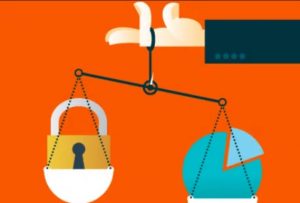
With the advent of the digital era, the security of personal information has been compromised to a great extent and the protection of personal privacy has become a huge challenge, since personal information has become easily available with the developments in artificial intelligence and big data, enabling the profit-hogging companies to ‘plunder’ this invaluable resource. Moreover, with the gradual digitization of the world, a ‘privacy paradox’ has emerged worldwide, where users express strong concerns about privacy while being willing to share more data. The common speculation about this ‘discrepancy’ in privacy is that users are sharing data inadvertently and against their will, being ‘forced’ to do so, for example, when they use Facebook, they have to reveal their personal details, or they would be excluded from the social circles. Either they choose to share irrationally without regard to privacy issues, or be left out, are the only options. (Debatin, Lovejoy, Horn, & Hughes, 2009)In the digital era, there are various ways and means to collect information, and all people are exposed to information collection, especially through big data analysis, all human behavioural tendencies could be predicted. As against the collection and storage capacity of the big data network, everyone in the future would not be able to hide anything in front of big data. It could be said that the information revolution in the digital economy, driven by mobile intelligence, has changed our world in just a few decades, besides raising privacy issues, and is driving the formation of new social norms. The issue of privacy in the digital economy has become a social issue of huge concern. With the popularity of smartphones, GPS positioning has become ubiquitous, and location is no longer private. Even if you do not use WeChat to shake, others could know where you are, and several other mobile applications that have nothing to do with geolocation could steal your cell phone information and geolocation at any time without your permission and succeed in tracking and positioning you. Several internet companies are also analysing your online behaviour. When a family shares a computer for shopping, the shopping platform is able to analyse your relationship with each other from the different categories of things you buy and analyse your search behaviour and buying habits. The power of individuals to protect their privacy has become too meagre against the huge information wave. (MacKenzie, Meyer, & Noble, 2013)
(PCDN, n.d.).
With the continuous development of technologies such as cloud computing, internet of things, and big data, the means of collecting and organising user related data and analysing and predicting information system services have matured. Various targeted services based on location tracking and behavioural preference records provide huge convenience to people in daily life, nonetheless, with increasing privacy concerns. Hence, in this blog, we would talk about why this issue has become a national issue rapidly, in the age of digital intelligence, how could we avoid becoming a transparent person online, and how to protect our privacy on the internet? (Weinberg, Milne, Andonova, & Hajjat, 2015)
Conceding information is the beginning of the problem
The purpose of collecting personal information by other people or organisations, whether legal or illegal, is primarily for profit. Like factors of labour and capital, personal information has become an essential input for production in the digital economy today. The misuse and degradation of personal information has nothing to do with both the users and the internet companies.
Why and how Facebook could stand out in the fierce social media war was analysed in 2009 by Julia Angwin, in an article titled, ‘Putting Your Best Faces Forward’. According to the article, it was because users were ‘willing to trade their personal information for a trust-based communication platform’ and Facebook, which was registered with real information, was preferred by users compared to several other anonymous platforms.
In China, this has been reflected in the shift from QQ to WeChat. Many people were reluctant to use QQ and preferred to use WeChat. To a large extent, this was because several people on WeChat had real names. Users were willing to trade their privacy for a trust-based communication platform. Historically, it has been an indisputable fact that users have given up their personal information to gain access to services.
The user portrait is what is important for the enterprises and the vast majority of platforms which helps them to link the individual choices with their pertinent personal information, rather than the isolated personal information which is immaterial, that is, to judge the business value embodiment of the user through his or her specific behaviour.
Thus, based on the basis of user profiling, major applications are able to provide useful and relevant information, such as more relevant search results, improve their services and develop new ones, deliver ads to users based on their interests, and conduct user behaviour analysis and measurement to understand the users’ usage. (Appel, Grewal, Hadi, & Stephen, 2020)
Nevertheless, influenced by business preferences, in the fast-growing digital economy today, it has often led to the misuse and leakage of personal information as more and more irrelevant information is collected by the companies. There has been an exponential growth in the number of data breaches related to the users, compared to the pre-digital era. Ostensibly, the number of cases regarding information leakages could be in tens or hundreds of millions, over a given period. (Tenove, Buffie, McKay, & Moscrop, 2018)
Besides, in this digital age, people also have become ‘digital people’ with the advent of the growth in information technology. Since the personal information and data are highly interconnected, the three-dimensional personal data becomes more vulnerable to abuse.
Storage of personal data has become a regular and significant part of everyday life since mobile and other devices have become more powerful and capable of higher storage capacities that include personal communication records, web browsing history, personal choices of videos, and photo albums. However, if this personal information is leaked, the harm caused to individuals could be less than in the past.
It is for these reasons that users pay so much attention to the protection of personal information, besides, in recent years the technology has magnified the risk of people exposing their privacy.
Personal privacy becomes more difficult to be protected in the era of big data
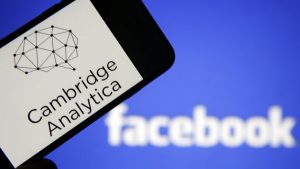
Enterprises have been using big data to design products that meet the market demand better and provide greater convenience to individuals in their daily lives, although with endless leaks of personal data of the users. But these companies have not made many positive solutions, as in the Facebook-Cambridge Analytica data scandal, where Facebook allowed Cambridge Analytica to access the personal data of tens of millions of Facebook users without their consent
It was alleged that Ted Cruz, the U.S. Congressman in connivance with the data analytics firm Cambridge Analytica, collected user information that could help Donald Trump win the presidential election in 2016, as claimed by an American watchdog. By 2018, Christopher Wiley, a former Cambridge Analytica employee, divulged several details of this deal to The New York Times, and more and more details were thereafter reported. People were thrown into a severely panic situation concerning the ease of personal data getting leaked by the social media and its serious consequences, with more than 270,000 Facebook uses having consented to the use of their personal data for a ‘digital life’. Nevertheless, data was collected by Facebook not only from the users, rather from their friends also, hence, the total number of users was as high as 50 million. The question remains, how did they get the data of so many persons from just 270,000 users.
With funding from Cambridge Analytica, the software developers created a Facebook third-party app, specializing in psychometric testing, naming it as the digital life of the users, while on Mechaniecal Turk and other online platforms. For getting the 270,000 users to answer certain questions and give up their Facebook data, the software developers were paid $. For completing a small task, the Amazon-owned part-time job site, Mechanical Turk paid a certain amount of money. The remuneration would be very meagre, ranging anything from ten cents to a dollar. Payment of five dollars was a substantial sum and that is why people were willing to participate. There was no ‘theft’ or ‘leakage’ due to hacking of the Facebook. Rather, the collection of data was done legally by the Facebook app with the consent of the users. So from where did the 50 million users come from mentioned in the reports? They were the Facebook users and their friends (in exchange of five dollars). The 270,000 ‘seeds’ turned into 50 million users, as every individual user could have had several hundreds of friends. (Cadwalladr & Graham-Harrison, 2018) The attribution of data becomes an interesting question here. A person who is willing to sell his personal information for five dollars (like gender, age, name of friends, and such other), naturally, he would not need the consent of his friends Privacy is believed by several scholars to have evolved into a joint network decision, rather than being an individual decision in social media any longer.
(Inc images, n.d.)
This incident with Facebook and Cambridge Analytica revealed that the risk of a data breach is sometimes simply unpredictable. Information technology is moving too fast, changing too much, and being used too widely, and failure to act with caution could result in huge risks. And the worst part is that there would be no bad guy in the event of a data breach disaster. Everyone is acting according to convention and the result could be catastrophic. We cannot help but wonder what privacy really means in the age of data.
Conclusion
Admittedly, now in the issue of personal information protection, with the increased attention of various countries and the promotion of legislation to improve, it could be more effective to protect the security of our personal information from all aspects. Nonetheless, at the same time, attention needs to be paid with regard to the following aspects on this problem: First and foremost, priority should be placed on the issue of protecting personal data with establishment of security awareness. (Matsakis, 2019) We need to remember that the basic information provided by us also include the details of our lives, and ‘everything is a bit number’ in this era of big data, while there is no need to open the permissions for certain apps. For example, an app that reads news, why would it need our voice call permission?
Secondly, to protect our own interests the use of legal means should also be considered. When such issues of data leakages are observed, we not only need to focus on fixing the responsibilities of the enterprise and the punishment of the unscrupulous elements involved should also be considered, rather also need to use public opinion to speak out, or even uninstall the applications, and other actions to let the enterprise platforms know out attitude and concern, forcing them to pay more attention to the protection of user privacy data. Nonetheless, the daily discovery of problems also needs to be actively reported to the competent authorities, along with the use of legal means to protect our personal interests. Simultaneously, the government needs to strengthen accountability. The enterprises that benefit from the application of big data need to strengthen their accountability in the protection of personal information of their users. This accountability could be pursued not only through the personal information protection law itself, rather also through the contract mechanism for conduction. Since in the big data application industry chain, the entities collecting and processing data would be numerous, and the market-based transactions of data would be more frequent, it become very necessary to bind the data processing behaviour of related parties through contracts.
Finally, to protect our personal information, we need to take a few initiatives like having different sets of passwords on different software and applications, not using unsecured WiFi in public places, browsing only through secured websites, and such others. Also all the three parties involved, the user, the enterprise, and the government, all should cooperate to establish awareness about the protection of personal data in this era of information overflow for the safe effective use of the valuable data.
Reference List
- Debatin, B., Lovejoy, J. P., Horn, A. K., & Hughes, B. N. (2009). Facebook and online privacy: Attitudes, behaviors, and unintended consequences. Journal of Computer-Mediated Communication, 15(1), 83–108. doi:10.1111/j.1083-6101.2009.01494.x
- MacKenzie, I., Meyer, C., & Noble, S. (2013, October 1). How retailers can keep up with consumers. McKinsey & Company. Retrieved from https://www.mckinsey.com/industries/retail/our-insights/how-retailers-can-keep-up-with-consumers
- Weinberg, B. D., Milne, G. R., Andonova, Y. G., & Hajjat, F. M. (2015). Internet of things: Convenience vs. privacy and secrecy. Business Horizons, 58(6), 615–624. doi:10.1016/j.bushor.2015.06.005
- Appel, G., Grewal, L., Hadi, R., & Stephen, A. T. (2020). The future of social media in marketing. Journal of the Academy of Marketing Science, 48(1), 79–95. doi:10.1007/s11747-019-00695-1
- Tenove, C., Buffie, J., McKay, S., & Moscrop, D. (2018). Digital threats to democratic elections:How foreign actors use digital techniques to undermine democracy. British Columbia: Centre for the Study of Democratic Institutions, UBC. doi:10.2139/ssrn.3235819
- Cadwalladr, C., & Graham-Harrison, E. (2018, March 17). How Cambridge Analytica turned Facebook ‘likes’ into a lucrative political tool. The Guardian. Retrieved from https://www.theguardian.com/technology/2018/mar/17/facebook-cambridge-analytica-kogan-data-algorithm
- Matsakis, L. (2019, February 15). The WIRED guide to your personal data (and who is using it). Wired. Retrieved from https://www.wired.com/story/wired-guide-personal-data-collection/
- PCDN. (n.d.). Big data [Picture]. PCDN. Retrieved from https://s27389.pcdn.co/wp-content/uploads/2016/08/Big-data.png.webp
- Inc images. (n.d.). Getty [Picture]. Inc images. Retrieved from https://www.incimages.com/uploaded_files/image/1920×1080/getty_935015144_351238.jpg

