
Introduction
Cover photo retrieved from: https://blog.enthec.com/do-you-know-how-to-protect-your-user-privacy/
The Digital era has brought a whole new revolution in how people connect on the social network. Various social media platforms have emerged over the years. Most of these popular platforms include Facebook, Instagram, Twitter, TikTok, LinkedIn, and Snapchat among others. Development in these media platforms has created an internet community that has had a significant impact on social groups (Sander, 2021). These platforms have come to help bridge a gap that existed in the information network. They have led to easy access to information. However, some of these digital platforms have brought a division in socioeconomic status among people, differences in gender, age, religion, family structure, and leakage in a digital product. These are some issues that require people to pay attention to avoid social issues that these digital platforms cause (Schwarz, 2021). The growth of these digital platforms has attracted the attention of policymakers, legislators, and regulators globally. These parties focus on trying to regulate how these digital platforms run their operations to ensure they do not exploit their customers and also protect their privacy. One of the challenges that have faced the growth of these digital platforms is the breach of privacy of the customers. Concern issues around the various digital platforms have led to the emergence of public concern and policies formulation by concerned bodies to help protect user privacy in the digital age.
What can platforms do?
Social media platforms set their rules whereby government authorities have no right to interfere with their terms and condition of operations. Generally, social media platforms set their regulations and seem to have a form of democracy. These platforms stipulate what customers are should follow and have no obligation to abide by any constitutional law (Aulisio, 2018). In the US, constitutional law does not govern the operations of private companies like Facebook and Google. These laws solely focus on regulating government companies. Facebook CEO Mark Zuckerberg stipulated in 2009 that social media networks would grow to be democratic, which has been evident over the years in most of the social media platforms (Sander, 2021). There has been criticism of both self-regulation and government regulation of the social media platforms and how they handle their private policy. Supporters argue that self-regulation is more effective than government regulation because it allows platforms to develop their own rules in a way that is tailored to their specific needs. They change these policies to fit their interests leaving no room for views from customers. Some of these platforms provide a platform for customers to vote their recommendations on certain policies. Although subscribers vote, the sole decision on how to implement these policies remains in the authorities of these platforms.
Retrieved from: https://martech.org/facebook-updates-terms-and-data-collection-policy-to-be-more-clear/
Social media platforms set their privacy policy with regards to who can create an account, what type of content is allowed, and what type of advertising is allowed. Additionally, some platforms may have stricter rules than others when it comes to content that is considered inappropriate or offensive. Some common examples of regulations that social media platforms may set are that an individual must be at least 18 years old to create an account on Facebook. On Instagram, content must be appropriate for all ages. Twitter prohibits the promotion of drugs, weapons, hate speech, and violent threats (Sander, 2021). An example was in the UK during the 2016 Brexit referendum when Thomas Mair killed UK labor MP Jo Cox. The House of Commons Home Affairs Committee (2017) balmed social media platforms like Facebook, YouTube, and Google for perpetuating online hate speech (Newkey-Burden, 2019). Extremist content was directed towards the MP and other people in the public domain. The Committee responded to Google’s failure to pull down these hate speech that extreme right-wing individuals had posted. Ultimately, it is up to the social media platform’s administrators to determine what is and is not allowed. Generally, however, social media platforms will have some type of guidelines in place.
Legal policies to protect user privacy
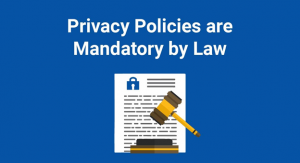
There has been a recent push by policymakers to help regulate democracy among social media digital platforms. The United States has been a leader in regulating democracy among social media digital platforms. The United States has enacted several laws and regulations to help regulate these platforms and ensure that they are being used for the benefit of the public. One example of this is the Electronic Communications Privacy Act (ECPA). ECPA regulates the privacy of electronic communications. The government passed this law in 1986 and has been amended several times over the years (Runde &Ramanujam, 2022). It covers a variety of topics, including how information can be collected, stored, and used by businesses and government agencies. ECPA is one of the laws that the United States has used to regulate democracy among social media digital platforms. It prohibits businesses and government agencies from collecting electronic communications without consent. This law helps protect the privacy of people who use these social media platforms.
Retrieved from: https://www.termsfeed.com/blog/privacy-policy-mandatory-law/
Congress is trying to regulate democracy in digital platforms by creating rules and laws that would protect users’ privacy. Congress has been trying to regulate democracy in digital platforms to protect user privacy. They have been trying to pass bills like the SESTA/FOSTA bill, which would make it easier for law enforcement to investigate online platforms for illegal activity (Runde &Ramanujam, 2022). They have also been trying to create regulations that would protect user privacy, like the GDPR. These bills and regulations are important because they help to protect user privacy and ensure that the democratic process is fair and transparent. They are also important because they help to prevent online platforms from being used for illegal activity. Congress has been doing a good job of regulating democracy in digital platforms to protect user privacy. They are working to create regulations that will help to ensure that the democratic process is fair and transparent, while also protecting user privacy. This is important because it helps to prevent online platforms from being used for illegal activity.
Another policy effort has been the establishment of self-regulation by social media platforms. This involves platforms creating their own rules and guidelines to govern how users interact with each other, which can be difficult given that social media is a platform for free expression. Most social media platform users fail to feel full control of their privacy online. They feel these platforms deny them the freedom of expression due to the regulations they impose. However, the social media platforms impose these regulations to ensure they protect the rights of the users. These regulations prevent abusive use of the platforms.
Certain governments like the Australian government have released bills that aim to ensure the safety of digital platform users in Australia. The government released a new Online Safety Act in December 2020 to enhance online safety (Legislation.gov.au, 2022). This new Online Safety Act is likely to have a significant impact on the freedom of expression in Australia. The Act will give the government new powers to regulate the internet, including the ability to block websites and compel internet service providers to block access to certain websites (Falor, 2022). The Act will also give the government the power to require companies to disclose any information about their users that it deems necessary for online safety in digital platforms (Schwarz, 2021). These measures will allow the government to monitor and control online speech, which may be used to restrict freedom of expression. The Act is controversial because it violates freedom of speech and privacy rights. It is also likely to be ineffective in preventing online harm.
Alongside the intervention of policies that try to protect digital platforms users’ privacy, there have been increased public concerns on privacy violations in these platforms. The concerns behind privacy issues in digital media platforms are mainly about the way companies use and share personal data. People are worried that companies may not be keeping their data safe and maybe sharing it with third parties without their consent (Aulisio, 2018). They are also concerned about the way that personal data is used to target ads and sell products. Some people also worry that companies may be using their data to track their online activities and spy on them. There are also concerns about how companies use data to manipulate public opinion. People want digital media platforms to be more transparent about how they use and share personal data, and they want the platforms to protect user privacy rights.
This blog will then give three specific examples to better help readers understand the issue of privacy regulation on digital platforms
Apple
Apple is committed to protecting user privacy. Users have always known little about the data collected by apps as users of apps, and Apple is trying to change that. In terms of privacy, the most important change Apple is making in 2020 is the introduction of a new App Privacy Disclosure Alert. According to Apple officials, the latest UI system will clearly tell users what types of data each App collects. Application data collection must be communicated to users in advance and applications will no longer be allowed to “secretly” collect user data. This transparency will help to regulate the behaviour of app developers or operators and will help to combat industry disruption.
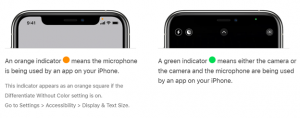
For many users, there are apps that secretly call on their phone’s camera or microphone. To address this issue, Apple has introduced a new feature that targets apps that secretly access the camera and microphone of IOS devices. When the webcam is enabled, the laptop will light up with an LED light. Apple says it plans to add a virtual indicator to the iOS status bar, which is located near the network signal, and it is an orange dot that is primarily used for the camera and microphone. This light will come on whenever the camera or microphone is enabled in any app (Apple, 2022).
Retrieved from: https://support.apple.com/en-us/HT211876
Zoom
Retrieved from: https://www.guidingtech.com/zoom-privacy-tips-settings-options/
One such case where companies have violated their users’ privacy is a scenario where Zoom gave data to third parties without users’ consent and knowledge. Zoom is a video conferencing site whose popularity rose during the COVID-19 pandemic (Moorhead, 2020). Many people used the site to hold virtual meetings since physical meetings were prohibited. Zoom engaged in unlawful data mining when users were having conversations. The case asserted that Zoom collected users’ data to a subscription tool named LinkedIn Sales Navigator once a person signed into a Zoom meeting. This tool then matched users with their LinkedIn profiles whose intention was to help customers with their marketing needs. Zoom engaged in this data mining practice without the knowledge of the users, which is a violation of their privacy.
Netflix
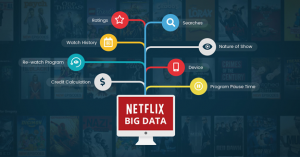
Retrieved from: https://medium.com/@bishal135/netflixs-big-data-architecture-c27d90ba781e
On the contrary, data collection has been crucial in marketing and advertising insights in some companies. Netflix is one of the companies that use big data analytics for targeted advertising. Netflix is an entertainment company with over 100 million subscribers which allows it to collect huge data to assist in boosting its marketing and advertising strategies (Maddodi & K., 2019). Netflix collects important data on what an individual watches and uses these data to help predict what such an individual would prefer to watch in the future. The company monitors online activities and dynamic changes in customers’ preferences. Customers’ data gives insight into predictive analytics which enables the company to define its target clients. These analytics enable Netflix to gain insights on what subscribers find most interesting, which boosts the company’s industry status.
Conclusion
Protection of privacy in the digital era has been a concern to people and authorities and has led to the formulation of new policies that aim at regulating digital platforms operations. Digital media platforms formulate their policies and regulations and evaluate these rules as they wish. The government cannot intervene and control how these digital platforms set their rules regarding how they treat their users. These parties focus on trying to regulate how these digital platforms run their operations to ensure they do not exploit their customers and also protect their privacy. There are certain practices that digital social media platforms can apply to ensure the privacy protection of their users. Firstly, platforms should be transparent about their data collection and use policies, and make them easy to understand. Secondly, platforms should provide users with clear and concise privacy controls that are easy to use and accessible from any device. Lastly, platforms should take proactive measures to protect user data from unauthorized access, use, or alteration. These measures may include employing robust data security measures and instituting user account verification processes.
References
Aulisio, G. J. (2018). #republic: Divided democracy in the age of Social Media. The European Legacy, 23(7-8), 866-867. doi:10.1080/10848770.2018.1449394
Apple. (2022, January 31). About the orange and green indicators in your iphone status bar. Retrieved March 31, 2022, from https://support.apple.com/en-us/HT211876
Daly, A., & Thomas, J. (2017). Australian internet policy. Internet Policy Review, 6(1). doi:10.14763/2017.1.457
Falor, S. (2022, January 25). Explained: What Australia hopes to achieve with its Unique Online Safety Bill. Retrieved April 1, 2022, from https://indianexpress.com/article/explained/explained-australia-online-safety-bill-7738771/
Legislation.gov.au. (2022). Online safety act 2021. Retrieved April 1, 2022, from https://www.legislation.gov.au/Details/C2021A00076
Maddodi, S., & K., K. P. (2019). Netflix bigdata analytics- the emergence of data driven recommendation. International Journal of Case Studies in Business, IT, and Education, 41-51. doi:10.47992/ijcsbe.2581.6942.0050
Moorhead, P. (2020, April 04). Why most should avoid an ‘out of control’ zoom right now. Retrieved April 1, 2022, from https://www.forbes.com/sites/moorinsights/2020/04/03/why-most-should-avoid-the-out-of-control-zoom-right-now/?sh=1781aad4397b.
Newkey-Burden, C. (2019, September 26). Who was Jo Cox? Retrieved April 1, 2022, from https://www.theweek.co.uk/103496/who-was-jo-cox
Runde, D. F., & Ramanujam, S. R. (2022, April 05). Digital governance: It is time for the United States to lead again. Retrieved April 1, 2022, from https://www.csis.org/analysis/digital-governance-it-time-united-states-lead-again
Sander, B. (2021). Democratic disruption in the age of social media: Between marketized and structural conceptions of human rights law. European Journal of International Law, 32(1), 159-193. doi:10.1093/ejil/chab022
SCHWARZ, K. (2021, December 01). Click bait: The battle for internet safety in Australia. Retrieved April 1, 2022, from https://lsj.com.au/articles/click-bait-the-battle-for-internet-safety-in-australia/