Introduction
Unless we somehow find ourselves in front of a powerful wizard that can read our minds just by looking into our eyes, the expression “nobody knows me better than myself” would seem to be a statement of fact. Afterall, so long as we choose to stay silent, not even our most intimate partner or family member could know what we are thinking.
Our ideas are our most ultimate private property. What we think, want, or intend to do is none of others’ business, until we choose to act upon them and thus make them public through our actions.
Yet today we might learn something that counters our intuitive assumptions. Hear this: what knows you the most may not be yourself, but Google, assuming of course that you are indeed a Google user, instead of some hermit that is so respectable, and frankly so crazy that you don’t use the internet at all. What is more upsetting is that, this gigantic digital empire earning billions at the expense of our privacy. Using our personal data, Google, and other multi-billion digital giants such as Facebook and Apple are becoming the new empires that rule the world.
Fortunately, some people are pushing for a change.
The Case of Google
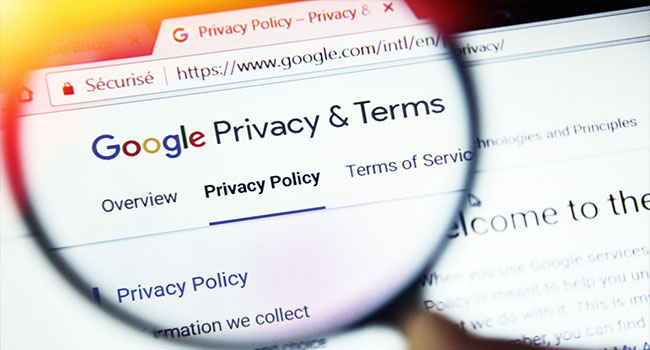
On January, 2019, Google was fined by the French Data Protection Authority (CNIL) for €50 million, against Google’s violation of the EU General Data Protection Regulation (GDPR) in its practice of using users’ personal data for ad targeting without consent (Golden Data Law, 2019). This was a major win to the activists pushing for change, in this case None of Your Business (NOYB) and La Quadrature du Net (LQDN) who brought the issue of Google’s privacy violation to court (Golden Data Law, 2019)
Technically speaking, Google does have some sort of mechanism in place for users to know that their personal data is being collected and used, and to gain user consent, it’s just that the kind of consent gained through Google’s tricky design is passive and even unconscious, which fails to fulfill the requirement of “genuine consent” under GDPR (Porter, 2019).
The problem with “genuine consent” is that, users gotta clearly know what they are agreeing to, and they must also have a clear option of disagreement if they don’t like the terms.
This is not what Google did. In addition to the lengthy Terms of Service to which most users would tap “agree” without reading, the privacy settings that are made intentionally complex for users to fully opt out from data collection, it has been also found that Google actually use deceptive privacy designs to continue collecting and using user data for ad targeting, even if users choose not to (Guardian Staff and Agencies, 2022).
For example, as Karl Racine from the office of the Washington DC attorney general states, “Google falsely led consumers to believe that changing their account and device settings would allow customers to protect their privacy and control what personal data the company could access” (Guardian Staff and Agencies, 2022). This is why the attorney generals from D.C., Texas, Wasthingon, and Indiana are launching a join lawsuit against Google in 2022, a latest step taken in the growing movement against tech giants’ unchecked powers and abuse of public trust for profits (Zakrzewski, 2022).
Personal Data as Resources
To truly grasp the critical weight of Google’s violations, we need to understand personal data as the way big techs see it – private property in the digital age with significant values for profit. We the contemporary people are simultaneously citizens and netizens. As citizens, we are accustomed to the idea that our labor produces physical products, and physical products are resources with values. But what we often do not realize is, what we produce online, the massive volume of personal data that is both our virtual products and extended parts of our digital selves, is also a kind of resource worth millions and billions. The only problem is that, such a resource is taken for free by the tech giants such as Google, helping them to make billions at the expense of our privacy.
For Alphabet, the holding company of Google, over 80% of revenue comes from Google ads, which uses our personal data to algorithmically determine what ads should target which users (Graham & Elias, 2021). In 2020, Google ads alone brought Alphabet $147 billion in revenue (Graham & Elias, 2021). Accounting for operational costs, Google earn a profit of $92 million a day, much more than the €50 million fine it had to pay (Brown, 2019). It is made possible by every trace we have left using Google’s products, from search history on Google engine to correspondence on Gmail, locational data on Google Maps, and practically everything in every app linked to a Google account (Brown, 2019).
In an imaginative opinion piece published on Androids Authority, Scott Brown proposes that letting everyone get a fair share of what Google makes from our personal data can be a first step towards a future of universal basic income (Brown, 2019). While this proposition is mostly likely just a daydream, we may double-down on the daydream and arrive at a more practical baseline – that if big techs are profiting using our personal data, we should at least be able to say no when we don’t like it.
Puppets and Puppet-Masters
If you do not already care about protecting your privacy as a basic freedom and right, nor do you care about big techs profiting off your personal data as long as it means you get their services for free, you should also know that privacy is our first line of defense against manipulations and control. Using the personal data acquired from us, big tech companies are able to influence our choices in everyday lives. Such choices are not limited to what to buy either, but extend across economic, social, political, and cultural aspects, since the source of our information and knowledge is held in the hands of these companies (Pasquale, 2015). The most apparent evidence comes from Google’s search engine recommendations, which suggest for us the information we should see, basing on a combined effect of Google’s own agenda and our past search results (Pasquale, 2015). With our personal data in hand, Google and other big techs not only know us better than ourselves, but may even control our behaviors better than ourselves.
The Digital Empires
Privacy protection from big techs like Google is so hard to push forward because existing laws and regulations in the world still mostly adhere to a past conception of society and governance, carefully restricting the power of governmental institutions, while unrecognizing the digital empires which actually governs a large part of contemporary people’s lives.
An illustrative example of this was Facebook’s short-lived democratic reform back in 2009, in response to growing public discontent over its privacy policies (Suzor, 2019). Yet Facebook’s commitment to reform was as ingenuine as the sort of unconscious consents it gained from the users to give up their privacy, the democratic methods it proposed was impossible to implement, then Facebook also soon denied making such a promise altogether (Suzor, 2019). In people’s frustration, an analysis is required on the core reason why Facebook can do whatever it wants and derive or destroy rules as it goes, and the answer can be found in the outdated legal principles in the U.S. constitution.
The U.S. constitution only applies to the “public” but not “private” sphere, and big techs like Facebook or Google, despite of their imperial domination over the everyday lives of contemporary people, are still considered as “private”, to which the constitution has no applicability (Suzor, 2019). This is the reason why fining Google for its privacy violation was only made possible in Europe but not in the U.S., because the constitution of its home country shields its ability to branch out and dominate the world. The underlying logic of the constitution’s inapplicability to the digital empires like Google or Facebook is simple – nobody is “required” to use them (Suzor, 2019, p.11). The assumption is that, if you don’t like how these big techs are probing your privacy, simply don’t use them.
Yet this assumption is untrue, for there is little to no alternative in a world already dominated by these digital empires, and it is nearly impossible for a contemporary person to live without using the services of these big techs. It might be hard for some to fully imagine the difficulty of cutting Google and Facebook out of our lives, assuming that this would only mean using an alternative search engine with less accurate results, or an alternative social media with better functions than Facebook anyway. Yet the reality is, Google and Facebook have permeated the contemporary life more than most people realize, as by 2021, Google and Facebook have “collective owned roughly eight of the top 10 smartphone apps in the U.S. (Fischer, 2021). Besides, even if we could miraculously find satisfactory alternative to all apps and services owned by Google or Facebook, there is a good chance that these alternatives also pry on our privacies and sell our personal data to the big techs anyway – this is simply how the industry has been wired to operate and make profits.
As argued by Alice E. Marwick and Danah Boyd of the independent nonprofit research organization Data & Society, “the ability to achieve privacy often requires the privilege to make choices and create structures that make such freedoms possible (2018, p.1158). Therefore, when we have nowhere to turn, no alternative to choose other than accepting the terms and agreements of the big techs to use their services, there can be no freedom nor privacy.
Moral of the Story
So after all these very legitimate trash talks against Google and other digital empires alike, what is the moral we may take away from the story, aside from that they are all manipulative evil corporations that profit billions at our expense? Perhaps the most valuable takeaway would be the necessity for us to explore solutions, both individually and collectively, since we can’t really live without Google or Facebook anymore.
Individually, we may not be able to retreat into the secluded life of a modern-day hermit, but we can dig through the barricades set up by the digital empires, and find the opt-out settings that maximally protect our privacy – unless of course if you don’t mind trading your privacy for the joy of discovering stuffs you didn’t even know you wanted to buy, then feel free to ignore this entire article altogether. But since you have already read this far, I assume you are indeed concerned with your privacy, so here is what you can do:
Go to “My Account” section of your Google account, and select “Manage Your Google Activity”, listed under “Personal info & privacy”. Select “Activity controls” to see everything about you that Google is tracking, and turn them off (Thompson, 2016).
If this seems easy enough, it is because this function was launched by Google in 2016 as a response to the growing public mistrust against its privacy practices (Thompson, 2016). It was precisely also the function alleged as deceptive by the U.S. attorneys currently suing Google, and a part of what got Google in trouble with the activists and the CNIL (Guardian Staff and Agencies, 2022; Zakrzewski, 2022; Golden Data Law, 2019).
Then why still do it? Because it is a first step of awakening, which must be followed by our collective actions, by using our democratic power to pressure governments adopt stricter regulations against these digital empires, making sure that these platforms are properly regulated like the public sphere they have become. And with every incident of ad targeting still occurring even with privacy settings that disagree to data collection, there exists another evidence against Google in court.
As the political environment and position taken by global governments are turning increasingly harsher against big tech companies, there is indeed hope for some tangible outcomes (Flew, 2018).
The €50 million fine Google had to pay was not much, but it was a start, towards a future that is not dominated by the digital empires.
References
Alexandra, S. (2019). 3 major internet privacy issues and how to avoid them. Security Today. Retrieved from https://securitytoday.com/articles/2019/09/03/3-major-internet-privacy-issues-and-how-to-avoid-them.aspx
Brown, C. (2019). What if Google shared its profits off your data from you? Android Authority. Retrieved from https://www.androidauthority.com/google-data-sharing-1002538/
Fischer, S. (2021). Google and Facebook still dominate mobile apps. Axios. Retrieved from https://www.axios.com/google-facebook-dominate-mobile-apps-c7e2c449-1e13-4221-b547-5becaf715ab6.html
Flew, T. (2018). Platforms on trial. Intermedia, 46(2), 24-29.
Golden Data Law. (2019). Case study: Google’s €50 million GDPR fine. Medium. Retrieved from https://medium.com/golden-data/case-study-googles-50-milliion-gdpr-fine-5e43946793c2
Graham, M., & Elias, J. (2021). How Google’s $150 billion advertising business works. CNBC. Retrieved from https://www.cnbc.com/2021/05/18/how-does-google-make-money-advertising-business-breakdown-.html
Guardian Staff and Agencies. (2022). Google accused of ‘deceptive’ location tracking in fresh round of lawsuits. The Guardian. Retrieved from https://www.theguardian.com/technology/2022/jan/24/google-sued-privacy-texas-district-of-columbia
Pasquale, F. (2015). The secret algorithms that control money and information. The Black Box Society. Harvard University Press, pp.1-18.
Porter, J. (2019). Google fined €50 million for GDPR violation in France. The Verge. Retrieved from https://www.theverge.com/2019/1/21/18191591/google-gdpr-fine-50-million-euros-data-consent-cnil
Suzor, N. P. (2019). Who makes the rules? Lawless: The Secrete Rules That Govern Our Digital Lives. Cambridge University Press, pp. 10-24.
Thompson, C. (2016). How to see everything Google knows about you. Business Insider. Retrieved from https://www.businessinsider.com/how-to-see-everything-google-knows-about-you-2016-6
Zakrzewski, C. (2022). Google deceived consumers about how it profits from their location data, attorneys general allege in lawsuits. The Washington Post. Retrieved from https://www.washingtonpost.com/technology/2022/01/24/google-location-data-ags-lawsuit/