In digital age, websites collect personal information without restraint. The Internet records everything that people do, and various location-based technologies expose people’s offline whereabouts. Hotels, airlines, takeout companies, express delivery companies, Internet companies frequently broke out of large-scale personal information leakage events (Susi, 2021). In 2017, a BBC News investigation found that a phone number can be used to find out a person’s id number, home address, property status, location, taxi history, check-ins, and other personal information (BBC News, 2017). In the face of these threats, people’s awareness of privacy protection is enhanced, and the concept of personal information privacy is strengthened.
In the era of big data, the analysis of user data is very important to help analyze the relevance of customer data, to achieve accurate push. While big data analysis brings convenience, it inevitably causes the problem of privacy disclosure (Suzor, 2019). The voice of privacy protection in the digital age is rising day by day. The concept of Internet privacy is no longer suitable for the new digital age. The essence of privacy lies in the control of personal information. There exists a natural contradiction between the essential characteristics of “openness” and “communication” in the digital world and the “concealment” and “privacy” of privacy (Kilpatrick, 2020). Digital progress of the Internet will inevitably further aggravate the infringement of privacy, thus forcing people to improve the awareness of privacy protection.

This blog starts from the manifestation of the violation of citizens’ privacy in the age of data, analyzes the causes of privacy disclosure, and summarizes the problems resulting in the violation of users’ privacy. After analyzing the reasons and aiming at the Facebook existing problems, this blog puts forward protection policies from the aspects of users themselves, technology, and laws, to strengthen the protection of users’ privacy in the digital era and reduce the risk of privacy infringement.
The Facebook data breach scandal
Facebook has had an eventful year in 2018, with data breaches leading to privacy issues throughout the year. However, since 2007, Facebook has come under constant criticism from NGOs over user privacy issues. From the perspective of historical development, the outbreak of scandal concentration in 2018 is an inevitable result.
 The Cambridge Analytica data scandal began in early 2008. It collected information about the preferences of more than a million Facebook users without their permission and used it for political propaganda. The scandal sent Facebook’s share price down sharply and brought heightened attention to the threat to privacy in the digital age (Lomas, 2022). Cambridge Analytica’s illegal access to personal data was first reported by the Guardian. As described by journalist Haskell-Dowland (2021), Cambridge Analytica worked for the US Senator Ted Cruz to collect data from millions of people’s Facebook accounts without their consent for use in the US election and had a significant impact on the election. According to Chang (2018), the collection of data — a major breach of user privacy — may have begun in 2016, when The Trump presidential campaign hired Cambridge Analytica. The announcement came after Republican presidential candidate Ben Bernanke and Cruz hired the firm during their primary campaign. The company says it can target political campaigns based on voters’ psychological profiles.
The scandal was revealed on March 16, 2018, and it took five days for Mark Zuckerberg to respond.  Mark Zuckerberg has apologized on his Facebook social network for failing to secure customers’ private data and causing a data breach. It also promises to correct the platform’s privacy protection policies, strictly approve third-party programs, and prevent user information from being maliciously stolen and used for other purposes other than user authorization (Wong, 2019). Less than six months later, however, Facebook had another breach of its users’ private data. Through the data breach, hackers obtained the details of more than 15 million users, including their real names, genders, cities, and current jobs, which is shocking. An investigation of Facebook employees by The New York Times found that the company’s passive response to user data breaches and delays in dealing with them exacerbated the crisis of privacy risks (Confessore, 2018).
This blog will take the data leakage of Facebook as an example to analyze in detail the causes of frequent privacy leakage problems in the digital age, and put forward some suggestions for user data protection.
Causes of privacy threats
So, what is the root cause of data breaches like Facebook’s?
This blog will analyze the reasons for privacy risks from the perspectives of market, technology, and users.
Interest demand of Internet enterprises

In fact, in this era of increasing attention to privacy issues, Facebook is still frequently exposed to privacy scandals. From the perspective of competitiveness, Facebook’s core lies in the mining of users’ data value. Social media represented by Facebook makes full use of and promotes the development of big data. And has become an important part of the big data industry chain. As a component of the commercial society, the profitability of digital Internet service providers has always occupied one of the most important goals of the company, which is precisely in conflict with the user’s privacy security.
First, the use of digital network platform for users with more convenient experience, often open network platform application interface, relevant cooperation with third party applications, but due to the regulation on the application of the third party is difficult, or in order to better meet the third-party applications and collect more customer information, there are clearly makes information and privacy more likely (Krasnova & Kift, 2013). At the same time, in order to provide accurate marketing push or user to get a more personalized experience, network platform tend to continuously monitor in the background to grab the user’s preference or Internet browsing history, product consumption, by extracting data platform is analyzed, under the condition of without the approval of the user to obtain the value of user information.
Technical theft and trafficking
At the same time, from a technical perspective, Facebook has struggled to manage hackers and vulnerabilities, although in recent years it has tightened access to API, shut down several existing interfaces, and even launched a “bug hunt” program that rewards users and developers who discover data abuse. But ensuring that the flow of data is monitored and controlled remains extremely difficult.The technical reasons of network platform privacy leakage are mainly due to the hidden trouble of platform inherent privacy protection and the theft of hacker technology.
 First, as a social networking platform, the user for personal data lack of control in the true sense, the user can handle the way information is nothing more than to browse, release, hide, remove, and once the user accidentally released the privacy information and to a certain extent or many forwarding, most users can do is to delete the source of information (Sugathan, 2018). Network data is cleared thoroughly, need backstage personnel to carry on the operation. Due to the technical difficulty and effectiveness lag of this process, private data may have been stolen by hackers during this process. Whether the platform itself uses big data technology, cookie tracking and other means to obtain privacy information, or the third-party applications for the purpose of compulsory access to users’ personal location information, trace users’ movement track. The latest technologies make it harder to protect privacy (Fischetti, 2011).
User privacy self-disclosure
At the same time, due to the natural nature of social media, Facebook users actively share many private information, further exacerbating the problem. Self-disclosure refers to a person’s willingness to disclose information to others, and the characteristics of digital networks determine their ability to encourage and promote self-disclosure (Rainie, 2020). In the digital era, the unique information transmission mode of digital social platforms makes the communication between users break through the limitation of traditional language and text, and become more diversified and convenient. At the same time, the characteristics of anonymity on the network further strengthen the psychological security of users. All these advantages enable social networks to promote self-disclosure. Therefore, although many users are aware of the risk of privacy disclosure when releasing personal information online, they still make many self-disclosures. Although most users are aware of the risk, they tend to underestimate the risk of Internet privacy disclosure and its possible harm due to the characteristics of anonymity, and think that its spread will not be too extensive (E. Marwick & Boyd, 2018).
How to prevent similar scandal from happening again?
What can we do to prevent a data breach like Facebook’s from happening again? In the process of the rapid development of Internet technology, it is necessary to take diversified, multi-level and multi-angle measures to protect citizens’ personal privacy.
Raise awareness of self-protection
Nowadays, the development of Internet technology is going fast, while the development of laws and regulations and the progress of industry habits are lagging the technological innovation. Therefore, as we have personal privacy, we should establish and strengthen self-protection consciousness, using effective existing technology such as anti-virus software and other technical protection means, to protect their privacy information, so that it is not infringed by others.
Users need to pay more attention to the privacy use statement and infringement protection statement in the Internet site, and sandbox the spam may carry viruses and Trojan horses for effective protection. To protect citizens’ personal privacy information is not leaked, but also for its not to be a sign of personal forgotten (Buzzi, 2021). Facebook has gradually formulated and improved its privacy service terms, ensuring that users can completely delete the content on social media, and informing users of the risk of privacy disclosure through privacy prompts, thus enhancing users’ awareness of privacy protection.
Enhanced technical protection
Employees in the Internet technology industry should respect the privacy of everyone, to promote a benign atmosphere in the industry (Shi et al., 2021). In order to protect the privacy of citizens from infringement, the relevant departments are required to self-check and self-discipline, to prevent and eliminate the occurrence of user privacy leakage phenomenon. By strengthening its privacy technology, Facebook lets users assess over time who can see what they post, which apps can use it, and who has access to their profile information, including photos, birthdays, and phone numbers.
Store with citizens’ personal privacy information of Internet interaction platform should strengthen its own hardware conditions, raise the level of software protection, update the firewall, antivirus software (Smith, 2016). Facebook wants to use advanced technology to better protect users’ privacy from hackers.
legal protection
From the perspective of the industry, it is necessary to formulate a clear and independent regulatory mechanism and laws and regulations for Internet operation like GDPR and OECD regulation (OECD, 2021).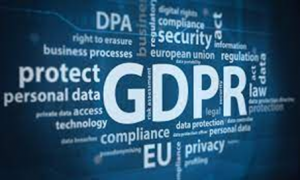
For Facebook, it should strictly require Internet technology providers and operators who have access to the personal privacy information of Internet end users to protect citizens’ personal privacy from illegal infringement. When information of a special nature is used, permission or legal support shall be obtained from the parties concerned and confidentiality shall be maintained. According to the law, compensation for the damage caused by the disclosure of citizens’ personal information. Meanwhile, Facebook have the obligation of confidentiality to their users. They are not allowed to trade users’ personal privacy or participate in activities of trading users’ personal privacy information, nor are they allowed to carry out profitable activities with the user’s privacy information they have mastered (Liu & Wang, 2018).
Conclusion
In the era of digital network, more and more privacy leakage problems are constantly mentioned, and the protection of Internet privacy data has become one of the hot topics widely discussed in society (Park, 2018). It is necessary for citizens to balance the contradiction between information sharing and privacy disclosure on the Internet through technical or legal means.
This blog analyzes the causes of privacy risks in the digital age. The speed of Internet technology update and iteration is beyond imagination. In privacy disclosure cases, the complex network environment and the illegal theft of emerging technologies have caused many information leakages. At the same time, the profit demand of enterprises and the self-disclosure of users further enhance the possibility of risk.
In the process of blog writing, I gradually realized that in order to better protect privacy in this era, users need to find an intersection between sharing and privacy, platforms need to find a balance between profit and self-discipline, and relevant laws need to be improved and updated constantly. Only the above methods can minimize the privacy risks in the digital era and effectively protect the privacy security of users.
References
BBC News. (2017, October 6). Is privacy dead in an online world? https://www.bbc.com/news/technology-41483723
Buzzi, C. (2021). Mass Atrocities in Myanmar and the Responsibility to Protect in a Digital Age. Global Responsibility to Protect, 13(2–3), 272–296. https://doi.org/10.1163/1875-984x-13020001
Chang, A. (2018, May 2). The Facebook and Cambridge Analytica scandal, explained with a simple diagram. Vox. https://www.vox.com/policy-and-politics/2018/3/23/17151916/facebook-cambridge-analytica-trump-diagram
Confessore, N. (2018, November 15). Cambridge Analytica and Facebook: The Scandal and the Fallout So Far. The New York Times. https://www.nytimes.com/2018/04/04/us/politics/cambridge-analytica-scandal-fallout.html
- Marwick, A., & Boyd, D. (2018). Understanding Privacy at the Margins: Introduction. International Journal of Communication, 12, 1157–1165.
Fischetti, M. (2011). Data Theft: Hackers Attack. Scientific American, 305(4), 100. https://doi.org/10.1038/scientificamerican1011-100
Haskell-Dowland, P. (2021, April 6). Facebook data breach: what happened and why it’s hard to know if your data was leaked. The Conversation. https://theconversation.com/facebook-data-breach-what-happened-and-why-its-hard-to-know-if-your-data-was-leaked-158417
Kilpatrick, H. (2020). 9 Online privacy myths keeping you from maximum online privacy. Freedom from Fear, 2018(15), 92–97. https://doi.org/10.18356/cb3421df-en
Krasnova, H., & Kift, P. (2013). Online privacy concerns and legal assurance: A user perspective. Internet Policy Review, 2(1). https://doi.org/10.14763/2013.1.107
Liu, Z., & Wang, X. (2018). How to regulate individuals’ privacy boundaries on social network sites: A cross-cultural comparison. Information & Management, 55(8), 1005–1023. https://doi.org/10.1016/j.im.2018.05.006
Lomas, N. (2022, March 15). TechCrunch is part of the Yahoo family of brands. . https://techcrunch.com/2022/03/15/facebook-2018-breaches-dpc-decision/
OECD. (2021). Data portability, interoperability and competition – OCDE. . https://www.oecd.org/fr/daf/concurrence/data-portability-interoperability-and-competition.htm
Park, Y. (2018). Boost children’s digital intelligence to protect against online threats. Nature, 555(7698), 587. https://doi.org/10.1038/d41586-018-03797-y
Rainie, L. (2020, August 17). Americans’ complicated feelings about social media in an era of privacy concerns. Pew Research Center. https://www.pewresearch.org/fact-tank/2018/03/27/americans-complicated-feelings-about-social-media-in-an-era-of-privacy-concerns/
Shi, Y., Yin, S., Chen, Z., & Yan, L. (2021). XGBoost Algorithm under Differential Privacy Protection. Journal of Information Hiding and Privacy Protection, 3(1), 9–16. https://doi.org/10.32604/jihpp.2021.012193
Smith, N. (2016). Book Interview: Digital protect and survive. Engineering & Technology, 11(2), 86–87. https://doi.org/10.1049/et.2016.0232
Sugathan, P. (2018). Data Theft in E-Commerce. SSRN Electronic Journal. https://doi.org/10.2139/ssrn.3367365
Susi, M. (2021). Human Rights, Digital Society and the Law (Routledge Research in Human Rights Law) (1st ed.). Routledge.
Suzor, N. P. (2019). Lawless: The Secret Rules That Govern our Digital Lives. Cambridge University Press.
Wong, J. C. (2019, March 19). The Cambridge Analytica scandal changed the world – but it didn’t change Facebook. The Guardian. https://www.theguardian.com/technology/2019/mar/17/the-cambridge-analytica-scandal-changed-the-world-but-it-didnt-change-facebook